c.curionodeThe Nobel Archive

1937 · Literature

Follow human conflict through a family and an age

Les Thibault placed competing convictions and private lives within the social world approaching the First World War.

Les ThibaultFamily and societyMoral conflictNovel cycle
1937Literature

Visual guide

The prize, pictured

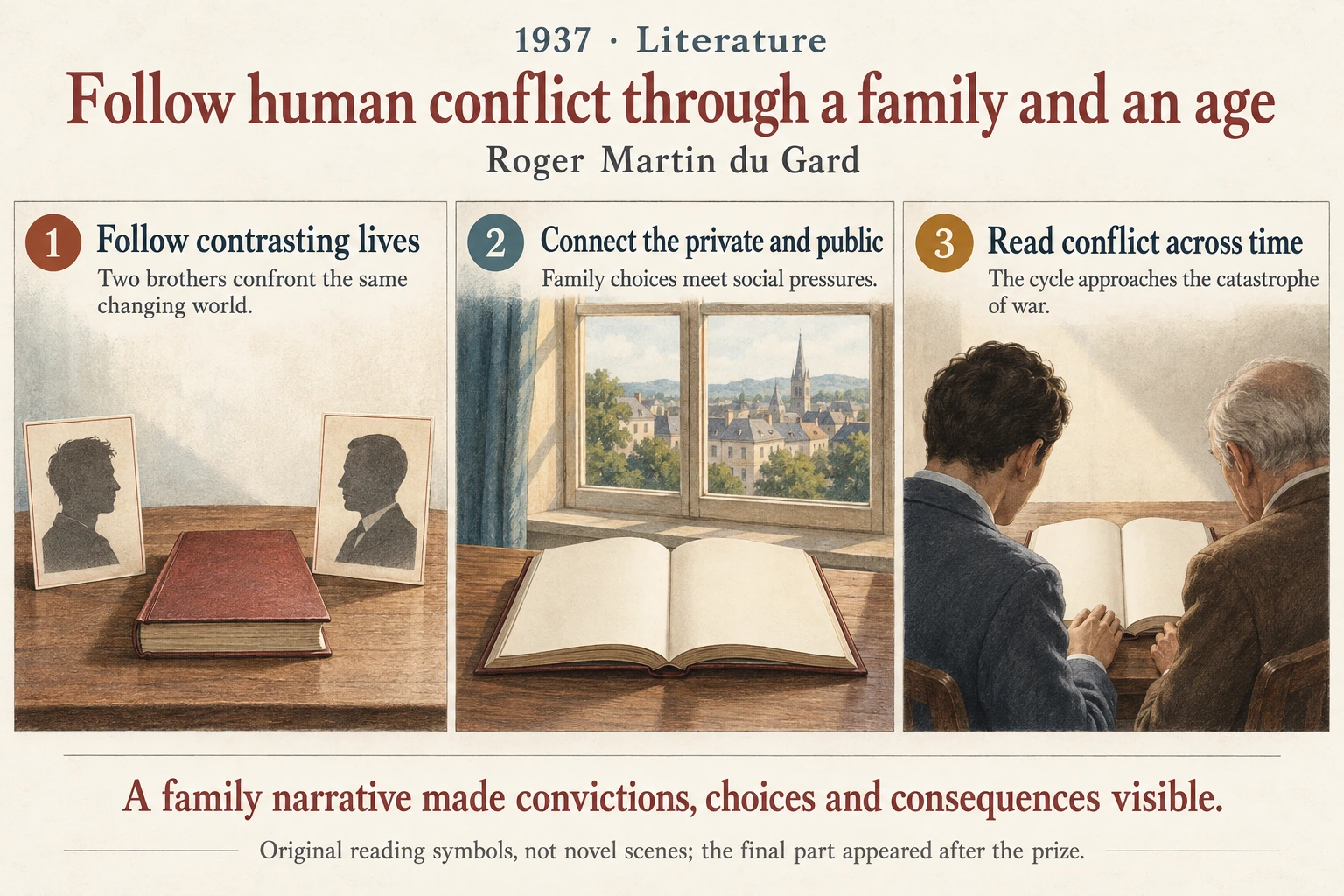
Infographic explaining Follow human conflict through a family and an age
Original AI-generated infographic. A conceptual overview; the explanations and sources below provide context.
Read the poster text

A family narrative made convictions, choices and consequences visible.

  1. Follow contrasting lives

    Two brothers confront the same changing world.

  2. Connect the private and public

    Family choices meet social pressures.

  3. Read conflict across time

    The cycle approaches the catastrophe of war.

Original reading symbols, not novel scenes; the final part appeared after the prize.

01 · The contribution

The idea, in everyday language

How can a novel make both a person’s inner conflicts and a changing society visible? Martin du Gard followed the Thibault family across a long narrative, giving the brothers Antoine and Jacques contrasting ways of confronting responsibility, belief and political commitment. Antoine’s medical work and Jacques’s rebellion and anti-war hopes open different perspectives on the same world.

Scenes, dialogue and close attention to thoughts connect personal choices with family authority and the pressures of contemporary life. The series began appearing in 1922; L’Été 1914, published in 1936, brought the approaching war to the centre. The Nobel Prize in 1937 recognised the artistic power and truth of this portrayal. The final Épilogue was published in 1940, after the award.

Why it matters

The cycle made human conflict legible through individual conduct as well as large events. Its significance lies in the tension between convictions, actions and consequences, and in the way private experience meets social change. Documentary care supported the work, but its literary truth is not the same claim as archival proof of each event.
02 · The people

Who brought the idea to life?

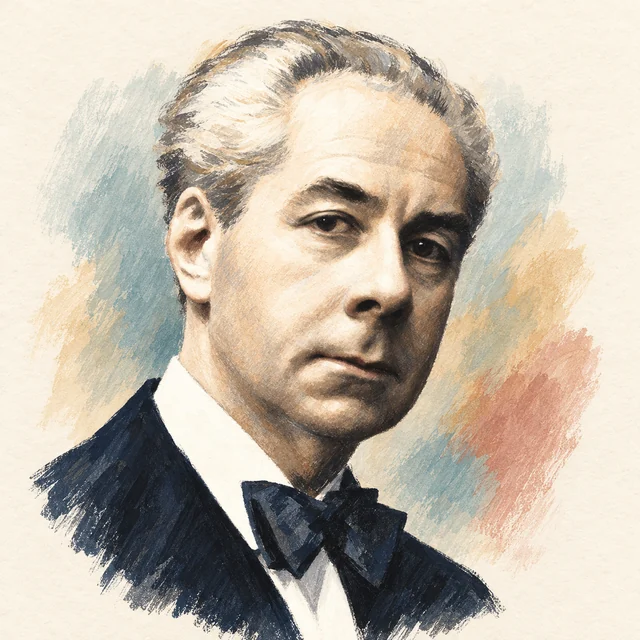
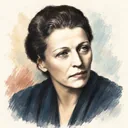
Illustrated portrait of Roger Martin du Gard

Roger Martin du Gard

Prize share · 1

Martin du Gard received the whole Literature Prize for the artistic force and truth of human conflict and contemporary life in Les Thibault. Its realism includes competing moral perspectives, not simply a catalogue of historical facts.

Read the biography ↗

03 · Years in the making

The path here

  1. 1913

    Jean Barois establishes Martin du Gard’s literary reputation.

  2. 1922

    The first parts of Les Thibault appear.

  3. 1929

    La Mort du père continues the family cycle.

  4. 1936

    L’Été 1914 is published in three volumes.

  5. 1937

    The Literature Prize recognises human conflict and contemporary life in the cycle.

  6. 1940

    The final Épilogue appears after the award.

04 · Read further

From the original sources

Original explanations by Curionode, based on the official records below. Biographical details and affiliations refer to the award year.

  1. Official award summary nobelprize.org
  2. Award ceremony speech nobelprize.org
  3. Official bibliography nobelprize.org
  4. École des Chartes: scholarly training persee.fr
  5. Official biography: Roger Martin du Gard nobelprize.org

More in Literature

Browse this subject ↗