A life in context
The person behind the prize
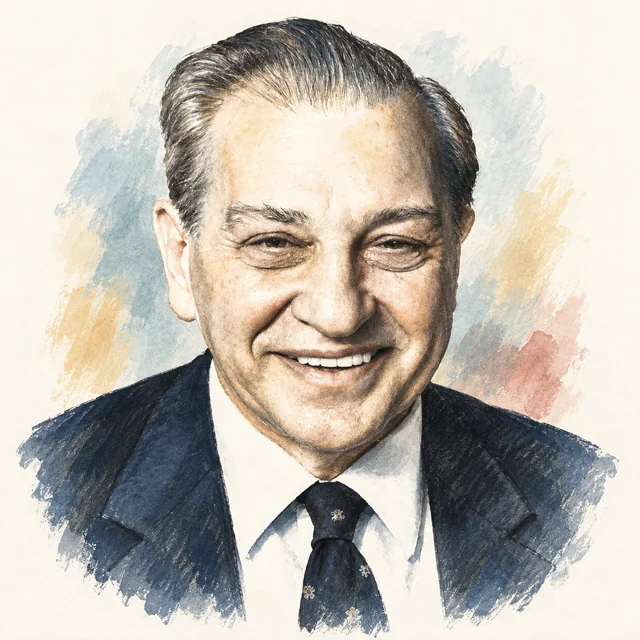
Marcus grew up in Montreal and studied chemistry at McGill, where his early research concerned reaction rates. After a doctorate in 1946 and experimental work in Ottawa, he turned toward theory with Oscar Rice at North Carolina. Teaching in Brooklyn and later Illinois supported his development of electron-transfer theory. He joined Caltech in 1978, continuing to let experimental puzzles guide mathematical explanations of chemical change.
The contribution
Marcus explained how the rearrangement of reacting molecules and their surroundings sets an activation barrier for electron transfer. Work from 1956 to 1965 related reaction rate to reorganisation and free-energy change. It also predicted an inverted region: under appropriate conditions, a stronger thermodynamic driving force can slow the reaction. This is a theory of specified electron-transfer processes, not a universal claim that greater energy always makes chemistry slower.
The idea in plain language
Transferring one electron can look like a tiny change, yet some electron-transfer reactions are fast and others slow. Marcus explained that the reacting molecules and their surroundings must rearrange. The solvent responds to changed charge, while molecular bond lengths and other internal coordinates can also change. Reaching a suitable configuration creates an activation barrier.
Read the full award story ↗

