A life in context
The person behind the prize
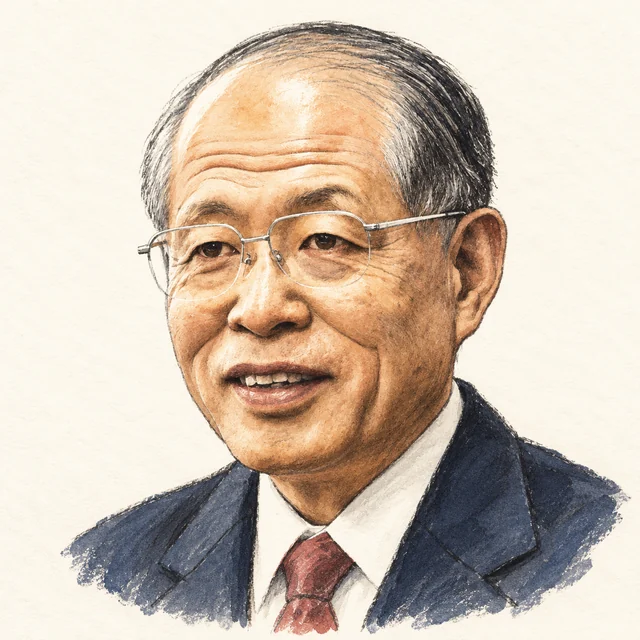
Noyori studied at Kyoto University, where he worked with Hitosi Nozaki and received his doctorate in 1967. He then built a long research career at Nagoya University. His interests linked the detailed behaviour of catalysts with the practical synthesis of complex molecules. Rather than treating selectivity as a fortunate accident, his research sought molecular designs that could make a preferred mirror-image product repeatedly and efficiently.
The contribution
Noyori and collaborators developed powerful chiral catalysts, including systems based on the BINAP ligand, that broadened the usefulness of asymmetric hydrogenation. The catalyst’s three-dimensional environment makes competing reaction pathways unequal, so one product can be favoured. These methods helped chemists prepare valuable compounds with controlled stereochemistry. The quarter share of the 2001 prize recognised his hydrogenation work alongside Knowles’s independent contributions.
The idea in plain language
Some molecules come in two forms that are mirror images but cannot be superimposed, like left and right hands. These enantiomers can interact differently with other chiral molecules, including those in living systems. A synthesis that makes both forms equally may therefore be less useful than one that strongly favours the desired form.
Read the full award story ↗