A life in context
The person behind the prize
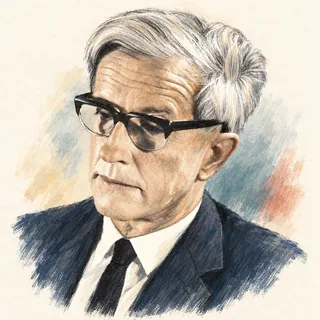
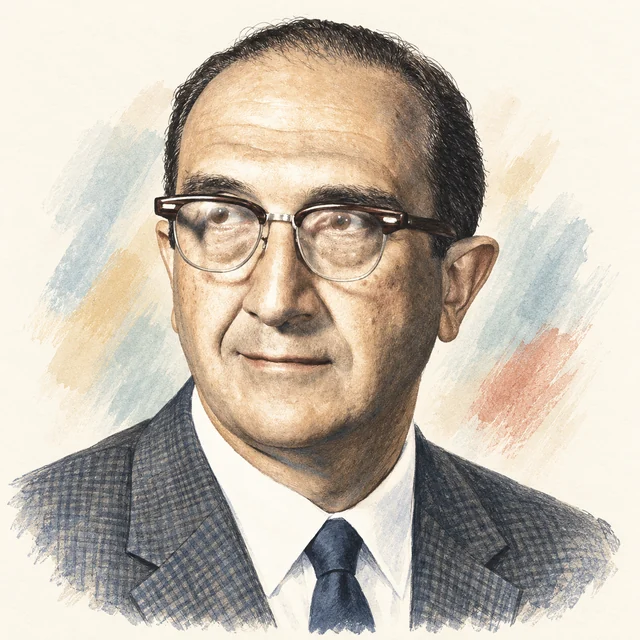
Luria completed his Turin medical degree in 1935. Research at the Radium Institute in Paris preceded work at Columbia from 1940. He joined Indiana University in 1943 and later held a microbiology professorship at Illinois. Collaborations with Delbrück brought genetic concepts and statistical methods to bacterial-virus research. Their 1943 study compared resistance across independently grown bacterial cultures; large fluctuations supported mutations arising before the selecting virus was added in the studied system. His investigations also examined interactions among phages, including recovery of genetic function after several damaged phages infected a common host. He moved to MIT in 1959 and became Sedgwick Professor of Biology in 1964. The Institute Professor appointment mentioned in his updated biography came in 1970, after this award.
The contribution
Luria investigated bacterial mutation, phage interactions and genetic mechanisms. He received one third of the Medicine Prize.
The idea in plain language
Their phage research combined genetics, statistical reasoning and biochemical experiments. In 1943, Luria and Delbrück found that resistance varied widely across independently grown bacterial cultures. The pattern supported heritable mutations arising independently of the selecting virus in the studied system.
Read the full award story ↗