c.curionodeThe Nobel Archive

1969 · Physiology or Medicine

Small viruses, large genetic questions

Delbrück, Hershey and Luria made bacterial viruses powerful experimental systems for studying replication and genetic structure.

BacteriophagesGenetic structureDNA and replication
1969Physiology or Medicine

Visual guide

The prize, pictured

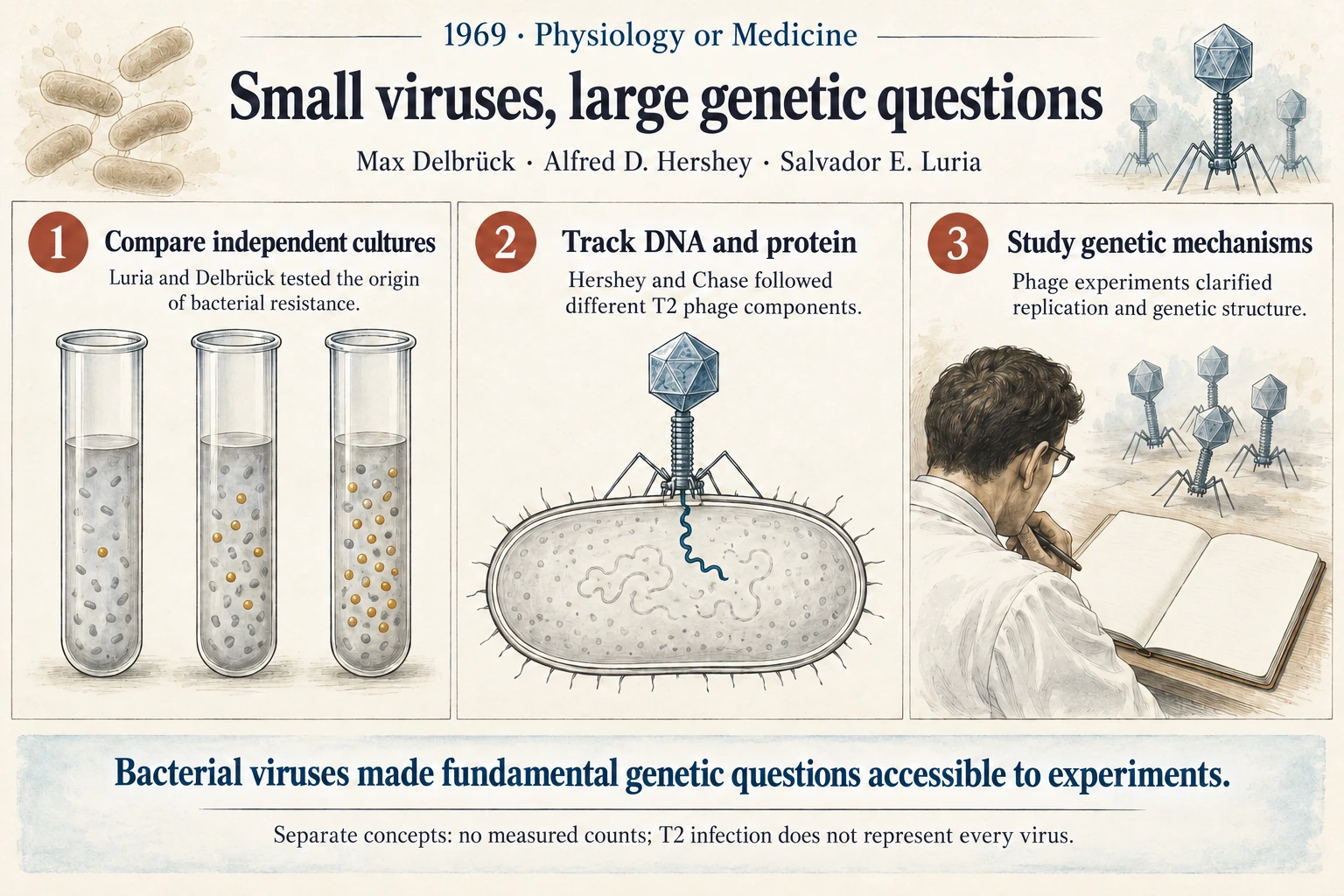
Infographic explaining Small viruses, large genetic questions
Original AI-generated infographic. A conceptual overview; the explanations and sources below provide context.
Read the poster text

Bacterial viruses made fundamental genetic questions accessible to experiments.

  1. Compare independent cultures

    Luria and Delbrück tested the origin of bacterial resistance.

  2. Track DNA and protein

    Hershey and Chase followed different T2 phage components.

  3. Study genetic mechanisms

    Phage experiments clarified replication and genetic structure.

Separate concepts: no measured counts; T2 infection does not represent every virus.

01 · The discovery

The idea, in everyday language

Their phage research combined genetics, statistical reasoning and biochemical experiments. In 1943, Luria and Delbrück found that resistance varied widely across independently grown bacterial cultures. The pattern supported heritable mutations arising independently of the selecting virus in the studied system.

Studies of phage mutations and recombination made genetic mapping possible. Hershey and Martha Chase’s 1952 T2 experiments tracked DNA and sulfur-containing protein separately: most DNA entered bacteria while most labelled coat material remained outside. The results supported DNA’s genetic role.

Why it matters

Simple, experimentally accessible systems helped expose mechanisms that became central to molecular genetics. The informal phage group shared information and materials while pursuing distinct research programmes, contributing to a much wider scientific effort.
02 · The people

Who brought the idea to life?

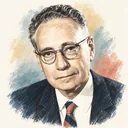
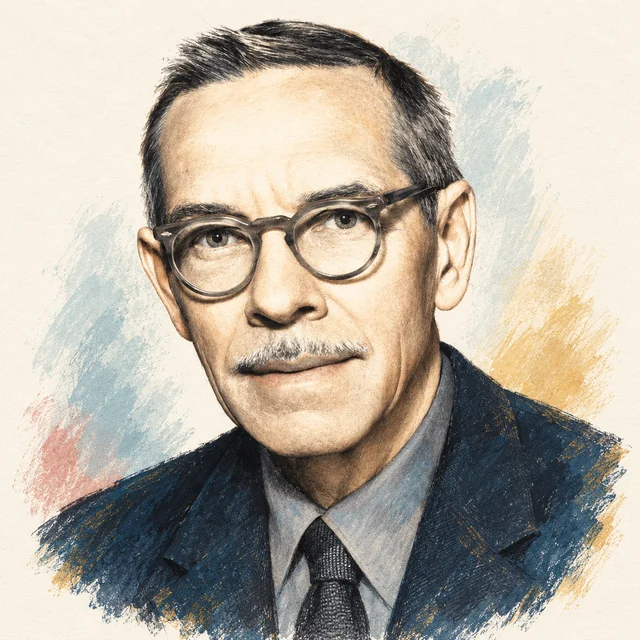
Illustrated portrait of Max Delbrück

Max Delbrück

Prize share · 1/3

Delbrück developed quantitative phage research and, with Luria, tested the origin of bacterial resistance. He received one third of the Medicine Prize.

Read the biography ↗
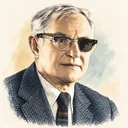
Illustrated portrait of Alfred D. Hershey

Alfred D. Hershey

Prize share · 1/3

Hershey investigated phage genetic structure and, with Martha Chase, DNA’s role in T2 infection. He received one third of the Medicine Prize.

Read the biography ↗

03 · Years in the making

The path here

  1. 1937

    Delbrück begins phage work at Caltech.

  2. 1943

    Luria and Delbrück publish their fluctuation study.

  3. 1946

    Phage mutation and recombination studies reveal genetic structure.

  4. 1952

    Hershey and Chase investigate DNA and protein in T2 infection.

  5. 1969

    The three researchers share the Medicine Prize.

04 · Read further

From the original sources

Original explanations by Curionode, based on the official records below. Biographical details and affiliations refer to the award year.

  1. Official announcement nobelprize.org
  2. Award ceremony speech nobelprize.org
  3. Hershey–Chase original abstract (1952) pmc.ncbi.nlm.nih.gov
  4. Luria–Delbrück original study (1943) digirepo.nlm.nih.gov
  5. Official biography: Max Delbrück nobelprize.org
  6. Official biography: Alfred D. Hershey nobelprize.org
  7. Official biography: Salvador E. Luria nobelprize.org

More in Physiology or Medicine

Browse this subject ↗