c.curionodeThe Nobel Archive

1968 · Physiology or Medicine

Deciphering how RNA guides protein synthesis

Holley, Khorana and Nirenberg clarified the genetic code and its function in protein synthesis through complementary experiments and structural work.

Genetic codeTransfer RNAProtein synthesis
1968Physiology or Medicine

Visual guide

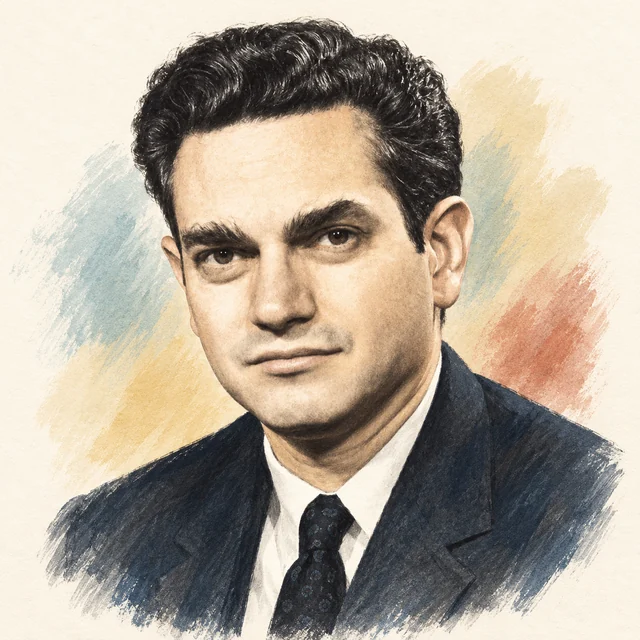
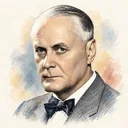
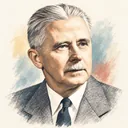
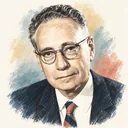
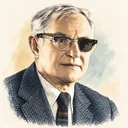
The prize, pictured

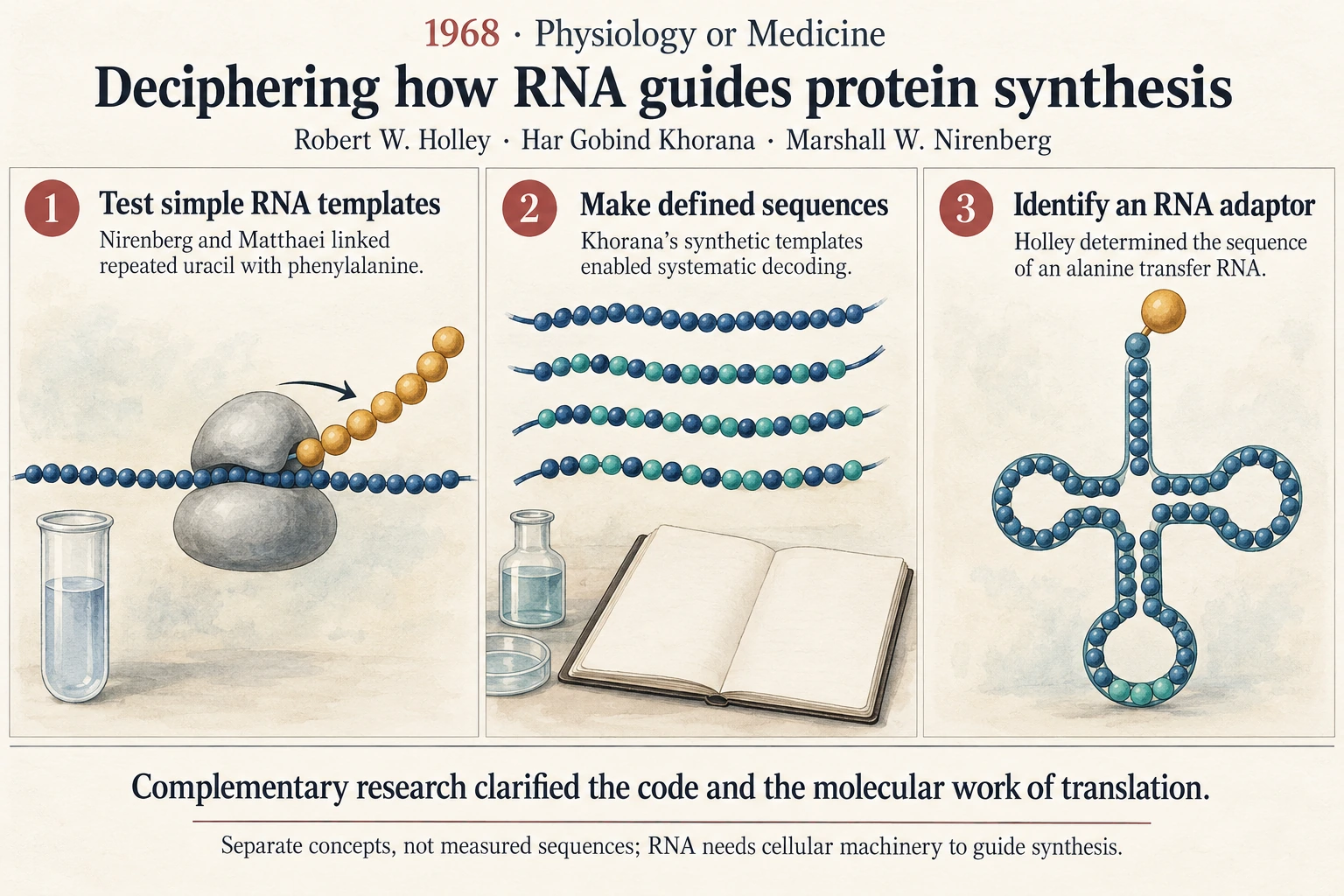
Infographic explaining Deciphering how RNA guides protein synthesis
Original AI-generated infographic. A conceptual overview; the explanations and sources below provide context.
Read the poster text

Complementary research clarified the code and the molecular work of translation.

  1. Test simple RNA templates

    Nirenberg and Matthaei linked repeated uracil with phenylalanine.

  2. Make defined sequences

    Khorana’s synthetic templates enabled systematic decoding.

  3. Identify an RNA adaptor

    Holley determined the sequence of an alanine transfer RNA.

Separate concepts, not measured sequences; RNA needs cellular machinery to guide synthesis.

01 · The discovery

The idea, in everyday language

Nirenberg and Matthaei used a cell-free bacterial system with synthetic RNA. In 1961, repeated uracil in the template directed formation of a phenylalanine-rich chain. This was a crucial clue; the original paper did not yet establish the size of a code unit.

Khorana’s defined nucleic-acid sequences enabled systematic decoding. Holley and collaborators determined the complete sequence of an alanine transfer RNA, an adaptor connecting the RNA message with amino acids. Together with collaborators and other researchers, these contributions explained key relationships in translation.

Why it matters

The work made the relationship between genetic information and protein synthesis experimentally concrete. It became foundational knowledge for molecular biology and later biotechnology, rather than a claim that all inherited traits or diseases had become predictable.

02 · The people

Who brought the idea to life?

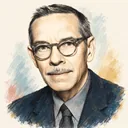
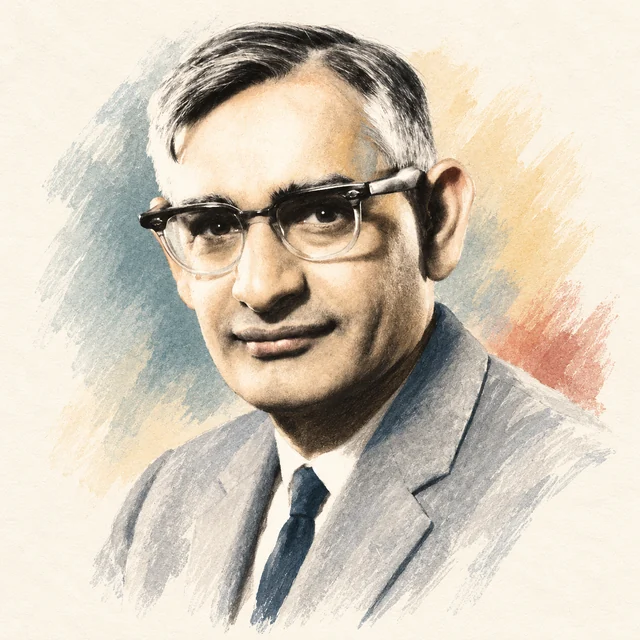
Illustrated portrait of Robert W. Holley

Robert W. Holley

Prize share · 1/3

Holley and collaborators determined the complete sequence of an alanine transfer RNA, clarifying a key adaptor in protein synthesis. He received one third of the Medicine Prize.

Read the biography ↗
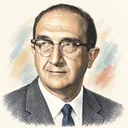
Illustrated portrait of Marshall W. Nirenberg

Marshall W. Nirenberg

Prize share · 1/3

Nirenberg, with Matthaei and other collaborators, used synthetic RNA and cell-free systems to decipher the genetic code. He received one third of the Medicine Prize.

Read the biography ↗

03 · Years in the making

The path here

  1. 1957

    Nirenberg completes his doctorate and begins NIH research.

  2. 1960

    Khorana moves to Wisconsin.

  3. 1961

    Nirenberg and Matthaei report the poly-U experiment.

  4. 1964–1965

    Holley’s alanine tRNA sequence is completed and reported.

  5. 1968

    The three researchers share the Medicine Prize.

04 · Read further

From the original sources

Original explanations by Curionode, based on the official records below. Biographical details and affiliations refer to the award year.

  1. Official award summary nobelprize.org
  2. Award ceremony speech nobelprize.org
  3. Nirenberg–Matthaei original study (1961) njc.rockefeller.edu
  4. NHGRI transfer RNA definition genome.gov
  5. Holley original publication metadata (1965) pubmed.ncbi.nlm.nih.gov
  6. NCBI genetic-code documentation ncbi.nlm.nih.gov
  7. Official biography: Robert W. Holley nobelprize.org
  8. Official biography: Har Gobind Khorana nobelprize.org
  9. Official biography: Marshall W. Nirenberg nobelprize.org

More in Physiology or Medicine

Browse this subject ↗