A life in context
The person behind the prize
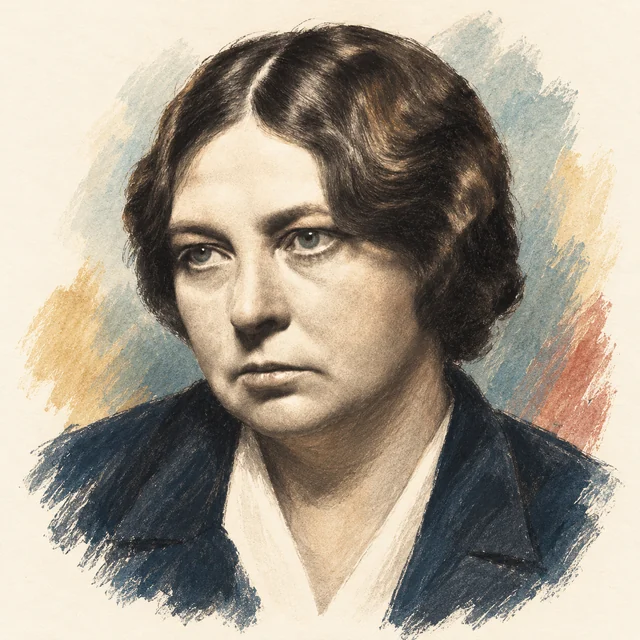
Undset was born in Denmark and grew up in Kristiania, now Oslo, in a family shaped by her father’s archaeological and historical interests. After commercial schooling she worked in an office for a decade, writing outside working hours. Fru Marte Oulie appeared in 1907, followed by another story collection in 1908. Travel, marriage to the painter Anders Castus Svarstad and family responsibilities formed part of her life alongside sustained literary work. She settled in Lillehammer in 1919 and entered the Roman Catholic Church in 1924. Kristin Lavransdatter appeared in three volumes from 1920 to 1922; the Olav Audunssøn novels followed in 1925 and 1927. The full 1928 Literature Prize recognized powerful descriptions of Northern medieval life. Her fourteenth-century setting combined historical knowledge with imagined motives, relationships and choices, rather than reproducing a documentary record. During the Second World War she lived in exile in the United States and supported the Norwegian resistance. She returned to Norway after the war and died in Lillehammer in 1949.
The contribution
Undset received the full Literature Prize, principally for her powerful descriptions of Northern life during the Middle Ages. Her historical novels combined social worlds, religious faith and intimate psychological conflicts.
The idea in plain language
Undset first wrote about contemporary lives before turning to large historical novels. Kristin Lavransdatter, published in three volumes from 1920 to 1922, follows a woman through relationships, family obligations and religious commitments in fourteenth-century Norway. Historical knowledge supplies a social world in which choices have consequences.
Read the full award story ↗

