A life in context
The person behind the prize
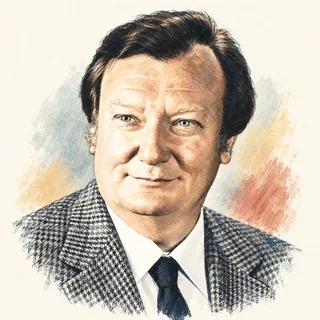
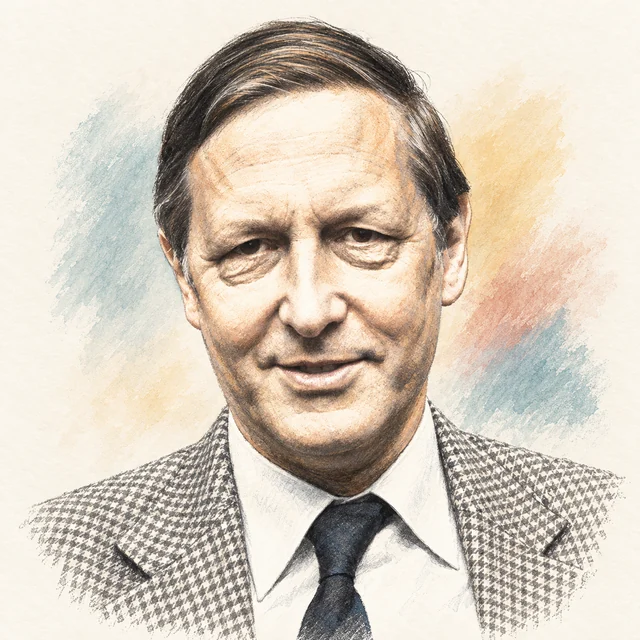
Van der Meer grew up in The Hague and entered Delft after wartime university closures, completing an engineering degree in technical physics in 1952. Work at Philips on electronics and electron microscopes preceded his arrival at CERN in 1956. He designed accelerator components, including focusing equipment for neutrino beams, and worked on magnet power supplies. In 1968 he conceived stochastic cooling; tests at the Intersecting Storage Rings followed in 1974. With colleagues including Frank Sacherer and Lars Thorndahl, the idea became a practical technique. He and Roy Billinge led construction of the Antiproton Accumulator. He retired in 1990. His later honorary doctorates were distinct from his earned engineering degree.
The contribution
Van der Meer developed stochastic cooling, using measurements and corrective fields over repeated beam circuits to reduce energy spread and angular divergence. Dense antiproton beams enabled the collider programme that discovered W and Z bosons. Cooling describes reduced beam disorder, rather than refrigeration or simply reducing every particle’s mean energy. He received one half of the Physics Prize.
The idea in plain language
Electroweak theory predicted heavy W and Z bosons. Producing them required enough collision energy and enough useful collisions. Rubbia, Cline and McIntyre proposed converting CERN’s SPS into a proton–antiproton collider. Antiprotons were difficult to accumulate into sufficiently dense beams.
Read the full award story ↗