A life in context
The person behind the prize
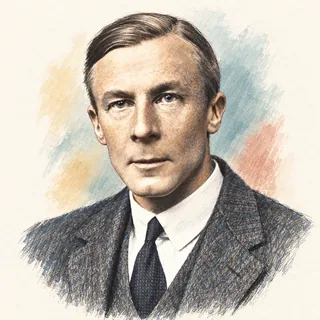
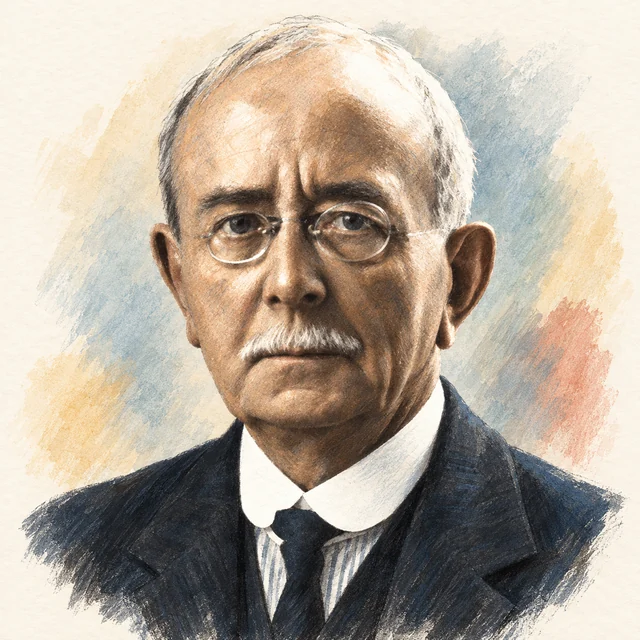
Sherrington trained in medicine and physiology in London and Cambridge, receiving his Cambridge medical degree in 1885. Early work included anatomy, bacteriology and the nervous system. He became professor of physiology in Liverpool in 1895 and moved to Oxford in 1913. Rather than treating each reflex as an isolated mechanical reaction, he investigated how sensory input, excitation and inhibition combine to produce coordinated responses. His work on opposing muscles showed why activating one movement often requires reducing activity in its antagonist. The Integrative Action of the Nervous System, published in 1906, brought these findings into a broad account of nervous function. He shared the 1932 Medicine Prize equally with Adrian. Their contributions were complementary: Sherrington studied how nervous activity is integrated, while Adrian recorded the electrical signals of individual nerve fibres. Sherrington also wrote poetry and later works on the relationship between physiology and human experience.
The contribution
Sherrington received half the Medicine Prize for discoveries concerning neuronal function. His studies of reflexes, reciprocal inhibition and the integration of inputs explained how nervous circuits coordinate muscular activity.
The idea in plain language
A nervous system has to do more than pass a message along a wire: it must combine inputs and produce an appropriate response. Sherrington investigated reflexes, muscle tone and the interaction of opposing muscles. When one muscle group contracts, reduced activation of its antagonist can help the movement proceed. His work on reciprocal inhibition and the summation of inputs showed that reflex pathways form an integrated system rather than a set of independent mechanical triggers.
Read the full award story ↗