A life in context
The person behind the prize
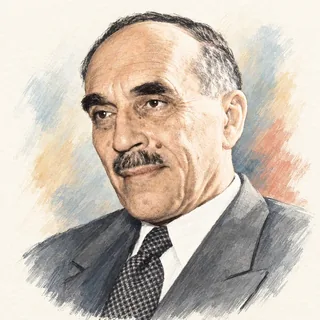
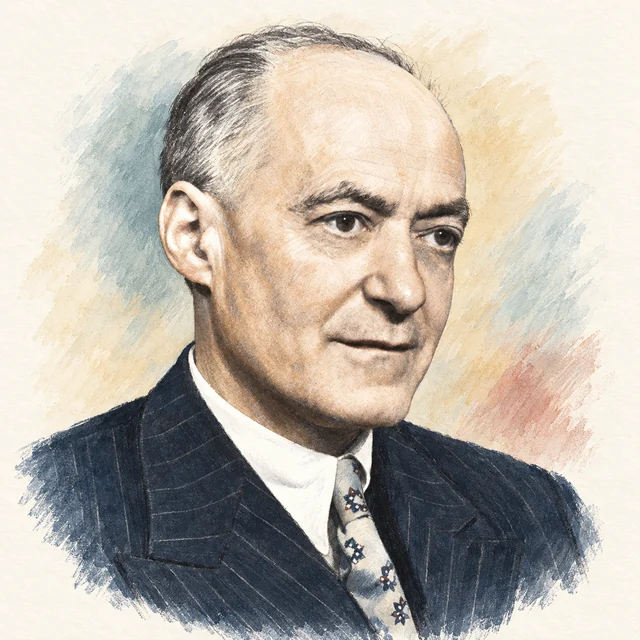
Hinshelwood studied at Oxford and earned Master of Arts and Doctor of Science degrees. He taught at Trinity College from 1921 to 1937 and became Dr Lee’s Professor of Chemistry in 1937. His research investigated how molecular processes determine the rate of chemical change. Studies of gas reactions, including hydrogen and oxygen, examined chain mechanisms and how they compete with other reaction pathways. His 1926 kinetics book helped organise the subject; later research also considered chemical changes in bacterial cells, described in a 1946 book. Elected to the Royal Society in 1929, he was knighted in 1948 and became its president in 1955. He received half of the 1956 Chemistry Prize for research into reaction mechanisms, alongside Semenov. His later Order of Merit in 1960 and Faraday Society presidency in 1961–1962 belong to subsequent history. Reaction mechanisms are more varied than the idea that all chemical changes proceed by chains.
The contribution
Hinshelwood combined kinetic experiments and interpretation to explain chemical reaction mechanisms, including chain reactions and competing pathways. He received one half of the Chemistry Prize.
The idea in plain language
A chemical equation can show starting substances and products without explaining the events in between or the reaction’s rate. Some reactions proceed through reactive intermediates that trigger further steps. Researchers needed to understand how such chains continue and why behaviour changes with conditions.
Read the full award story ↗