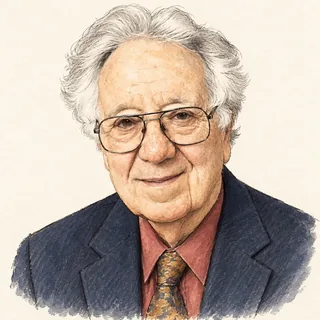
A life in context
The person behind the prize
Evans earned a doctorate in anatomy and embryology at University College London in 1969. His research asked how cells retain or lose the ability to form different tissues during development. He was based at Cardiff University at the time of the prize. That developmental perspective supplied a crucial bridge between altering DNA in a dish and studying an inherited change in an animal.
The contribution
In 1981 Evans established cultures of mouse embryonic stem cells, which could contribute to many tissues, including the germ line. These cells provided the vehicle through which a targeted DNA change could be passed to offspring. He later used gene targeting to develop mouse models of cystic fibrosis. Embryonic stem cells here are experimental mouse cells, not a claim of an established human stem-cell treatment.
The idea in plain language
A gene’s sequence does not by itself tell us everything about its job. Researchers can learn more by changing a chosen gene and comparing the result with an appropriate control. Capecchi and Smithies developed ways to use homologous recombination: introduced DNA with matching regions can exchange sequence with a chosen location in a mammalian chromosome. This is targeted modification rather than adding DNA at an arbitrary position.
Read the full award story ↗