A life in context
The person behind the prize
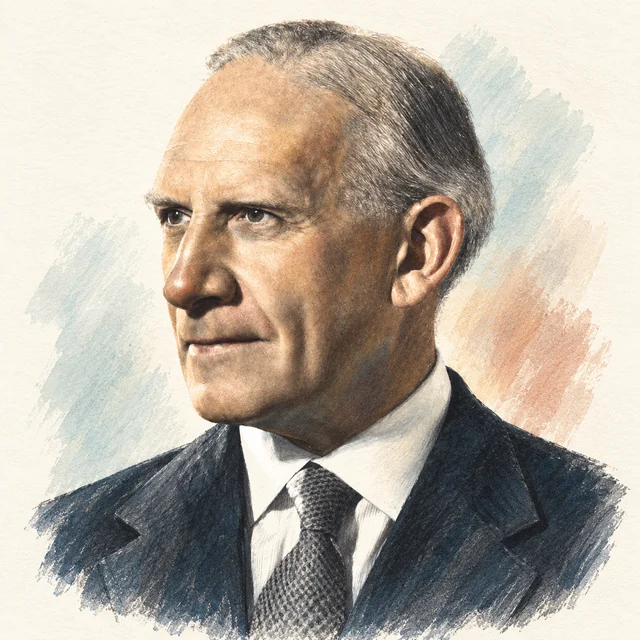
Robinson studied at Manchester, obtaining his BSc in 1906 and DSc in 1910. A professorship in Sydney from 1912 was followed by appointments at Liverpool, St Andrews, Manchester and London, as well as a period in industrial research. In 1930 he became Waynflete professor of chemistry at Oxford, his affiliation for the full 1947 Chemistry Prize. He investigated how complex plant products were arranged and how they might be formed, with particular attention to alkaloids. His 1917 synthesis of tropinone became an influential example of planning a complex structure through a comparatively direct construction. Work on plant pigments, including collaboration with his wife and fellow chemist Gertrude Maud Walsh, formed another part of his research. He was knighted in 1939 and was serving as president of the Royal Society at the time of the award. His 1949 Order of Merit and retirement from the Oxford chair in 1955 belong to later stages of his career.
The contribution
Robinson helped determine the structures and possible formation of important plant products, especially alkaloids. His full Chemistry Prize covered this wider contribution, rather than a single synthesis or proof of every natural biosynthetic pathway.
The idea in plain language
Plants produce substances with striking effects, but knowing a substance exists does not reveal how its atoms are arranged. Robinson investigated the structures of important plant products and considered how relatively simple precursors might be assembled into more complex molecules.
Read the full award story ↗

