A life in context
The person behind the prize
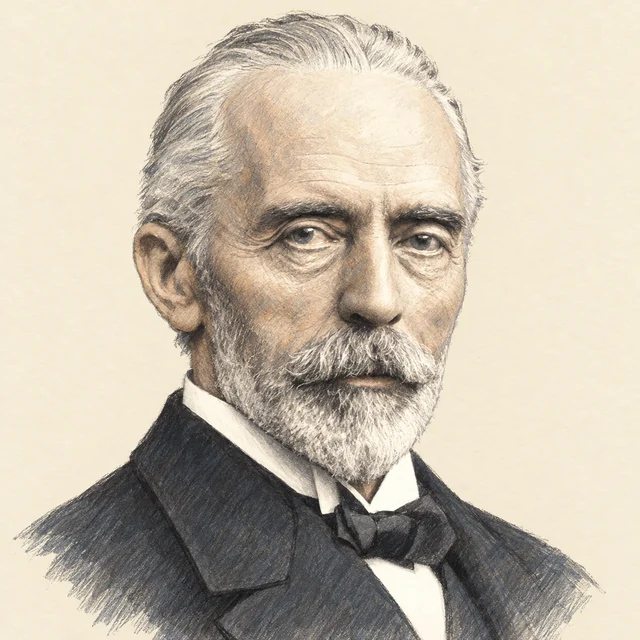
Emil Theodor Kocher trained in medicine in Bern and obtained his doctorate in 1865. After further surgical study and work as an assistant, he became professor of surgery and director of Bern’s surgical clinic in 1872. He promoted antiseptic and later aseptic practice, careful control of bleeding and systematic observation of outcomes. Thyroid operations made a crucial problem visible: patients could recover from the immediate procedure yet later suffer serious deterioration after the whole gland had been removed. In 1883 Kocher presented a detailed follow-up of former patients, comparing the consequences of different extents of removal. Jaques-Louis Reverdin’s observations also contributed, and the two surgeons disputed priority. Kocher’s evidence was important even though his first explanation of the mechanism, based on local circulation and breathing, was incomplete. Continued research connected the gland with internal secretion and metabolism. The full 1909 Physiology or Medicine Prize recognised his work on thyroid physiology, pathology and surgery. His wider surgical career included teaching, instruments and an influential textbook; the award was not simply for one clamp or operating technique. In 1912 he donated money for biological research at his university. He died in Bern in 1917. Modern hormone replacement changes the context of thyroid removal, so historical recommendations should not be treated as rules for every operation today.
The contribution
Kocher received the full Medicine Prize for work on the thyroid gland. Improving surgery and following patients afterwards helped show that technical recovery did not necessarily preserve the gland’s essential physiological function.
The idea in plain language
A goitre is an enlarged thyroid, not a single diagnosis or proof that the gland has no useful function. In the nineteenth century a large enlargement could obstruct nearby structures, while surgery itself carried major risks. Kocher improved operative care, but successful wound healing did not settle whether the intervention had been successful for the patient.
Read the full award story ↗