A life in context
The person behind the prize
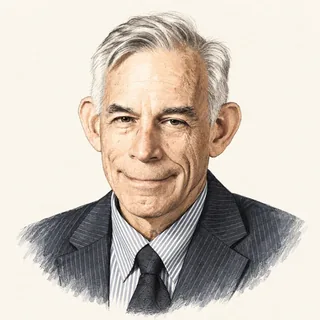
Sargent studied at the University of California, Berkeley and received his doctorate from Harvard in 1968. His academic career included Minnesota, Chicago and Stanford before he joined New York University in 2002. He investigated how economic decisions depend on expectations, and how historical data can be used to assess models in which households, firms and policymakers respond to one another.
The contribution
Sargent developed methods for constructing, solving and estimating structural models that incorporate expectations. Such models allow researchers to investigate systematic changes in policy rules, rather than assume that relationships measured under an old policy will remain unchanged. His empirical work also examined inflation, policy transitions and learning.
The idea in plain language
A central bank may raise interest rates because inflation is expected to rise. If inflation then rises, a simple correlation does not show that the rate increase caused it. Policy responds to the economy while also influencing it, and people act on expectations of future policy. Sargent developed structural models that incorporate those expectations and can be estimated with historical data. They allow researchers to examine how a systematic change in policy rules might alter behaviour.
Read the full award story ↗