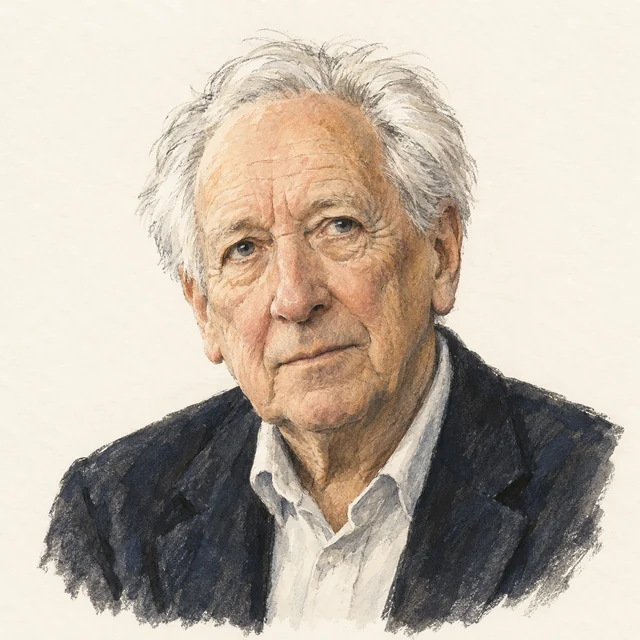
A life in context
The person behind the prize
Tranströmer grew up in Stockholm and studied literature, religion and psychology, completing his degree in 1956. Alongside poetry, he worked as a psychologist, including at a youth correctional institution and the Labour Market Institute in Västerås. His first collection, 17 Poems, appeared in 1954. A stroke in 1990 severely affected speech and movement, but his literary work continued in increasingly concentrated forms.
The contribution
Tranströmer used precise, unexpected images to connect everyday surroundings with memory, inner life and a sense of what exceeds ordinary explanation. Nature and music recur throughout his poetry. The award recognised the way his compressed language can alter a reader’s perception, rather than a single argument, scientific discovery or prescribed interpretation.
The idea in plain language
A road, a room, a tree or a piece of music can become more than background in Tranströmer’s poetry. Precise images bring ordinary perception into contact with memory, dreams and inner experience. The poems often begin with something concrete and then move, through a surprising connection, into a different way of sensing the scene.
Read the full award story ↗

