c.curionodeThe Nobel Archive

2011 · Literature

A few images can change what we see

Tranströmer’s concentrated poetry makes the familiar world open onto unexpected meanings.

poetryimageryattention
2011Literature

Visual guide

The prize, pictured

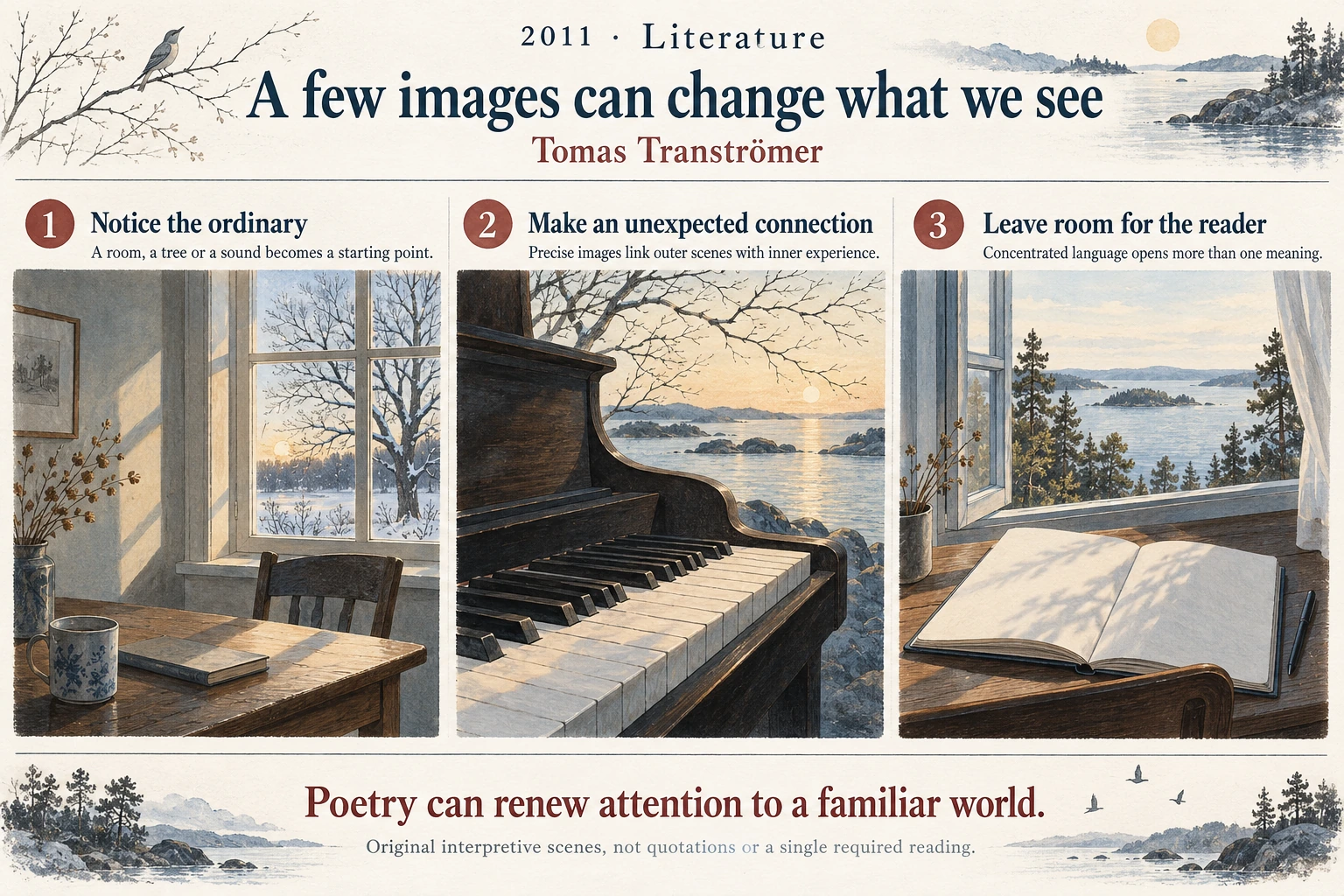
Infographic explaining A few images can change what we see
Original AI-generated infographic. A conceptual overview; the explanations and sources below provide context.
Read the poster text

Poetry can renew attention to a familiar world.

  1. Notice the ordinary

    A room, a tree or a sound becomes a starting point.

  2. Make an unexpected connection

    Precise images link outer scenes with inner experience.

  3. Leave room for the reader

    Concentrated language opens more than one meaning.

Original interpretive scenes, not quotations or a single required reading.

01 · The contribution

The idea, in everyday language

A road, a room, a tree or a piece of music can become more than background in Tranströmer’s poetry. Precise images bring ordinary perception into contact with memory, dreams and inner experience. The poems often begin with something concrete and then move, through a surprising connection, into a different way of sensing the scene.

This effect depends on compression. A short poem can leave space between its images for the reader to make connections, without explaining away every mystery. Nature and music recur, but the poems are not simply landscape descriptions or illustrations of musical works. Their language changes the relationship between what is seen and what is felt.

Why it matters

The prize recognised a body of poetry whose clarity of image coexists with openness of meaning. Tranströmer’s work travelled widely through translation and influenced readers beyond Swedish. Its contribution is artistic: it offers new possibilities of attention and expression, rather than an experimentally demonstrated account of how perception works.

02 · The people

Who brought the idea to life?

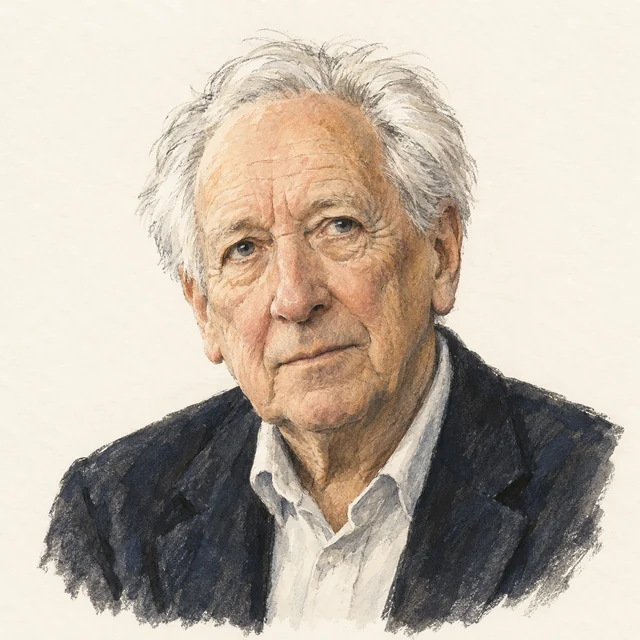
Illustrated portrait of Tomas Tranströmer

Tomas Tranströmer

Prize share · 1/1

Tranströmer used precise, unexpected images to connect everyday surroundings with memory, inner life and a sense of what exceeds ordinary explanation. Nature and music recur throughout his poetry. The award recognised the way his compressed language can alter a reader’s perception, rather than a single argument, scientific discovery or prescribed interpretation.

Read the biography ↗

03 · Years in the making

The path here

  1. 1954

    Tranströmer publishes his first collection, 17 Poems.

  2. 1974

    Baltics connects family history, place and memory.

  3. 2004

    The Great Enigma continues his movement toward highly concentrated poetic forms.

04 · Read further

From the original sources

Original explanations by Curionode, based on the official records below. Biographical details and affiliations refer to the award year.

  1. Official award announcement nobelprize.org
  2. Official biobibliography nobelprize.org

More in Literature

Browse this subject ↗