A life in context
The person behind the prize
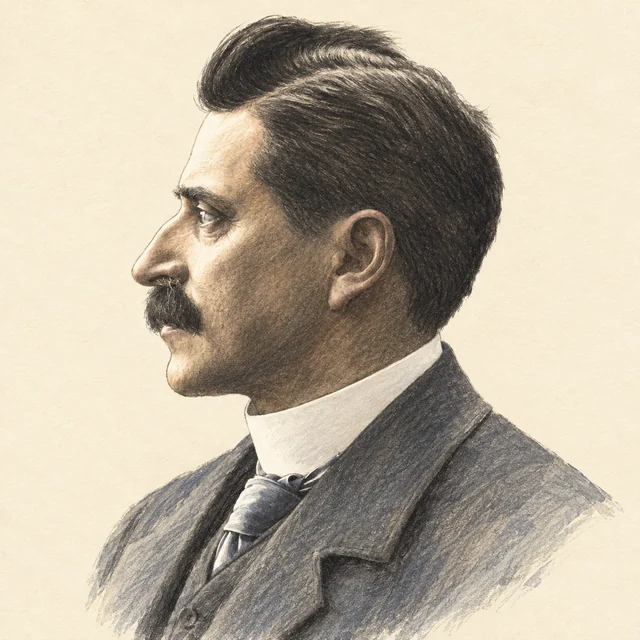
Heidenstam was born at Olshammar beside Lake Vättern and grew up partly in Stockholm. Travel in the eastern Mediterranean and southern Europe, followed by periods in Rome, Paris and Switzerland, shaped his early life. He initially studied painting, but writing increasingly became his vocation. His first poetry collection, Vallfart och vandringsår, appeared in 1888. Its imaginative freedom, colour and attention to individual experience helped challenge the prevailing naturalist literary programme. Renässans, published in 1889, made that challenge explicit; a satire written with Oscar Levertin followed in 1890. His later writing extended beyond an early celebration of beauty. Dikter in 1895 and Nya dikter in 1915 included more inward and reflective poetry. In prose, Karolinerna, published in 1897–1898, and Folkungaträdet, published in 1905–1907, reimagined parts of Sweden’s past. These are literary constructions of history, not neutral transcripts of the events they portray. Heidenstam entered the Swedish Academy in 1912 and received the full 1916 Literature Prize while already a member. The award recognised his significance for a new phase of Swedish literature rather than naming one book as its sole object. Sweden is the residence recorded for the award. He moved into his final home at Övralid in 1925 and died there in 1940. His memoir När kastanjerna blommade appeared posthumously in 1941.
The contribution
Heidenstam received the full Literature Prize for his role in renewing Swedish literature. His poetry and historical prose offered alternatives to the dominant naturalist programme, using imagination, form, individual experience and interpretations of the national past.
The idea in plain language
At the end of the nineteenth century, Heidenstam challenged the literary dominance of realism and naturalism. Vallfart och vandringsår, published in 1888, made room for vivid images, sensual experience and imaginative freedom. His polemical Renässans followed in 1889. This was a debate about what literature could do, not proof that realism had become artistically worthless.
Read the full award story ↗

