A life in context
The person behind the prize
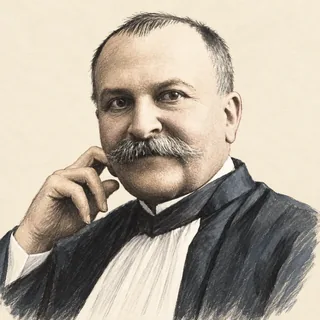
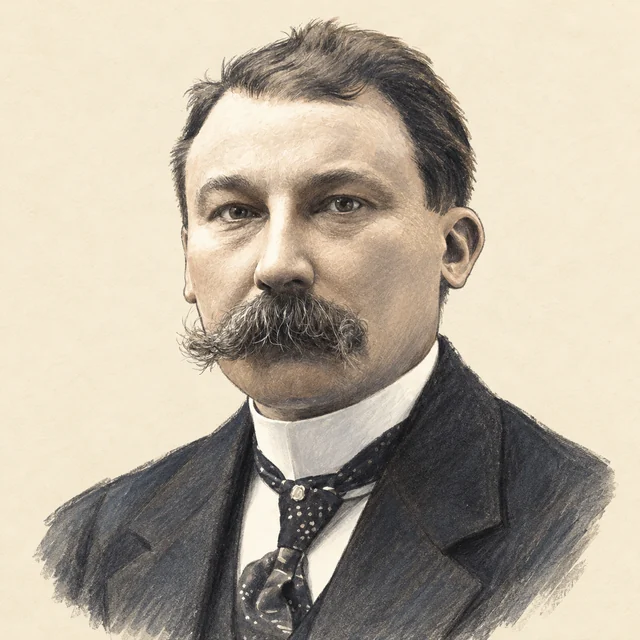
Victor Grignard began with mathematics, receiving his licence in Lyon in 1894, before entering chemical laboratory work. Working first with Louis Bouveault and then Philippe Barbier brought him into organic chemistry. Following Barbier’s work on organomagnesium chemistry, he developed reagents that provided a practical way to form new carbon–carbon bonds. The discovery was communicated to the French Academy of Sciences in 1900, and his doctoral thesis followed in 1901. Grignard expanded the reagents’ uses through studies of many classes of organic compounds. He taught in Besançon and Lyon before moving to Nancy in 1909, becoming professor of organic chemistry there in 1910. Nancy was his affiliation for the 1912 prize. His half of the prize recognised the reagent named after him; Sabatier’s half recognised a different method, catalytic hydrogenation. During the First World War, Grignard worked on chemical problems for the military, including chemical warfare, and travelled to the United States. He returned to Lyon as professor in 1919 and later directed its industrial chemistry school. He died in 1935, leaving a major organic chemistry reference project that collaborators continued.
The contribution
Grignard received half the Chemistry Prize for the organomagnesium reagents named after him. They supplied versatile ways to build larger organic structures by forming carbon–carbon bonds; the reagent takes part chemically rather than acting as an unchanged catalyst.
The idea in plain language
Organic synthesis requires ways both to build a molecular framework and to change the bonds within it. Grignard’s reagents made new carbon–carbon connections accessible across many useful transformations. Their reactive carbon-containing groups participate in the chemical change. Barbier’s earlier research helped set the problem that Grignard developed into a widely used method.
Read the full award story ↗