01 · The discovery
The idea, in everyday language
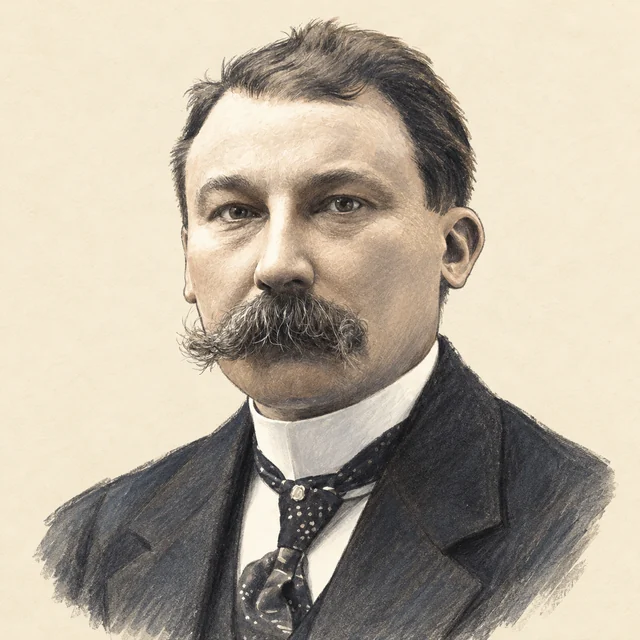
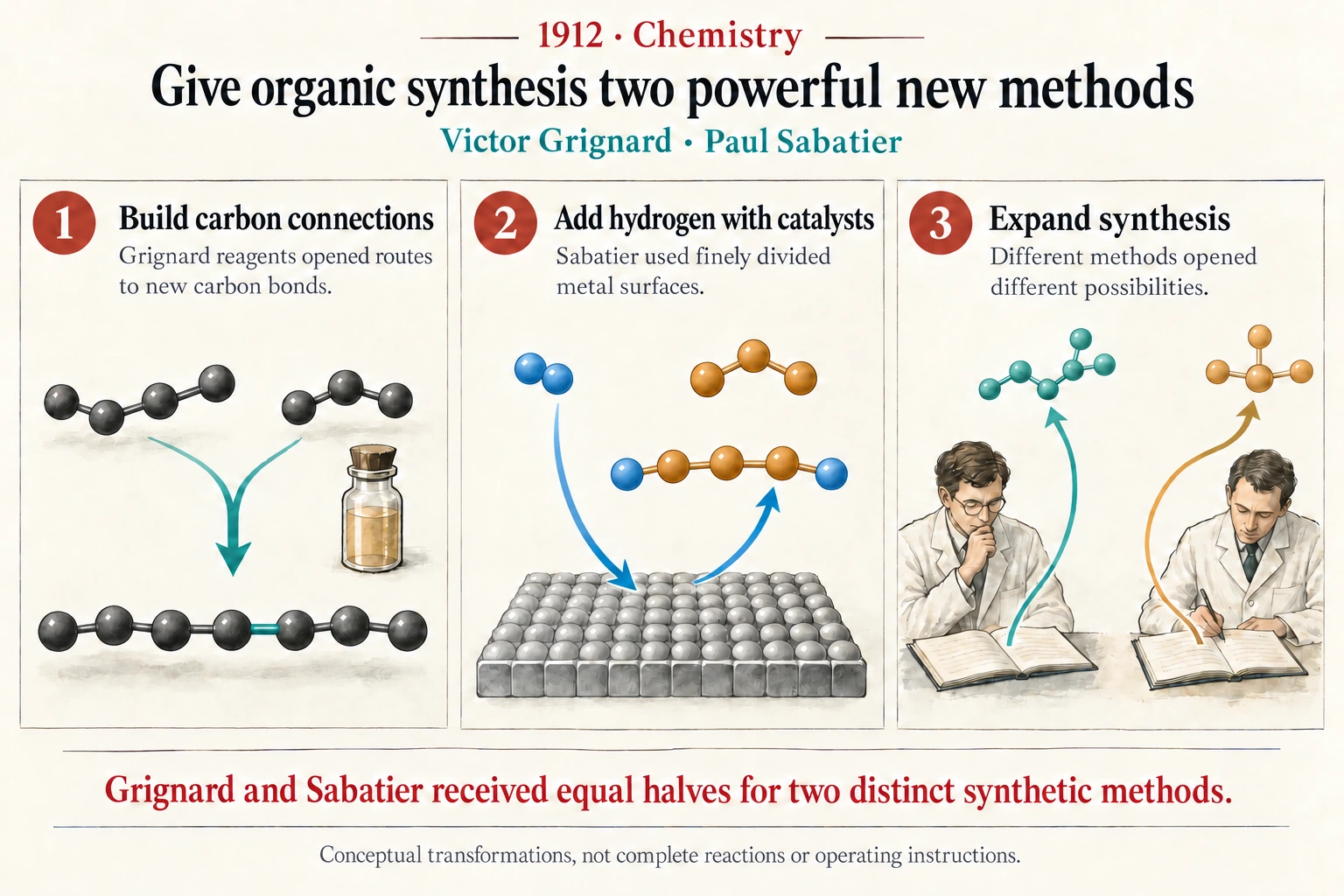
Organic synthesis requires ways both to build a molecular framework and to change the bonds within it. Grignard’s reagents made new carbon–carbon connections accessible across many useful transformations. Their reactive carbon-containing groups participate in the chemical change. Barbier’s earlier research helped set the problem that Grignard developed into a widely used method.
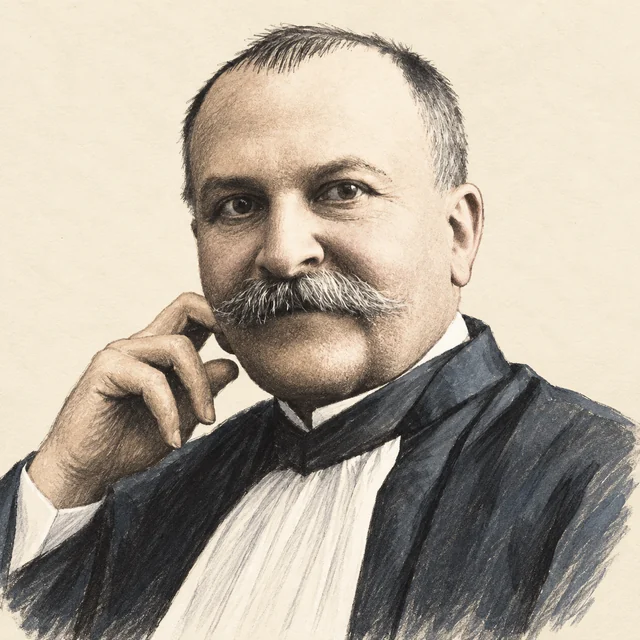
Sabatier’s route addressed a different transformation: adding hydrogen to organic compounds with the help of metal catalysts, especially nickel. Finely divided metal provides accessible surface where reactants can interact. His work with Senderens and other collaborators showed how carefully prepared catalysts could make such reactions useful. Hydrogen enters the products; the catalyst supports repeated cycles rather than serving as the carbon-containing reagent. Each laureate received one half for his own method.
Why it matters
Both methods widened the range of compounds chemists could prepare and investigate. Their influence came from being useful across many studies, with later refinements, rather than offering a single universal recipe for every organic molecule.