A life in context
The person behind the prize
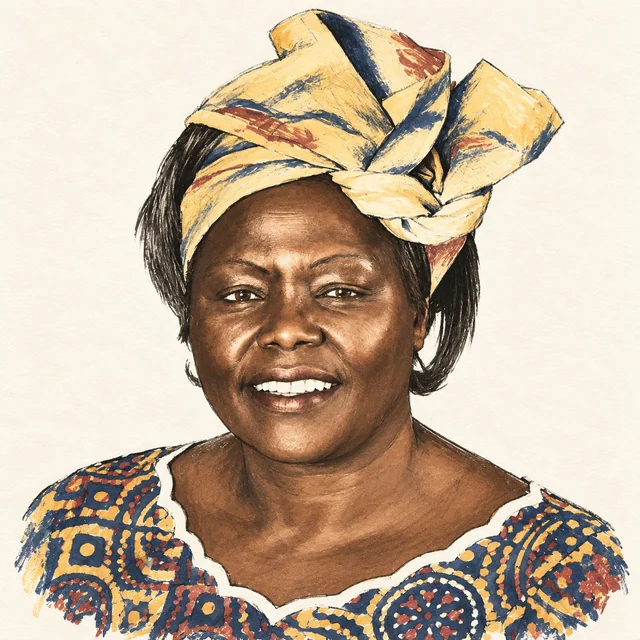
Maathai studied biological sciences in Kansas, earned a master’s degree in Pittsburgh in 1966 and completed her doctorate at the University of Nairobi in 1971. She taught veterinary anatomy and became involved in the National Council of Women of Kenya. Listening to rural women connected her scientific background with practical concerns about fuel, water, soil and livelihoods.
The contribution
Maathai founded the Green Belt Movement in 1977, mobilising women and communities to grow and plant trees while strengthening local participation. Her work linked environmental protection with women’s rights, accountability and democratic freedoms. The 2004 prize honoured this wider relationship between sustainable development and peace. Maathai was the individual laureate; the movement provided a collective setting for much of the work.
The idea in plain language
For rural communities, environmental damage can mean longer journeys for fuel and water, poorer soil and more fragile livelihoods. Maathai listened to women describing these pressures and connected practical tree planting with wider questions of who controls resources and whose voice is heard. The Green Belt Movement, founded in 1977, organised nurseries and planting through community participation.
Read the full award story ↗

