c.curionodeThe Nobel Archive

2004 · Peace

Planting trees, strengthening communities

Environmental care became a practical route into livelihoods, women’s participation and democratic rights.

Green Belt Movementenvironmentwomen’s participationdemocracy
2004Peace

Visual guide

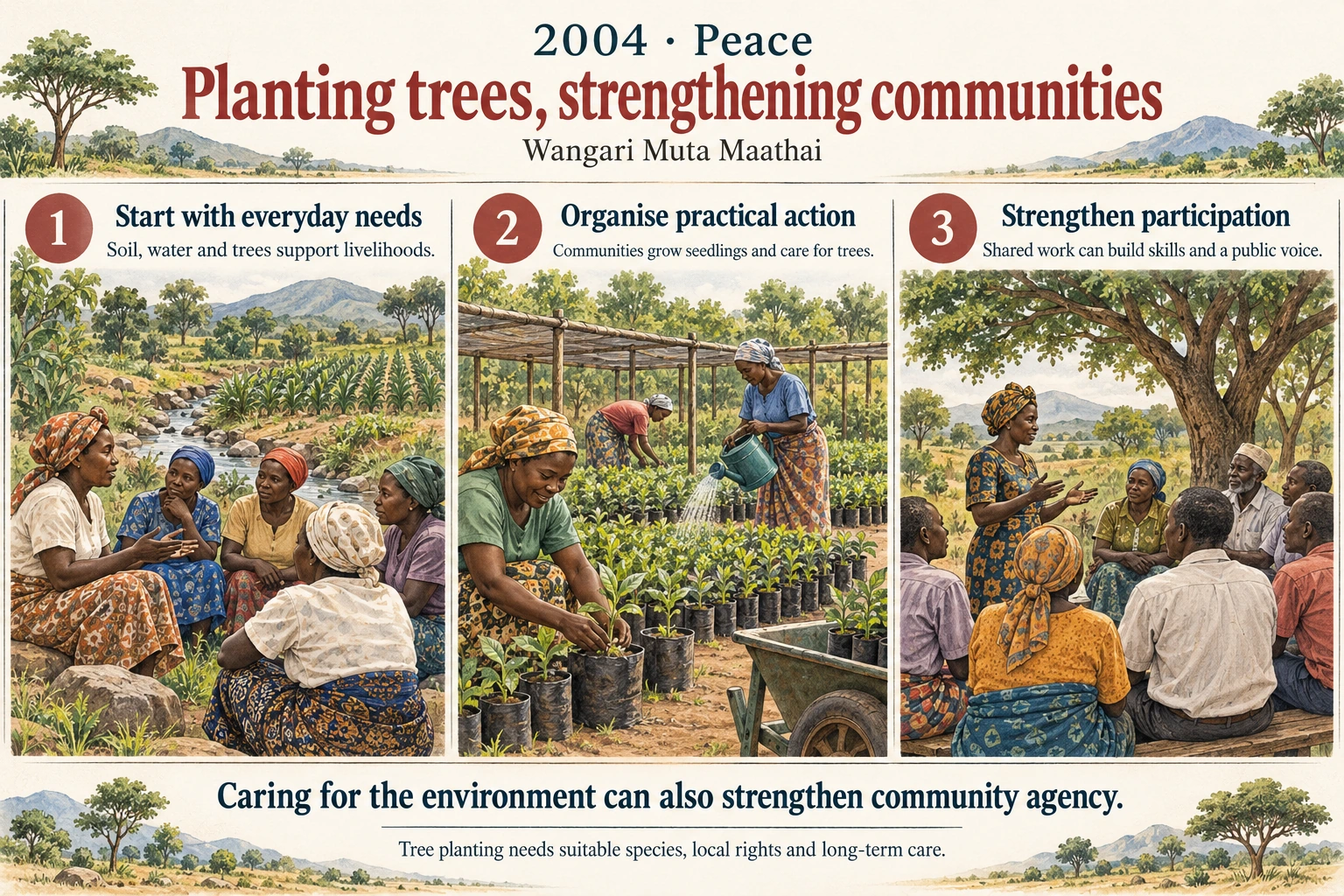
The prize, pictured

Infographic explaining Planting trees, strengthening communities
Original AI-generated infographic. A conceptual overview; the explanations and sources below provide context.
Read the poster text

Caring for the environment can also strengthen community agency.

  1. Start with everyday needs

    Soil, water and trees support livelihoods.

  2. Organise practical action

    Communities grow seedlings and care for trees.

  3. Strengthen participation

    Shared work can build skills and a public voice.

Tree planting needs suitable species, local rights and long-term care.

01 · The contribution

The idea, in everyday language

For rural communities, environmental damage can mean longer journeys for fuel and water, poorer soil and more fragile livelihoods. Maathai listened to women describing these pressures and connected practical tree planting with wider questions of who controls resources and whose voice is heard. The Green Belt Movement, founded in 1977, organised nurseries and planting through community participation.

Growing a seedling was part of a larger process: learning skills, working together and developing confidence to question decisions affecting shared land and resources. Maathai’s environmental work also became linked with opposition to corruption and the defence of democratic freedoms. The Peace Prize recognised the connection she drew between sustainable development, democracy and peace.

Why it matters

The movement made environmental restoration something communities could help organise rather than simply receive from distant institutions. Women’s participation was central, and the approach drew international attention to links between resource security and public accountability. Maathai became the first African woman awarded the Nobel Peace Prize, widening discussion of the conditions that support a durable peace.

02 · The people

Who brought the idea to life?

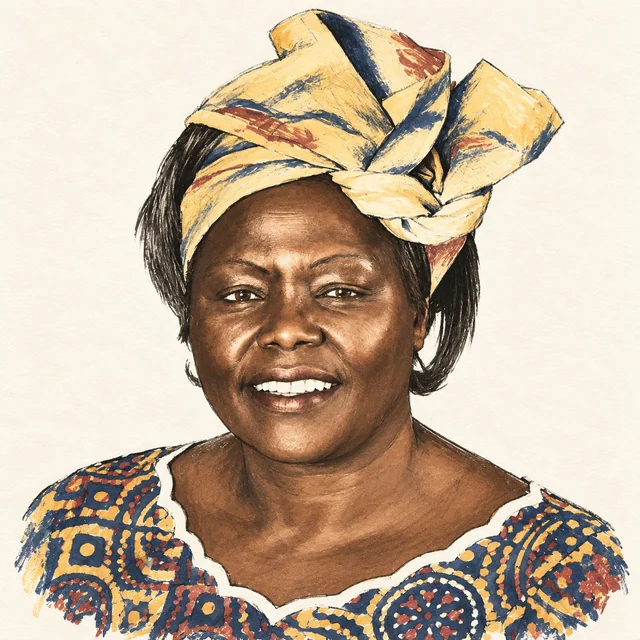
Illustrated portrait of Wangari Muta Maathai

Wangari Muta Maathai

Prize share · 1/1

Maathai founded the Green Belt Movement in 1977, mobilising women and communities to grow and plant trees while strengthening local participation. Her work linked environmental protection with women’s rights, accountability and democratic freedoms. The 2004 prize honoured this wider relationship between sustainable development and peace. Maathai was the individual laureate; the movement provided a collective setting for much of the work.

Read the biography ↗

03 · Years in the making

The path here

  1. 1971

    Maathai completed her doctorate at the University of Nairobi.

  2. 1977

    She founded the Green Belt Movement.

  3. 2004

    The Peace Prize recognised sustainable development, democracy and peace.

04 · Read further

From the original sources

Original explanations by Curionode, based on the official records below. Biographical details and affiliations refer to the award year.

  1. Official announcement nobelprize.org