c.curionodeThe Nobel Archive

2003 · Peace

Making rights matter in everyday lives

Shirin Ebadi used legal work, education and nonviolent advocacy to defend democracy and human rights.

human rightswomenchildrennonviolence
2003Peace

Visual guide

The prize, pictured

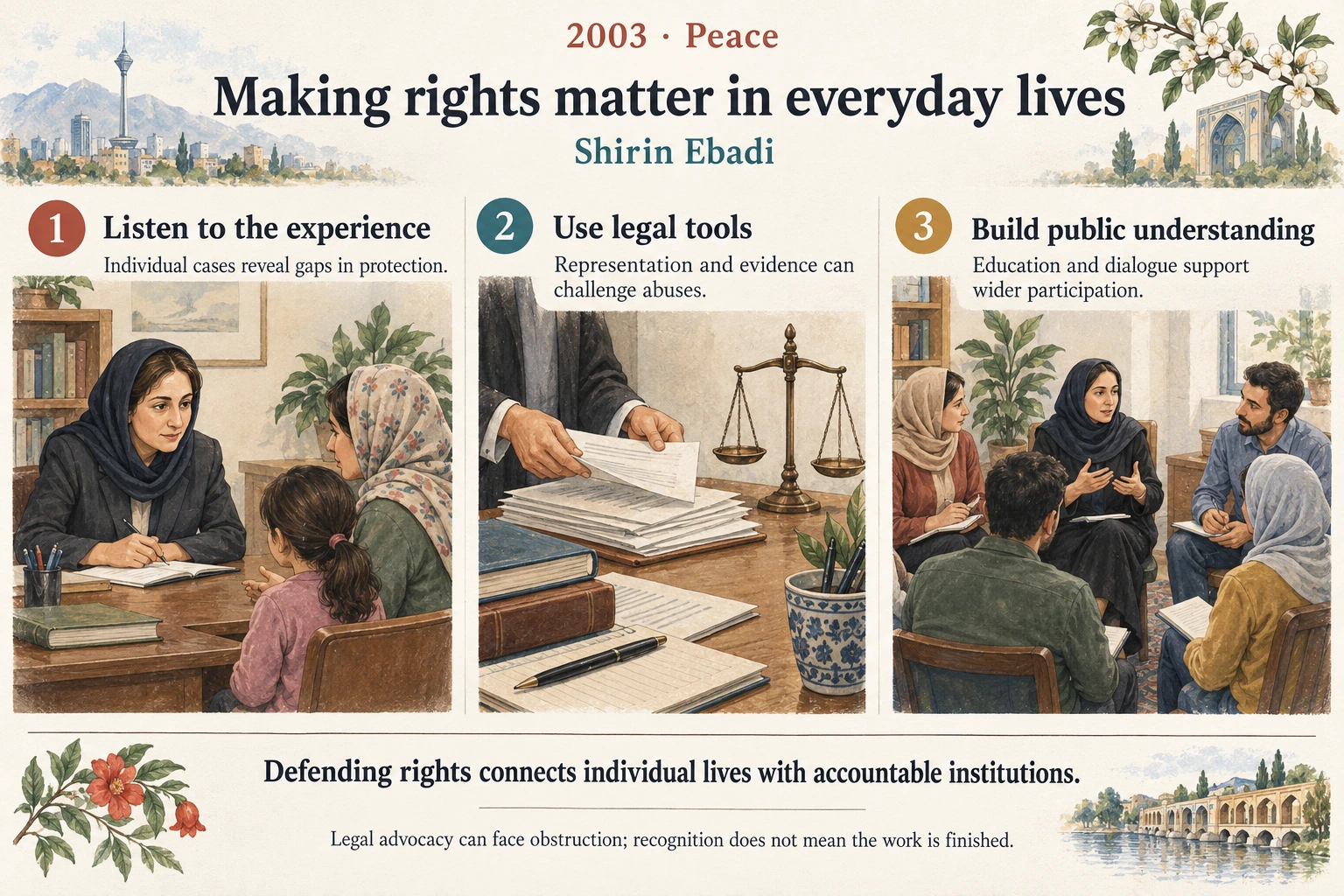
Infographic explaining Making rights matter in everyday lives
Original AI-generated infographic. A conceptual overview; the explanations and sources below provide context.
Read the poster text

Defending rights connects individual lives with accountable institutions.

  1. Listen to the experience

    Individual cases reveal gaps in protection.

  2. Use legal tools

    Representation and evidence can challenge abuses.

  3. Build public understanding

    Education and dialogue support wider participation.

Legal advocacy can face obstruction; recognition does not mean the work is finished.

01 · The contribution

The idea, in everyday language

Rights written into principles matter only when people can invoke them in real situations. Ebadi worked with women, children and families whose experiences exposed gaps between formal promises and actual protection. Individual cases could make discrimination or abuse visible, while legal knowledge helped people describe and challenge what had happened.

Her work extended beyond the courtroom. Writing, teaching and participation in rights organisations connected particular cases with broader questions about law and public accountability. The Nobel Committee recognised a sustained effort for democracy and human rights, especially the rights of women and children, pursued through nonviolent advocacy and dialogue.

Why it matters

Ebadi’s work drew international attention to rights advocacy within Iran and to the agency of women defending their communities. It also illustrated how professional legal work can connect with public education and democratic participation. The prize offered recognition and visibility to an ongoing effort, rather than certifying that a political transition had been completed.
02 · The people

Who brought the idea to life?

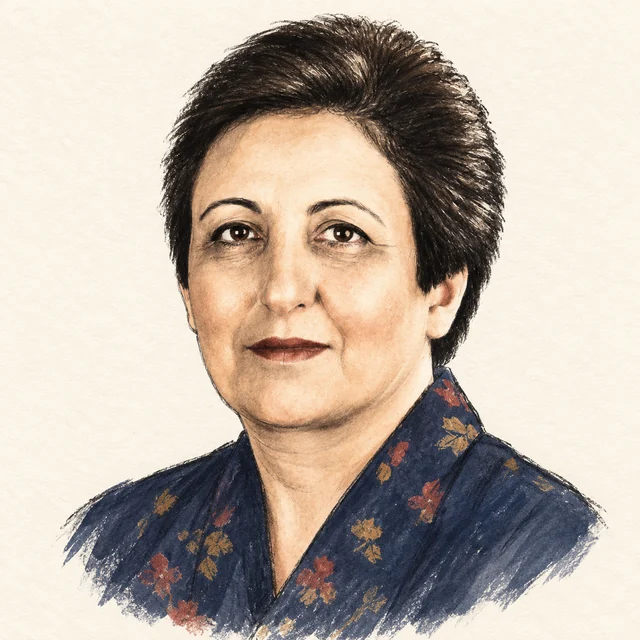
Illustrated portrait of Shirin Ebadi

Shirin Ebadi

Prize share · 1/1

Ebadi combined representation in individual cases with public education and proposals for legal change. She helped establish organisations supporting children’s rights and human-rights defence. The 2003 prize recognised her sustained nonviolent work for democracy and human rights, including dialogue across religious and cultural divisions. The award honoured her advocacy; it did not mean that the problems she confronted had been resolved.

Read the biography ↗

03 · Years in the making

The path here

  1. 1969

    Ebadi began serving as a judge in Iran.

  2. 1992

    After years away from judicial office, she obtained a licence to practise law.

  3. 2003

    The Peace Prize recognised her work for democracy and human rights.

04 · Read further

From the original sources

Original explanations by Curionode, based on the official records below. Biographical details and affiliations refer to the award year.

  1. Official announcement nobelprize.org