A life in context
The person behind the prize
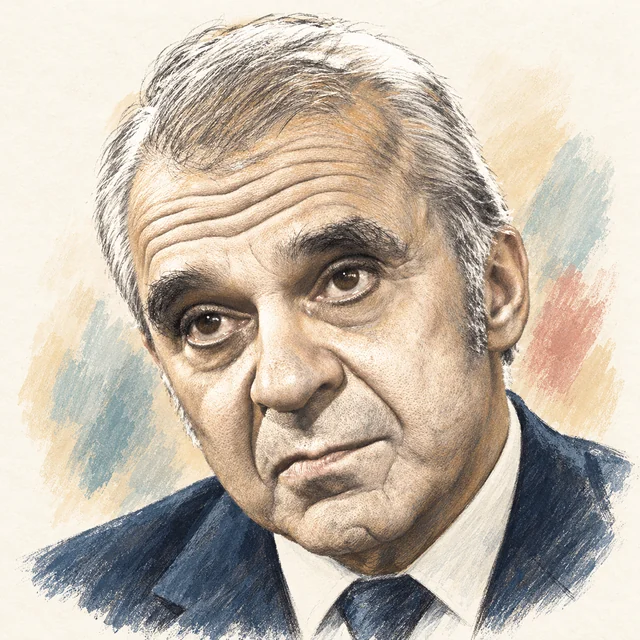
Leontief grew up in St Petersburg, where his father taught economics. He studied at Leningrad and Berlin, worked at Kiel and spent a period advising China’s railways. Moving to the United States in 1931, he joined the National Bureau of Economic Research and then Harvard. He sought an economic theory that could be implemented with observed interindustry transactions. Tables for the American economy connected industries’ purchases and sales, and his 1941 book developed the method. He organised Harvard’s Economic Research Project in 1948 and directed it until 1973. Later work considered environmental disruption and growth. The birth information here follows the correction in his Nobel biography: 1905 in Munich; the facts page retains 1906 in St Petersburg. His award-year affiliation was Harvard.
The contribution
Leontief developed and applied input-output analysis to trace interdependence between economic sectors. He received the entire Economic Sciences memorial prize.
The idea in plain language
An industry buys materials, energy and services while selling output to other industries or final users. Input-output tables record these interindustry deliveries. Under specified technical coefficients, a change in final demand implies additional output not only in the directly supplying sector but also in its suppliers and their suppliers.
Read the full award story ↗