A life in context
The person behind the prize
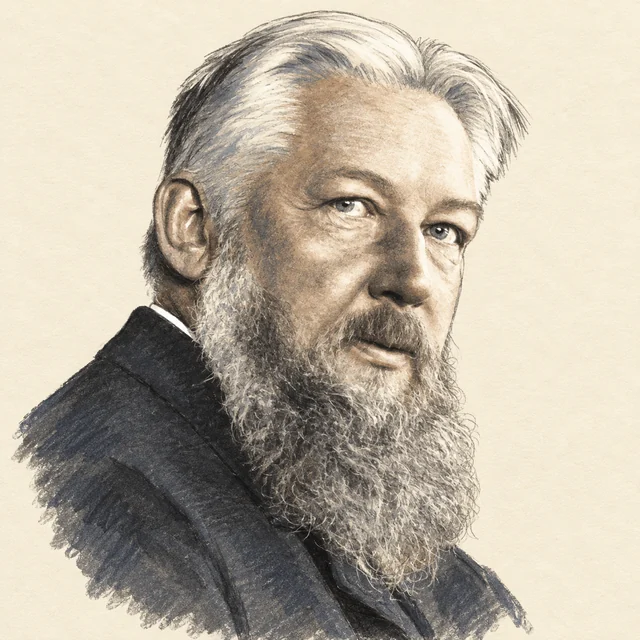
Wilhelm Ostwald studied chemistry at Dorpat, now Tartu, after growing up in Riga. Work with Arthur von Oettingen and Carl Schmidt drew him towards problems linking chemical composition with physical measurement. After teaching in Dorpat and Riga, he became professor of physical chemistry in Leipzig in 1887. Measurements of acids, bases, conductivity and reaction speeds helped make chemical change a quantitative subject. His work on catalysis clarified how a substance could alter the speed of a reaction without becoming a net end-product, while his research also addressed equilibrium and the dilution of weak electrolytes. He helped establish a research community through teaching, textbooks and the journal of physical chemistry established in 1887. Ostwald’s other interests included scientific organisation, philosophy and the standardisation of colour. His energetic view of nature was a historical philosophical programme, not a modern substitute for molecular chemistry. He retired from the Leipzig chair in 1906 and received the full Chemistry Prize in 1909 for catalysis, chemical equilibria and reaction rates. Later colour studies and cultural projects continued at his home near Leipzig. He died in 1932. Modern accounts distinguish catalysts that accelerate reactions from inhibitors that slow them, rather than retaining every term used in the 1909 presentation.
The contribution
Ostwald received the full Chemistry Prize for catalysis and fundamental work on chemical equilibria and reaction rates. Measurement helped distinguish how fast change occurs from the equilibrium towards which a system moves.
The idea in plain language
Some reactions proceed so slowly that little appears to happen during an observation. A catalyst can make a reaction faster while being regenerated in the overall process. It may participate in intermediate steps; being absent from the net end-products does not mean that it never interacts with the reacting substances. Ostwald studied rates, acid and base action and conductivity to bring such effects into quantitative physical chemistry.
Read the full award story ↗

