01 · The discovery
The idea, in everyday language
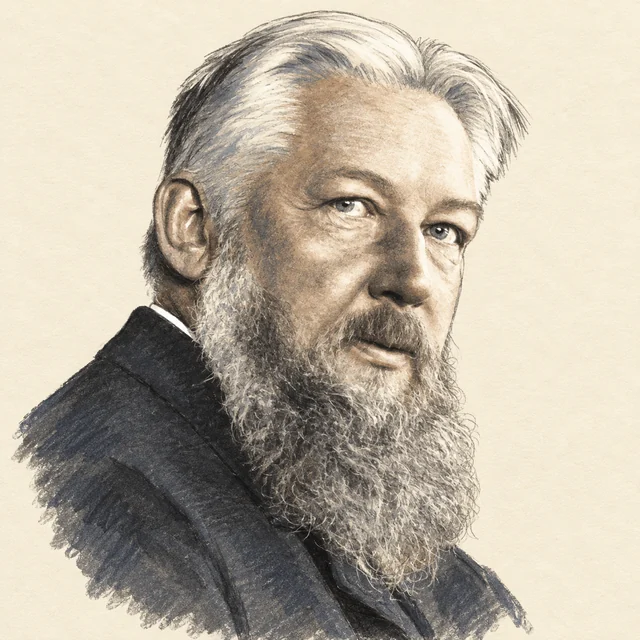
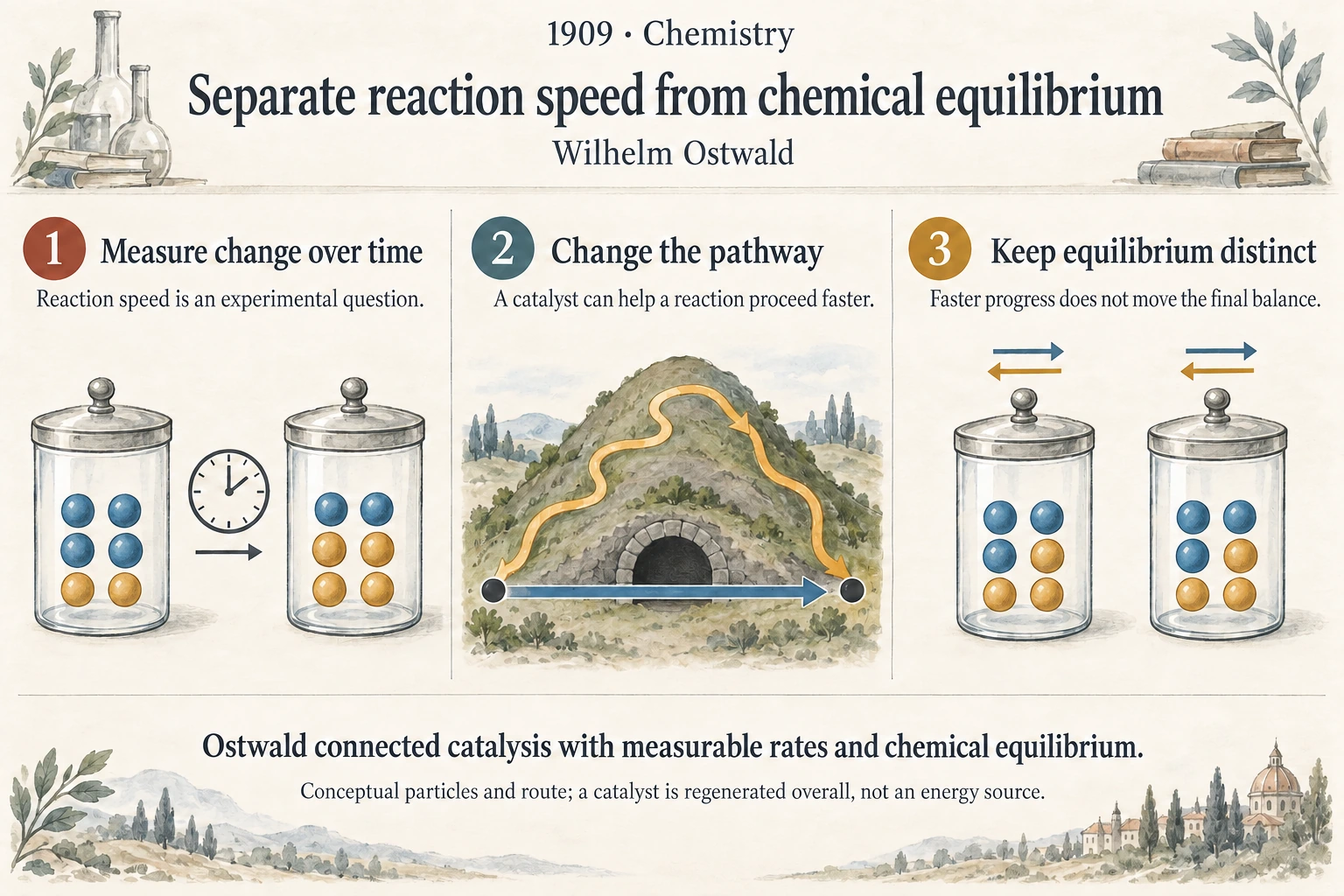
Some reactions proceed so slowly that little appears to happen during an observation. A catalyst can make a reaction faster while being regenerated in the overall process. It may participate in intermediate steps; being absent from the net end-products does not mean that it never interacts with the reacting substances. Ostwald studied rates, acid and base action and conductivity to bring such effects into quantitative physical chemistry.
Equilibrium is a different question from speed. In a reversible reaction, forward and reverse changes continue at equal rates when the composition is at equilibrium. A catalyst helps the system approach that balance faster without changing its equilibrium composition under the same conditions. Ostwald’s 1909 prize joined catalysis with fundamental investigations of equilibria and reaction rates, rather than rewarding a recipe for one industrial chemical.
Why it matters
The research helped establish physical chemistry as a framework for measuring and comparing reactions. Catalysis became important in industrial production and in understanding enzymes, while each real process still required evidence about mechanism, operating conditions and unwanted reactions.