A life in context
The person behind the prize
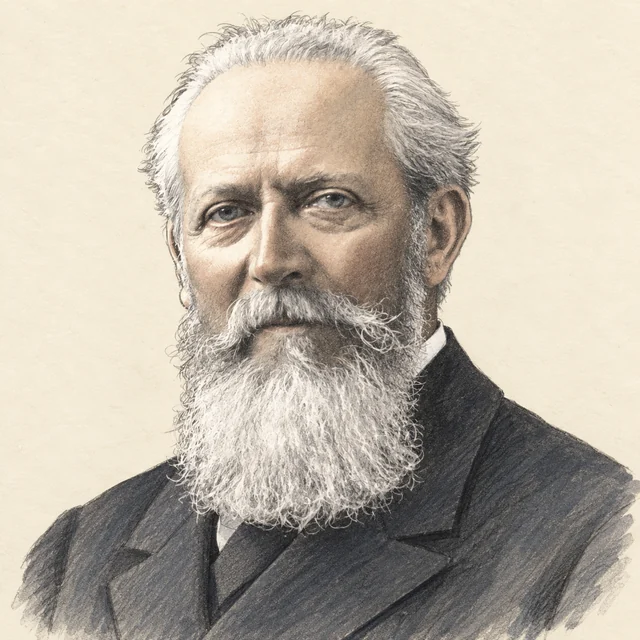
Otto Wallach grew up with strong interests in history and art before studying chemistry in Göttingen and Berlin. He completed his doctorate in Göttingen in 1869. After work in Berlin, a period in Bonn with August Kekulé and military service during the Franco-Prussian War, he briefly entered the dye industry. The fumes affected his health, and he returned to Bonn in 1872. Work involving pharmacology and a collection of essential oils led him towards the chemistry of terpenes. Many substances carried names derived from different plants, even when their chemical identities overlapped; unstable compounds and mixtures made comparisons difficult. From his first major terpene publication in 1884, Wallach developed methods for separating, identifying and relating these substances while attending to changes caused by the analysis itself. He became professor and director of Göttingen’s Chemical Institute in 1889. His book Terpene und Campher appeared in 1909, gathering a large research programme involving many students. The full 1910 Chemistry Prize recognised his pioneering work on alicyclic compounds and its importance to chemistry and industry. He retired in 1915 and died in Göttingen in 1931. The historical list of compounds he clarified was not a complete catalogue of all terpenes, and fragrant plant products were not thereby shown to be universally safe or beneficial.
The contribution
Wallach received the full Chemistry Prize for pioneering research on alicyclic compounds. He brought order to terpene chemistry through careful identification, separation and structural relationships, helping distinguish true differences from duplicate names and mixtures.
The idea in plain language
A plant’s fragrance is not a single chemical substance. Different oils may share a constituent, while compounds with similar properties can have different structures. Older names often followed the plant of origin, obscuring these relationships. Wallach used separation, comparison and chemical transformations to establish more reliable identities among terpenes and related compounds.
Read the full award story ↗

