A life in context
The person behind the prize
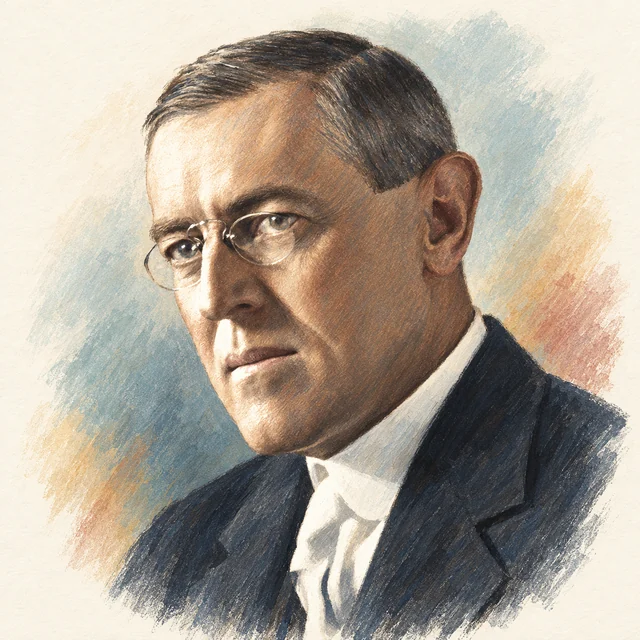
Wilson was born in Staunton, Virginia, and graduated from Princeton in 1879. After studying and practising law, he pursued political and historical scholarship, completing a doctorate at Johns Hopkins University in 1886. He taught at several institutions, joined the Princeton faculty and served as its president from 1902 to 1910. He was governor of New Jersey before becoming president of the United States in 1913. After initially maintaining American neutrality, his administration entered the First World War in 1917. On 8 January 1918 he presented the Fourteen Points, including a proposal for a general association of nations. At the 1919 peace negotiations he worked for the League of Nations and its covenant alongside other governments and political figures. The United States Senate refused to approve the settlement needed for American participation; the United States never joined the League. The reserved 1919 Peace Prize was awarded to Wilson in 1920 for his role in its founding. He was absent from the December presentation after a serious stroke in 1919. His international language of cooperation must be considered together with his racism and policies supporting federal segregation. Princeton’s 2020 account explains why that record led it to remove his name from its public-policy school and a residential college. Wilson’s presidency ended in 1921 and he died in Washington in 1924. The Peace Prize did not endorse his entire political record or prove the League could secure lasting peace.
The contribution
Wilson received the full Peace Prize for his role in founding the League of Nations. He promoted a continuing association of states in the Fourteen Points and the postwar negotiations, although the United States itself never became a member.
The idea in plain language
A peace settlement can end a particular war without providing a durable way to handle later disputes. In the Fourteen Points of 8 January 1918, Wilson proposed an association of nations. During the 1919 negotiations he worked to make the League of Nations part of the postwar settlement. Other governments and political figures also shaped the institution and its covenant.
Read the full award story ↗

