A life in context
The person behind the prize
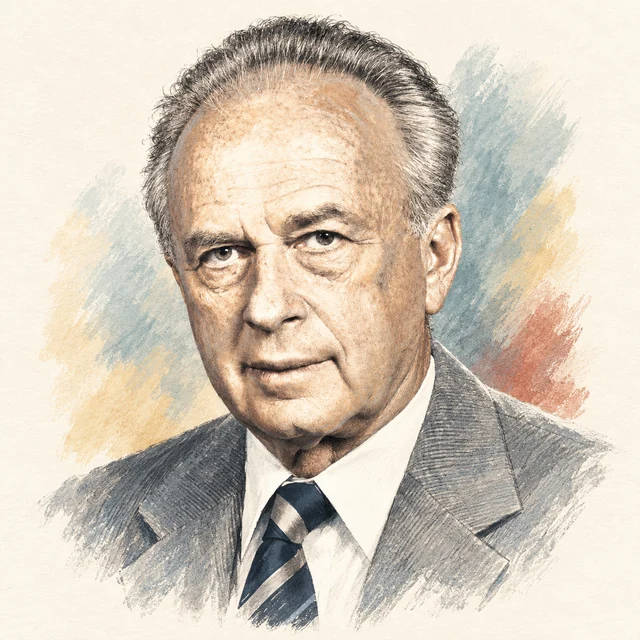
Rabin trained in agriculture before a military career that included command of Israel’s forces during the 1967 war. Service as ambassador to the United States preceded his first term as prime minister in the 1970s. He returned to the premiership in 1992 and supported negotiations with the PLO. This diplomatic turn followed a long and consequential security career; it did not remove that earlier history.
The contribution
Rabin supplied the prime-ministerial approval and political leadership needed for the Israeli government to pursue the Oslo agreements. He shared the 1994 prize with Peres and Arafat for efforts toward peace, while central issues remained unresolved. He was assassinated on 4 November 1995, after the award, amid opposition to the process. His death belongs to its later history, not to an account claiming peace was already secured in 1994.
The idea in plain language
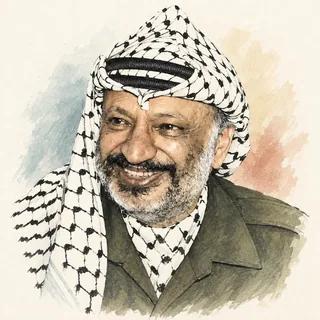
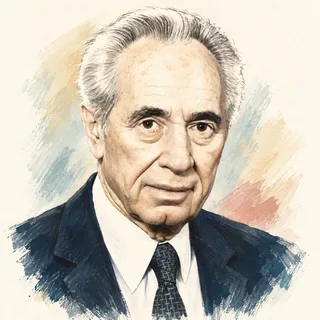
The Oslo process created a negotiating channel between Israel and the Palestine Liberation Organization. Arafat authorised Palestinian participation, Peres helped lead the Israeli negotiations, and Rabin gave the government’s political approval. The 1993 Declaration of Principles and subsequent implementation agreements opened a framework for interim Palestinian self-government and further negotiations.
Read the full award story ↗