01 · The contribution
The idea, in everyday language
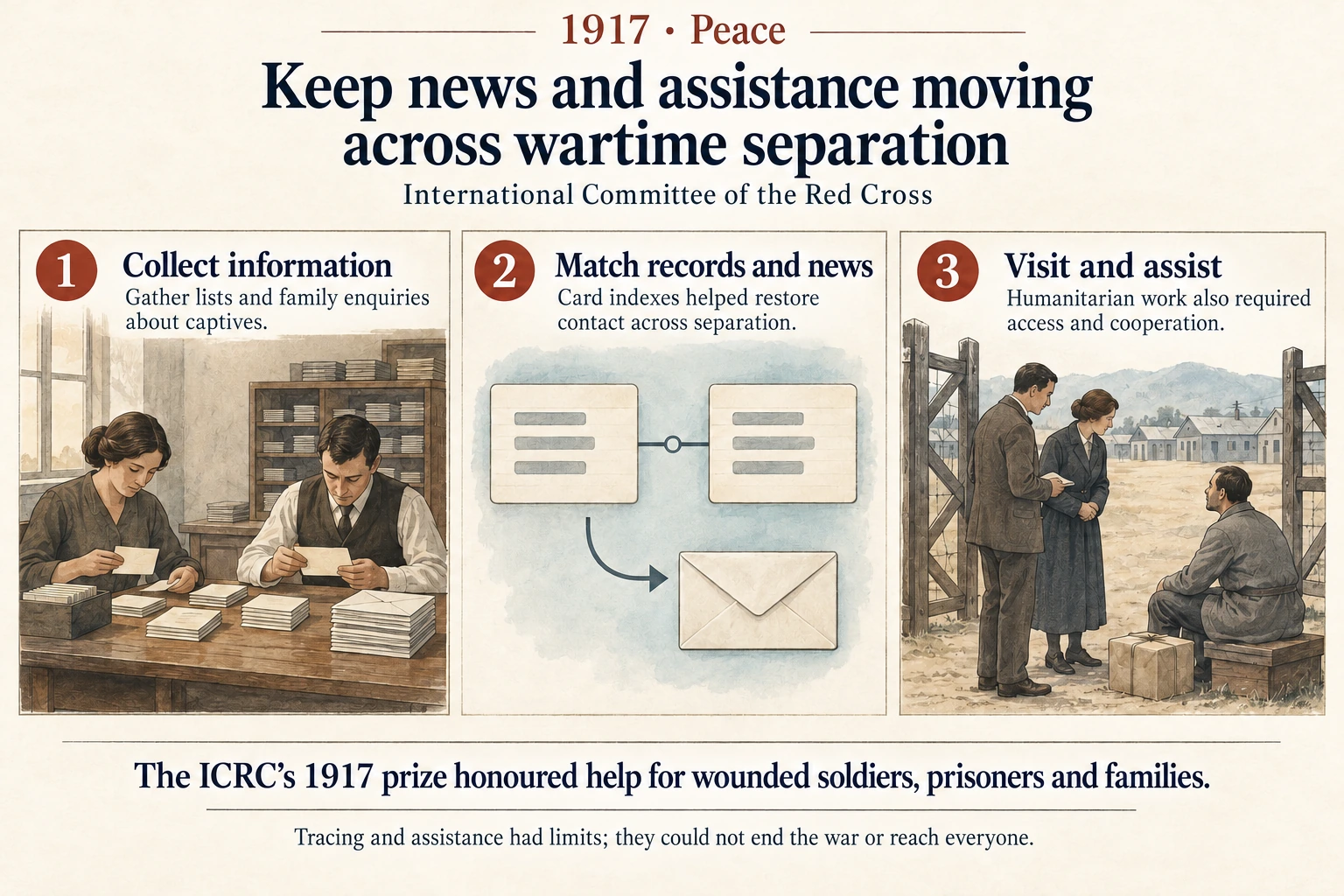
War separated prisoners and wounded people from families who often did not know where they were or whether they were alive. The ICRC established its International Prisoners-of-War Agency in Geneva in August 1914. Lists from authorities and enquiries from relatives could be compared through card indexes. Volunteers and staff maintained those records and passed available information back to families.
The work went beyond a filing system. Delegates sought permission to visit prisoner-of-war camps, while the organisation supported relief and efforts to exchange or repatriate sick and wounded captives. Coverage was incomplete and other organisations also played major roles. The award ceremony was held on 10 December 1917. Nobel’s presentation page explains that the original speech text is unavailable and instead publishes a historical account; it should not be mistaken for a verbatim transcript of that speech.
Why it matters
Finding a name in a record could reduce uncertainty and make renewed contact possible. Visits and assistance addressed the practical conditions of captivity and injury. These humanitarian achievements mattered within a continuing war, while gaps in access, information and protection remained.