c.curionodeThe Nobel Archive

1927 · Physics

Light exchanges energy; droplets reveal a track

Compton explained a change in scattered X-rays through an exchange with electrons. Wilson made charged-particle paths visible as trails of condensed droplets. The two discoveries supplied complementary evidence about radiation and matter.

Compton effectCloud chamberPhoton energyRecoil electrons
1927Physics

Visual guide

The prize, pictured

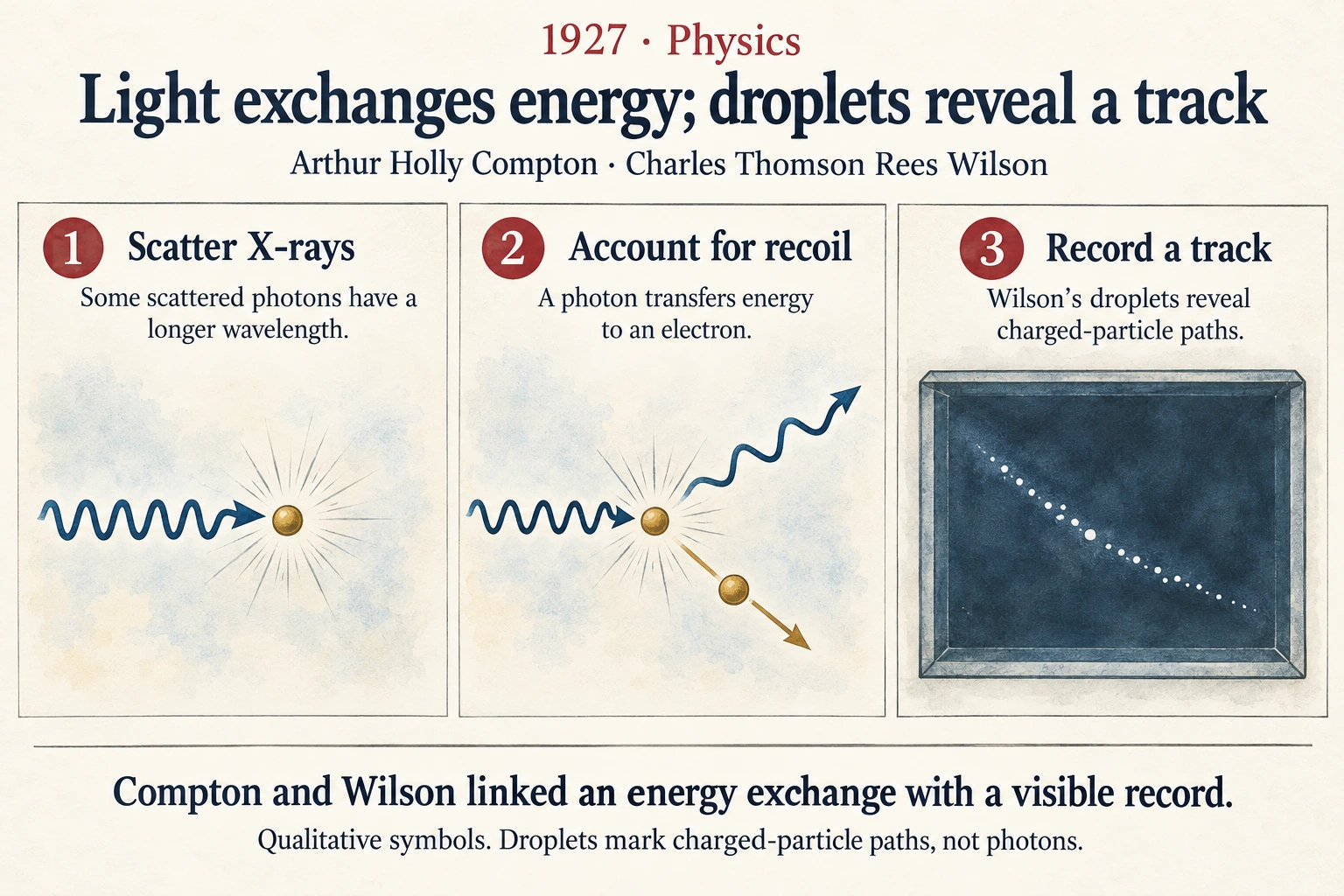
Infographic explaining Light exchanges energy; droplets reveal a track
Original AI-generated infographic. A conceptual overview; the explanations and sources below provide context.
Read the poster text

Compton and Wilson linked an energy exchange with a visible record.

  1. Scatter X-rays

    Some scattered photons have a longer wavelength.

  2. Account for recoil

    A photon transfers energy to an electron.

  3. Record a track

    Wilson’s droplets reveal charged-particle paths.

Qualitative symbols. Droplets mark charged-particle paths, not photons.

01 · The discovery

The idea, in everyday language

When X-rays scatter from matter, part of the scattered radiation can have a longer wavelength than the incoming beam. Compton’s measurements and explanation connected that change with energy and momentum transferred from a photon to a recoiling electron. This supported the particle properties of light without abolishing its wave behaviour.

Wilson approached a different problem: how to record paths of particles too small to see directly. In his cloud chamber, water droplets formed around ions left along charged-particle paths. Photographs of the droplet trails allowed those paths to be studied. Recoil-electron tracks provided evidence for the exchange involved in Compton scattering.

Why it matters

The work strengthened the quantum account of radiation and gave researchers an instrument for testing particle processes. Cloud chambers supported many later discoveries. Compton and Wilson received equal shares for distinct contributions: a scattering effect and a method of observing charged-particle tracks.
02 · The people

Who brought the idea to life?

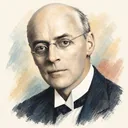
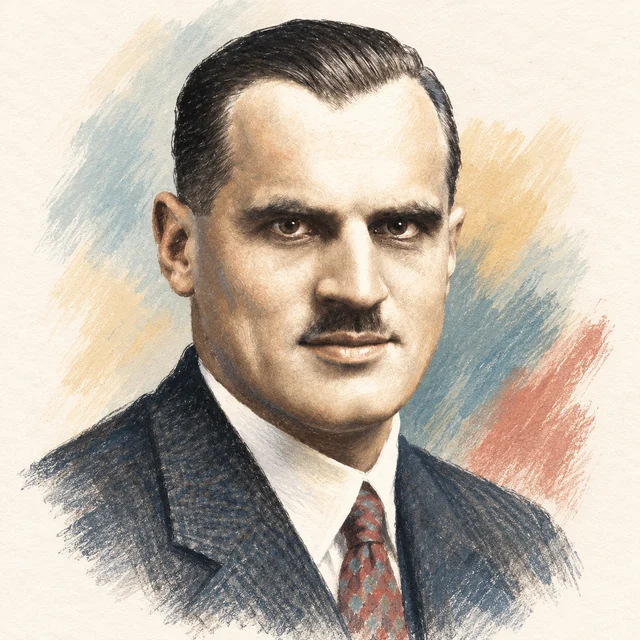
Illustrated portrait of Arthur Holly Compton

Arthur Holly Compton

Prize share · 1/2

Compton received half the Physics Prize for discovering the Compton effect. His scattering measurements supported an account in which an X-ray photon transfers energy and momentum to an electron.

Read the biography ↗
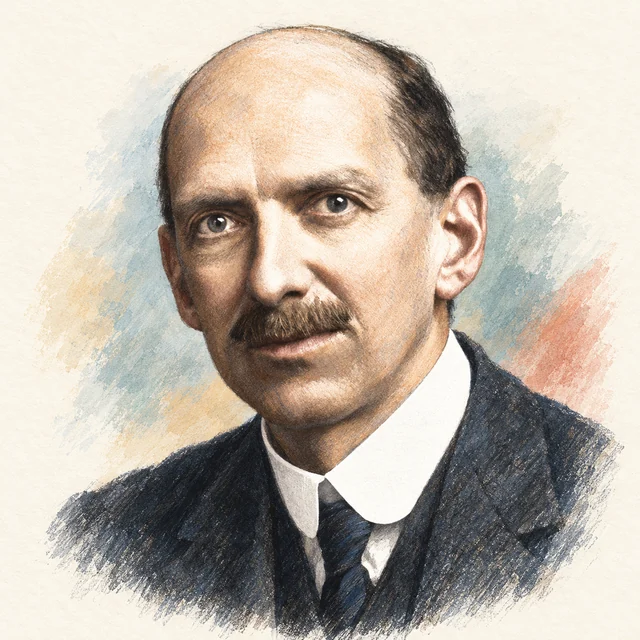
Illustrated portrait of Charles Thomson Rees Wilson

Charles Thomson Rees Wilson

Prize share · 1/2

Wilson received half the Physics Prize for a method that made charged-particle paths visible through condensation. His cloud chamber recorded droplet tracks along ionized paths, including recoil-electron tracks associated with the Compton effect.

Read the biography ↗

03 · Years in the making

The path here

  1. 1911

    Wilson photographs tracks left by individual charged particles.

  2. 1922

    Compton identifies the wavelength change in scattered X-rays.

  3. 1923

    Wilson’s refined chamber records recoil-electron tracks.

  4. 1927

    Compton and Wilson receive equal shares of the Physics Prize.

04 · Read further

From the original sources

Original explanations by Curionode, based on the official records below. Biographical details and affiliations refer to the award year.

  1. Official award summary nobelprize.org
  2. Award ceremony speech nobelprize.org