c.curionodeThe Nobel Archive

1936 · Literature

Giving modern conflict the force of tragedy

O’Neill brought sailors, workers and troubled families into ambitious modern drama, experimenting with stage form to expose the pressures behind what people say.

Modern dramaTragedyEugene O’NeillStrange Interlude
1936Literature

Visual guide

The prize, pictured

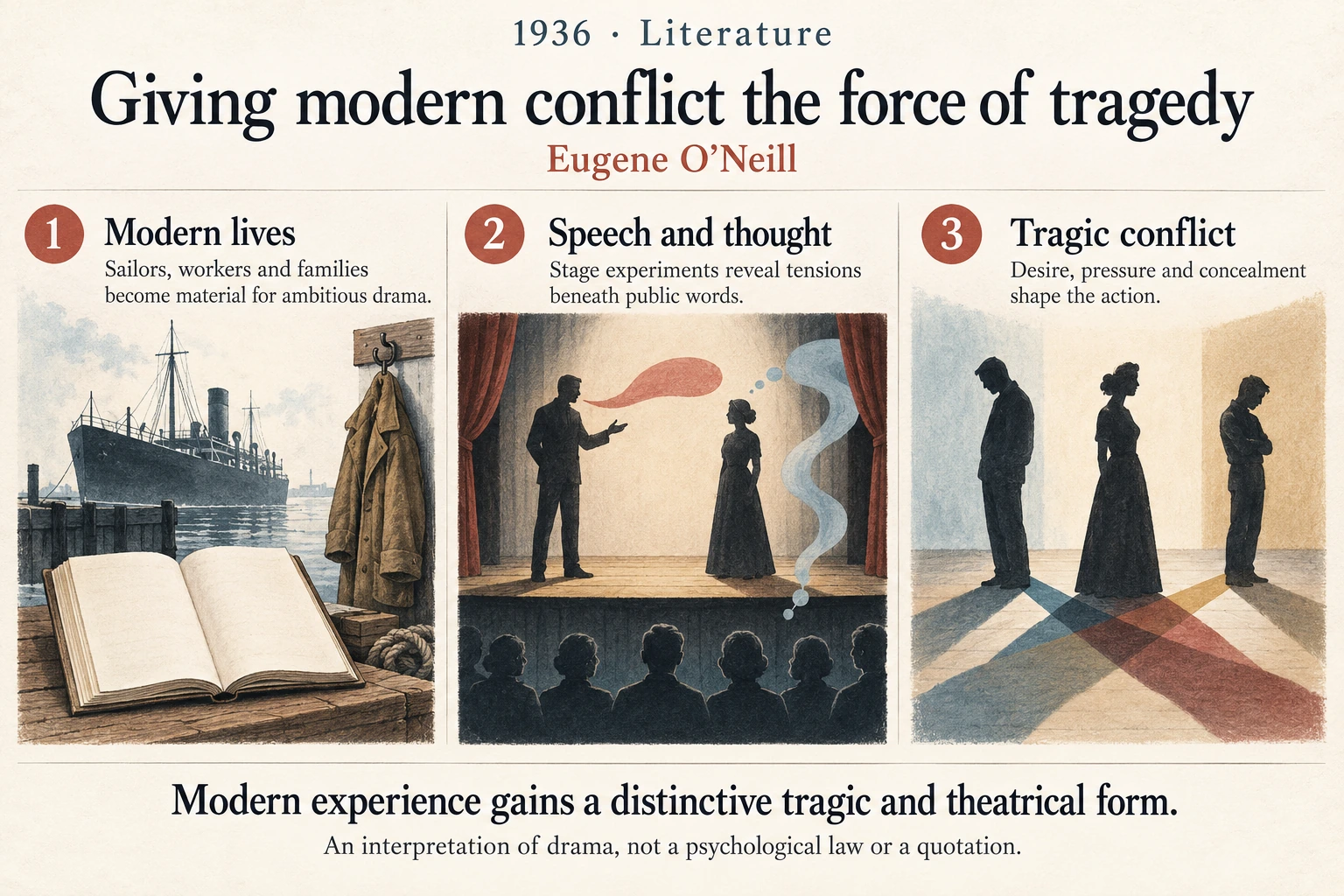
Infographic explaining Giving modern conflict the force of tragedy
Original AI-generated infographic. A conceptual overview; the explanations and sources below provide context.
Read the poster text

Modern experience gains a distinctive tragic and theatrical form.

  1. Modern lives

    Sailors, workers and families become material for ambitious drama.

  2. Speech and thought

    Stage experiments reveal tensions beneath public words.

  3. Tragic conflict

    Desire, pressure and concealment shape the action.

An interpretation of drama, not a psychological law or a quotation.

01 · The contribution

The idea, in everyday language

A character’s public words can conceal a different inner life. O’Neill made that tension a resource for the stage. His early sea plays drew on hard, insecure lives; later works shifted between realism and more stylised forms. The Hairy Ape turned a worker’s search for belonging into a harsh theatrical confrontation. Strange Interlude let the audience hear thoughts that other characters on stage could not hear. These devices gave private conflict a public dramatic form rather than merely reporting it.

In Mourning Becomes Electra, O’Neill reworked an ancient tragic pattern within an American family after the Civil War. Desire, inherited pressures and concealment drive a chain of consequences, but the dramatic structure is an artistic construction, not proof of a theory of heredity or psychology. His range also included the warmer comedy Ah, Wilderness! The 1936 award recognised the vitality, sincerity, emotional intensity and original tragic conception of his dramatic writing. It did not restrict his achievement to one technique or to uniformly pessimistic plays.

Why it matters

The work widened the expressive possibilities of American theatre, connecting contemporary settings with tragic scale and formal experimentation. Its force comes from language, rhythm, dramatic situations and performance. Different productions and readers can interpret the same conflict differently.

02 · The people

Who brought the idea to life?

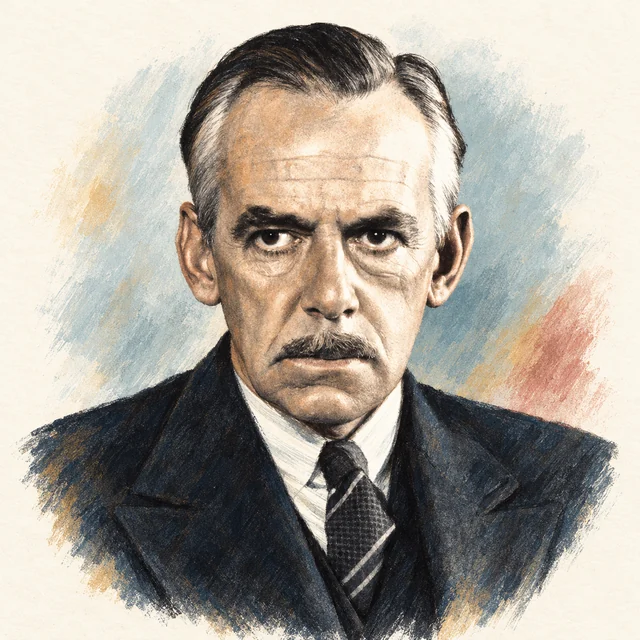
Illustrated portrait of Eugene O’Neill

Eugene O’Neill

Prize share · 1

O’Neill received the full Literature Prize for the energy, candour and emotional force of his dramatic writing and its distinctive treatment of tragedy. The award concerns his writing as a whole, not a scientific theory about human behaviour.

Read the biography ↗

03 · Years in the making

The path here

  1. 1916

    The Provincetown Players stage Bound East for Cardiff.

  2. 1920

    Beyond the Horizon reaches Broadway; The Emperor Jones is also first staged that year.

  3. 1928

    Strange Interlude explores the gap between speech and inner thought.

  4. 1931

    Mourning Becomes Electra reworks a tragic family pattern.

  5. 1936

    The Literature Prize recognises O’Neill’s dramatic writing.

  6. 1956

    Long Day’s Journey into Night is published and first performed after his death.

04 · Read further

From the original sources

Original explanations by Curionode, based on the official records below. Biographical details and affiliations refer to the award year.

  1. Official award summary nobelprize.org
  2. Award ceremony speech nobelprize.org
  3. Official bibliography nobelprize.org
  4. National Park Service: the later play nps.gov
  5. Official biography: Eugene O’Neill nobelprize.org

More in Literature

Browse this subject ↗