c.curionodeThe Nobel Archive

1938 · Literature

Read lives across cultural distances

Buck’s fiction about China and biographies of her parents brought individual and family experience to a wide English-language readership.

Chinese livesFamily narrativesBiographyCross-cultural reading
1938Literature

Visual guide

The prize, pictured

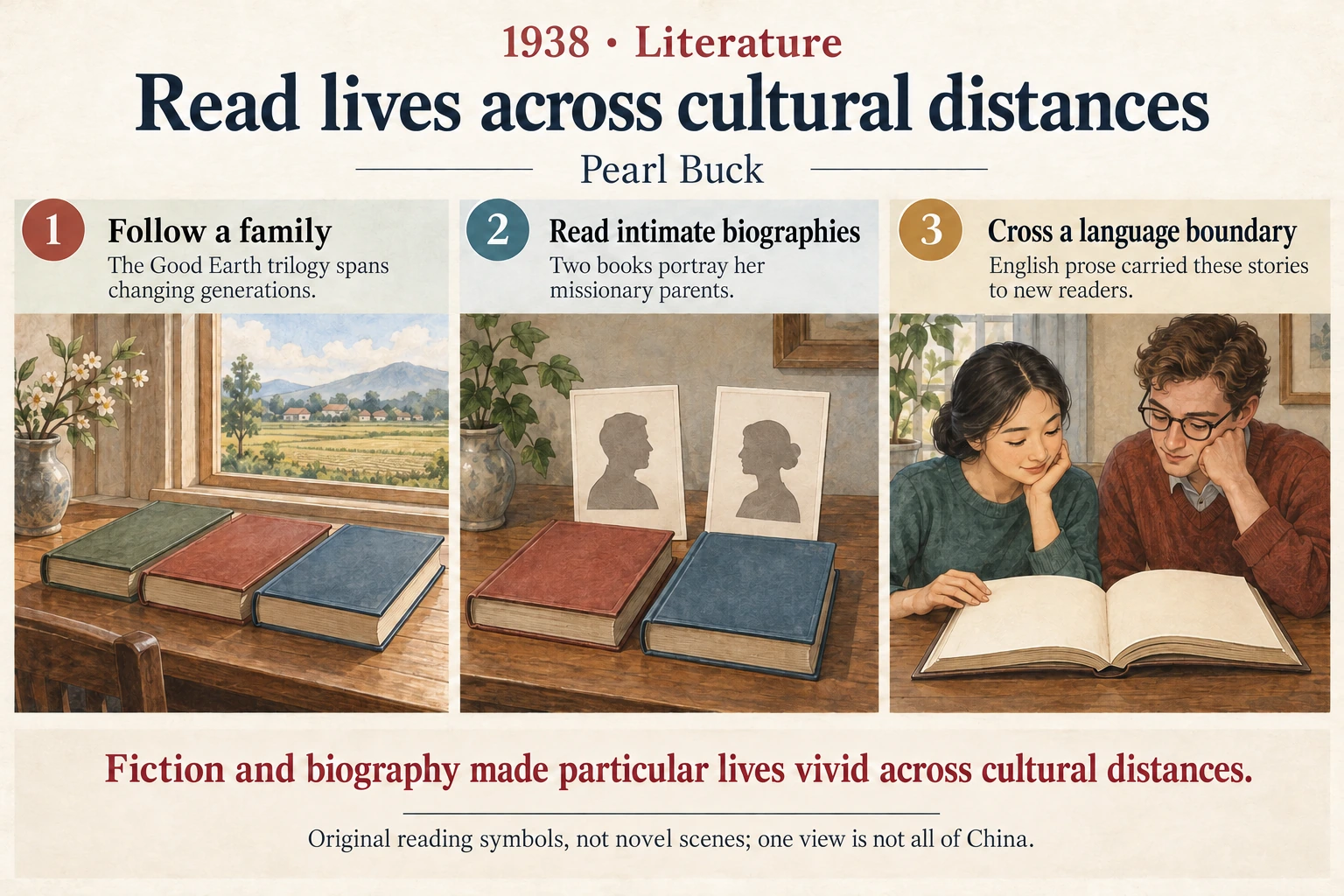
Infographic explaining Read lives across cultural distances
Original AI-generated infographic. A conceptual overview; the explanations and sources below provide context.
Read the poster text

Fiction and biography made particular lives vivid across cultural distances.

  1. Follow a family

    The Good Earth trilogy spans changing generations.

  2. Read intimate biographies

    Two books portray her missionary parents.

  3. Cross a language boundary

    English prose carried these stories to new readers.

Original reading symbols, not novel scenes; one view is not all of China.

01 · The contribution

The idea, in everyday language

A broad account of a country can turn its people into abstractions. Buck’s novels followed particular lives through work, hunger, changing wealth and family relationships. The Good Earth (1931), followed by Sons (1932) and A House Divided (1935), made the Wang family’s changing generations central to an extended narrative. The books were written in English by an American author who had grown up in China.

The Nobel citation also recognised biography. The Exile and Fighting Angel, both published in 1936, portrayed her mother and father and the tensions of their missionary lives. These personal accounts used a daughter’s knowledge and literary judgement, rather than pretending to be an impersonal record of every thought. The award joined her peasant narratives and her art of biographical portrayal; reducing it to The Good Earth leaves out part of the recognised achievement.

Why it matters

The books enlarged the audience for stories of Chinese lives and for personal accounts of cultural encounter. Their significance includes the way fiction and biography can invite attention to individuals across distance. They also invite scrutiny of who is speaking and how a person is represented. Contemporary praise in the 1938 presentation used racial and gender stereotypes that should be recognised as historical rhetoric, not adopted as neutral descriptions.
02 · The people

Who brought the idea to life?

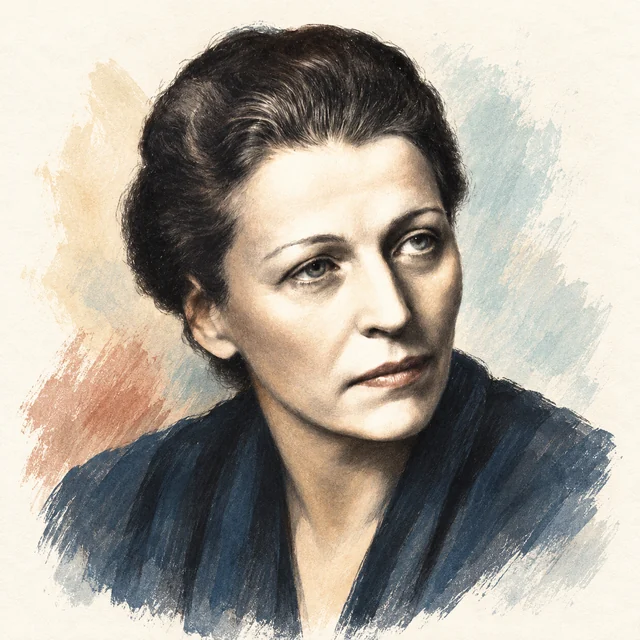
Illustrated portrait of Pearl Buck

Pearl Buck

Prize share · 1

Buck received the whole Literature Prize for her descriptions of Chinese peasant life and for her biographical works. The award was broader than The Good Earth alone.

Read the biography ↗

03 · Years in the making

The path here

  1. 1926

    Buck completes a master’s degree at Cornell.

  2. 1930

    Her first novel, East Wind, West Wind, appears.

  3. 1931

    The Good Earth is published.

  4. 1934

    She resettles in the United States.

  5. 1935

    A House Divided completes the family trilogy.

  6. 1936

    The Exile and Fighting Angel portray her parents.

  7. 1938

    The Literature Prize recognises both fiction and biography.

04 · Read further

From the original sources

Original explanations by Curionode, based on the official records below. Biographical details and affiliations refer to the award year.

  1. Official award summary nobelprize.org
  2. Award ceremony speech nobelprize.org
  3. Official bibliography nobelprize.org
  4. Official biography: Pearl Buck nobelprize.org

More in Literature

Browse this subject ↗