c.curionodeThe Nobel Archive

1939 · Chemistry

Reveal the structures of active natural molecules

Butenandt clarified steroid-hormone chemistry; Ružička investigated large carbon rings and higher terpenes, with important overlap in hormone research.

Steroid hormonesLarge ringsHigher terpenesMolecular structure
1939Chemistry

Visual guide

The prize, pictured

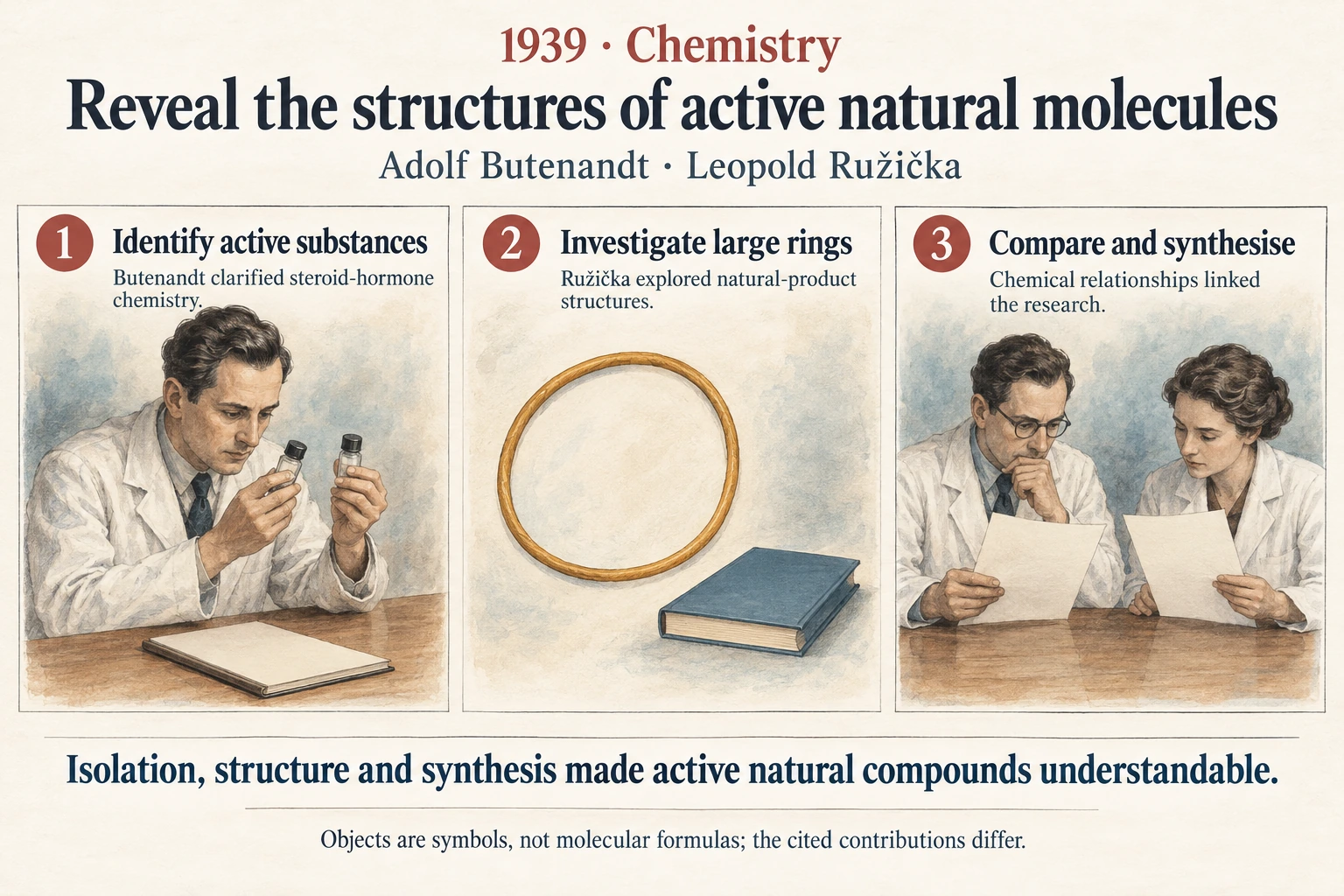
Infographic explaining Reveal the structures of active natural molecules
Original AI-generated infographic. A conceptual overview; the explanations and sources below provide context.
Read the poster text

Isolation, structure and synthesis made active natural compounds understandable.

  1. Identify active substances

    Butenandt clarified steroid-hormone chemistry.

  2. Investigate large rings

    Ružička explored natural-product structures.

  3. Compare and synthesise

    Chemical relationships linked the research.

Objects are symbols, not molecular formulas; the cited contributions differ.

01 · The discovery

The idea, in everyday language

A natural extract may have a powerful biological effect while containing many different substances. Which compound produces the activity, and how are its atoms arranged? Butenandt’s isolation and structural work helped turn sex hormones from poorly characterised activities into identifiable molecules. His work included oestrone in 1929, androsterone in 1931 and progesterone with collaborators in 1934. Parallel research by Doisy and others also mattered.

Ružička approached natural-product chemistry through a broader set of compounds, including higher terpenes and the large carbon rings of muscone and civetone. His team’s work in 1924–1926 challenged prevailing assumptions about possible ring sizes. The programmes overlapped in steroid chemistry: both groups independently achieved testosterone synthesis in 1935. Their equal prize shares recognise distinct cited contributions, rather than two identical discoveries or an award solely for testosterone.

Why it matters

Isolation, structural analysis and synthesis allowed natural compounds to be compared and investigated reproducibly. The work connected fundamental organic chemistry with hormone and fragrance research and opened further questions about structure and biological activity. A large carbon ring and a steroid framework are different structures; the poster’s objects are symbols for investigation, not formulas for particular molecules.
02 · The people

Who brought the idea to life?

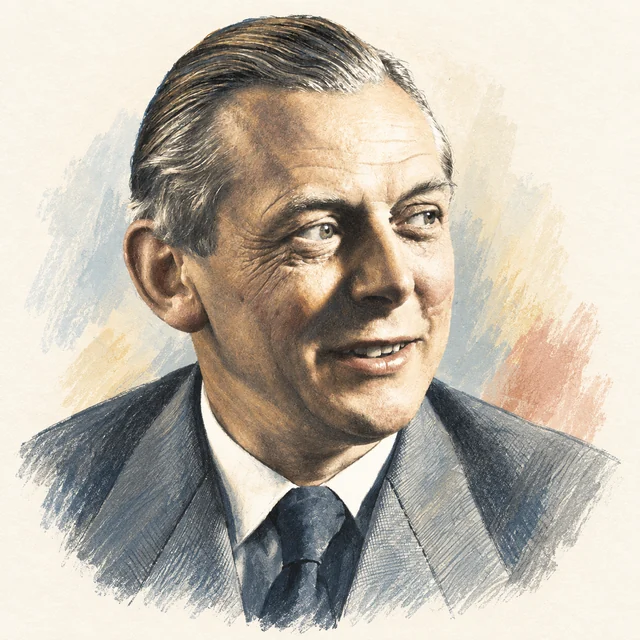
Illustrated portrait of Adolf Butenandt

Adolf Butenandt

Prize share · 1/2

Butenandt received one half of the Chemistry Prize for work on sex hormones, including isolation, structural elucidation and chemical relationships. Parallel discoveries and collaborators also contributed.

Read the biography ↗
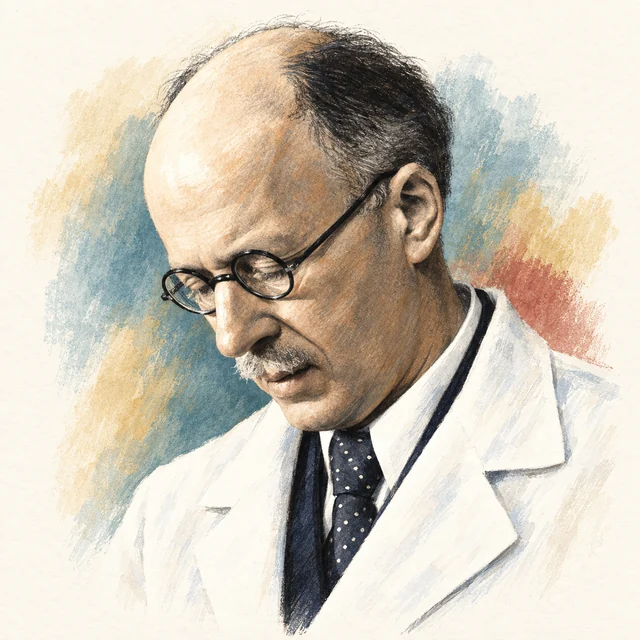
Illustrated portrait of Leopold Ružička

Leopold Ružička

Prize share · 1/2

Ružička received one half of the Chemistry Prize for polymethylenes and higher terpenes, including work on large carbon rings and natural-product structures. His group also advanced steroid-hormone chemistry.

Read the biography ↗

03 · Years in the making

The path here

  1. 1924–1926

    Ružička’s team establishes unusually large rings in natural musk compounds.

  2. 1929

    Butenandt and Doisy independently isolate crystalline oestrone.

  3. 1931

    Butenandt isolates androsterone.

  4. 1934

    Butenandt and Westphal obtain chemically pure progesterone.

  5. 1935

    The two groups independently achieve testosterone synthesis.

  6. 1940

    Ružička receives his 1939 medal and diploma in Zurich.

  7. 1949

    Butenandt receives his medal and diploma.

04 · Read further

From the original sources

Original explanations by Curionode, based on the official records below. Biographical details and affiliations refer to the award year.

  1. Official award summary nobelprize.org
  2. Award ceremony speech nobelprize.org
  3. Max Planck Society history: Butenandt mpg.de
  4. Official biography: Adolf Butenandt nobelprize.org
  5. Official biography: Leopold Ružička nobelprize.org

More in Chemistry

Browse this subject ↗