c.curionodeThe Nobel Archive

1943 · Chemistry

Follow an element with an isotopic marker

De Hevesy used isotopes to make an element’s movement and exchanges detectable within a chemical or biological process.

IsotopesTracersChemical processesBiological turnover
1943Chemistry

Visual guide

The prize, pictured

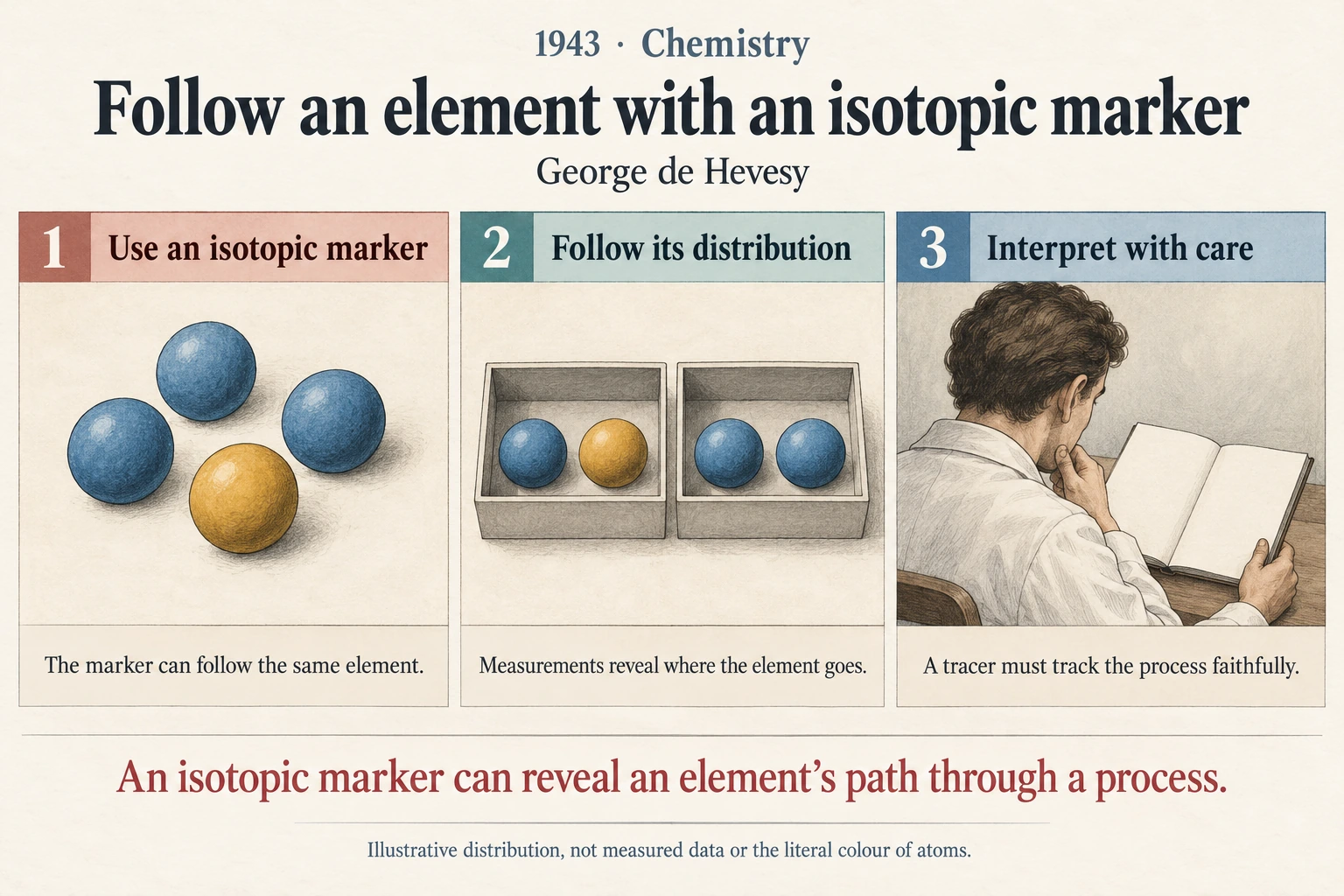
Infographic explaining Follow an element with an isotopic marker
Original AI-generated infographic. A conceptual overview; the explanations and sources below provide context.
Read the poster text

An isotopic marker can reveal an element’s path through a process.

  1. Use an isotopic marker

    The marker can follow the same element.

  2. Follow its distribution

    Measurements reveal where the element goes.

  3. Interpret with care

    A tracer must track the process faithfully.

Illustrative distribution, not measured data or the literal colour of atoms.

01 · The discovery

The idea, in everyday language

How can researchers follow a small amount of an element when it mixes with a much larger amount of the same element? A difficulty in separation suggested an answer. Radioactive lead and ordinary lead were so similar chemically that attempts to separate them failed. An identifiable isotope could therefore accompany the element through a process instead of being removed from it.

De Hevesy and Paneth used radioactive tracing in 1913, and the method developed across inorganic chemistry and biology. Radiation made a radioactive isotope detectable; the element’s chemistry determined how it moved and exchanged. Later access to more isotopes expanded the range of questions. Stable isotopes could also serve as tracers, detected by different methods. The award recognised this way of investigating processes, rather than the discovery of hafnium or a claim that every tracer must be radioactive.

Why it matters

Tracing made distributions, exchanges and turnover accessible even when direct observation of individual atoms was impossible. It connected chemistry with the study of living systems. A tracer result still needs interpretation: where a marker is detected is evidence about a process, not automatically a complete account of every reaction or biological effect.

02 · The people

Who brought the idea to life?

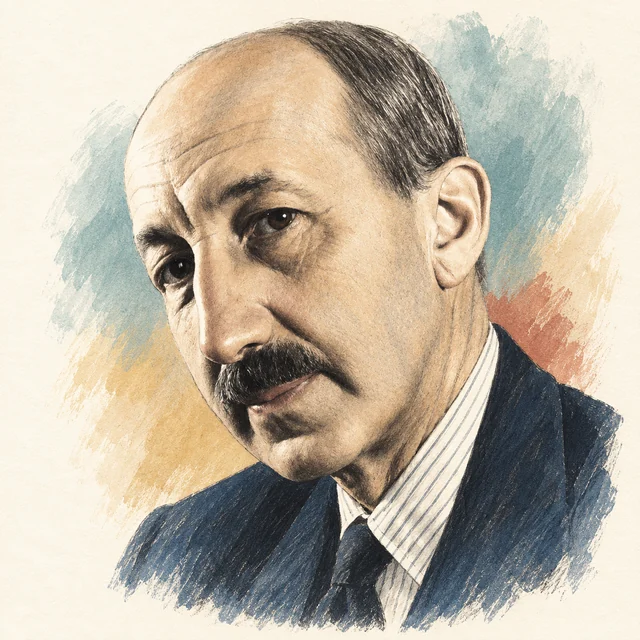
Illustrated portrait of George de Hevesy

George de Hevesy

Prize share · 1

De Hevesy received the whole Chemistry Prize for using isotopes as tracers to investigate chemical processes, including processes in living organisms.

Read the biography ↗

03 · Years in the making

The path here

  1. 1908

    De Hevesy completes his doctorate at Freiburg.

  2. 1910

    Joins Rutherford’s laboratory in Manchester.

  3. 1913

    Works with Paneth on an early radioactive-tracer experiment.

  4. 1923

    Discovers hafnium with Coster, a separate achievement.

  5. 1943

    Moves to Stockholm and continues isotope research.

  6. 1944

    The reserved 1943 Chemistry Prize is announced.

04 · Read further

From the original sources

Original explanations by Curionode, based on the official records below. Biographical details and affiliations refer to the award year.

  1. Official award summary nobelprize.org
  2. Award ceremony speech nobelprize.org
  3. Official biography: George de Hevesy nobelprize.org

More in Chemistry

Browse this subject ↗