01 · The contribution
The idea, in everyday language
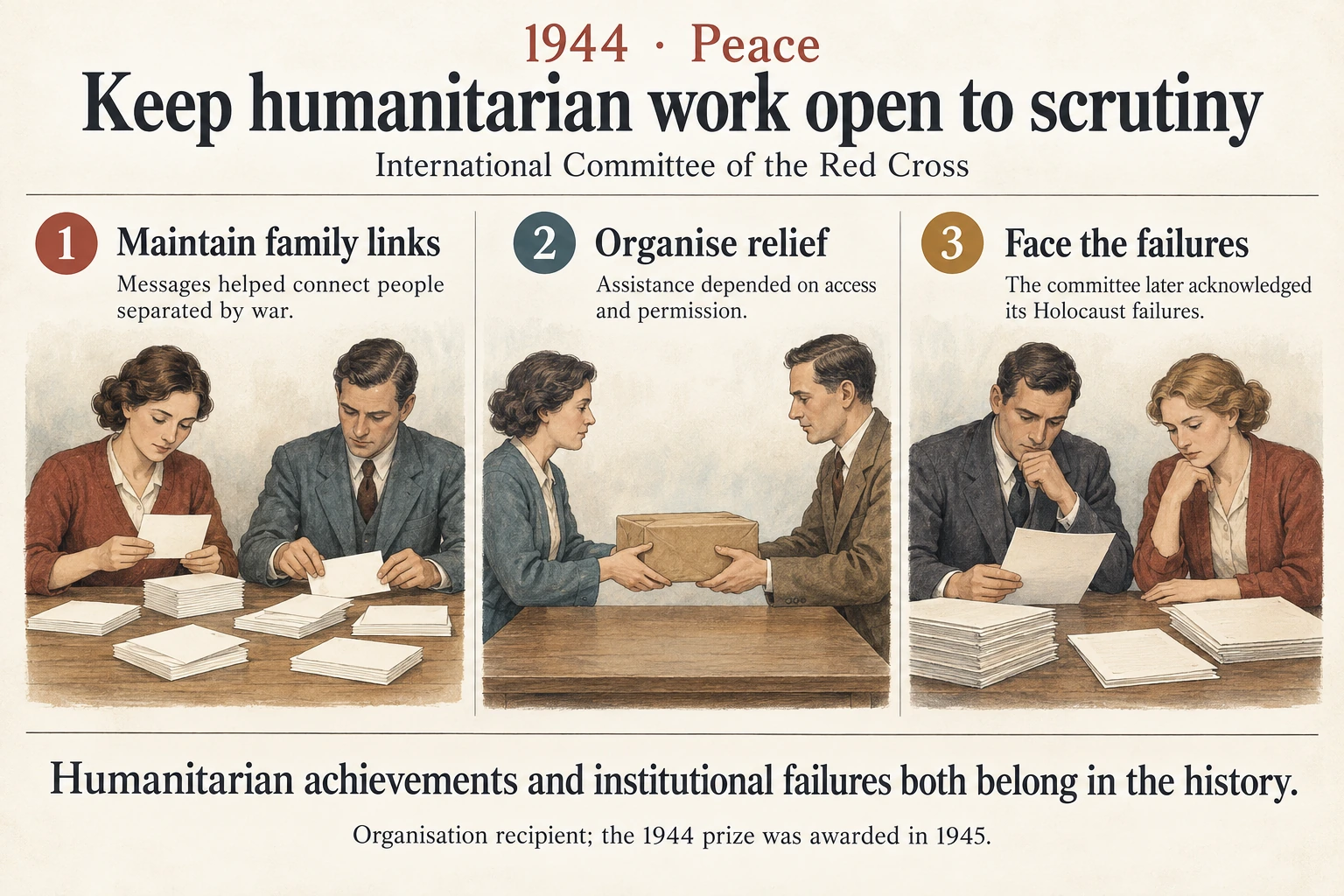
War separated prisoners and civilians from their families and exposed people in captivity to severe danger. The International Committee of the Red Cross worked on prisoner-of-war information, family correspondence, relief parcels and attempts to visit people in detention. These activities needed negotiations, permission and practical organisation; the committee’s neutral role did not guarantee access or protection.
The whole 1944 Peace Prize went to this organisation, already a laureate in 1917. Its humanitarian achievements must be considered alongside failure during the Holocaust. In 1942 the committee considered a public appeal but did not issue it. Its later account acknowledges that it failed to protect Jews and other persecuted groups. Individual delegates’ efforts and relief deliveries were real, but did not stop persecution and genocide.
Why it matters
The committee helped sustain humanitarian assistance and family links amid war. Its history also shows why access claims and institutional choices need scrutiny, especially when an organisation faces mass persecution. A peace award cannot serve as a blanket judgment that every decision was adequate or every vulnerable group protected.