c.curionodeThe Nobel Archive

1945 · Literature

Give grief, care and the living world a lyric voice

Mistral’s poetry joined emotional force with attention to childhood, landscape and ordinary life, bringing a Latin American voice to international recognition.

Lyric poetryCare and lossEducationLatin American literature
1945Literature

Visual guide

The prize, pictured

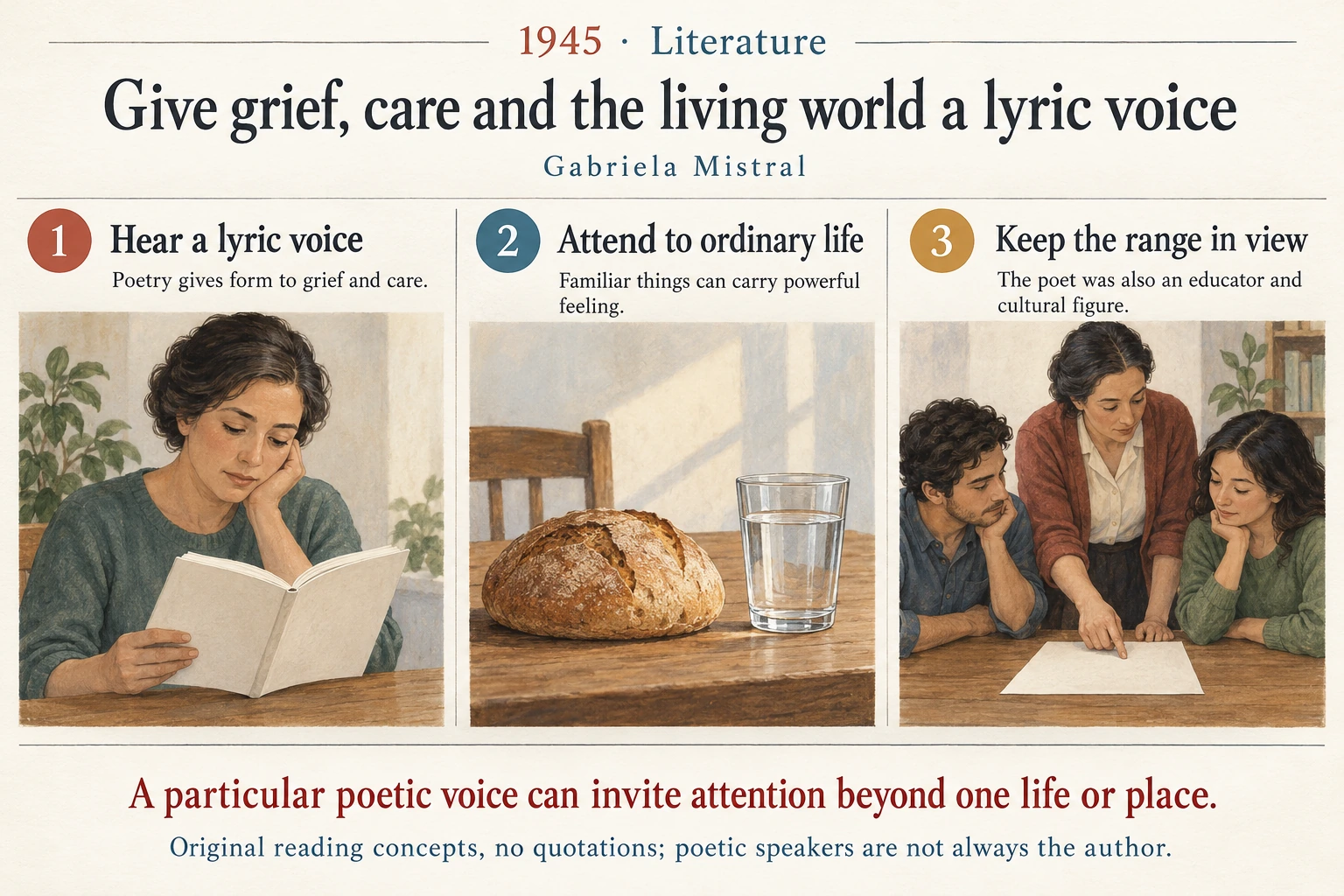
Infographic explaining Give grief, care and the living world a lyric voice
Original AI-generated infographic. A conceptual overview; the explanations and sources below provide context.
Read the poster text

A particular poetic voice can invite attention beyond one life or place.

  1. Hear a lyric voice

    Poetry gives form to grief and care.

  2. Attend to ordinary life

    Familiar things can carry powerful feeling.

  3. Keep the range in view

    The poet was also an educator and cultural figure.

Original reading concepts, no quotations; poetic speakers are not always the author.

01 · The contribution

The idea, in everyday language

A lyric poem can make a particular experience audible without turning it into a general rule. Mistral wrote of loss, love, care and the things that sustain life. Desolación appeared in 1922, Ternura in 1924 and Tala in 1938; the collections share concerns but do not speak in a single tone.

Her work as an educator and cultural figure belongs alongside that literary career. Childhood and care are important subjects, yet the range of the poetry exceeds the maternal role assigned to her in much contemporary praise. The 1945 award recognised lyric achievement and its resonance, rather than rewarding a single poem or treating every poetic speaker as the author herself.

Why it matters

The award brought wide attention to a South American poet writing in Spanish. Her combination of literary, educational and cultural work made visible several ways of participating in public life. The poems’ significance rests on their language and forms as well as the emotions and subjects they address.

02 · The people

Who brought the idea to life?

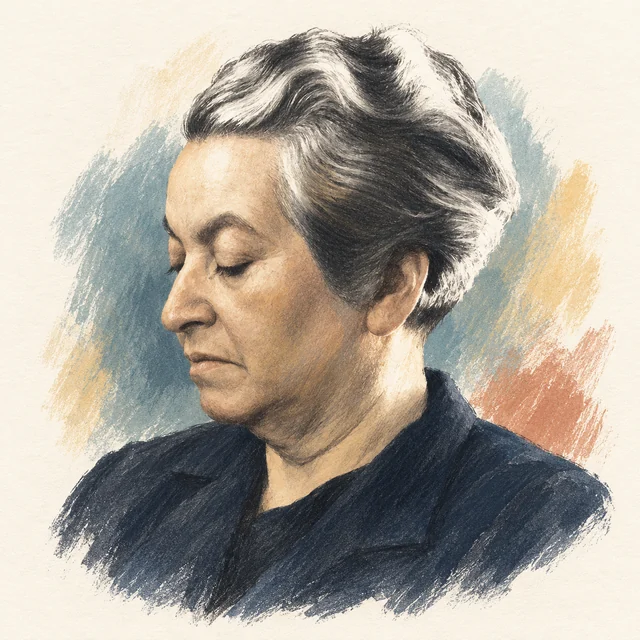
Illustrated portrait of Gabriela Mistral

Gabriela Mistral

Prize share · 1

Mistral received the whole Literature Prize for lyric poetry whose emotional force and literary achievement brought wide recognition to a Latin American voice.

Read the biography ↗

03 · Years in the making

The path here

  1. 1914

    The poems associated with Sonetos de la muerte bring public recognition.

  2. 1922

    Desolación is published in New York.

  3. 1924

    Ternura is published in Madrid.

  4. 1938

    Tala is published in Buenos Aires.

  5. 1945

    Receives the full Literature Prize and accepts it in Stockholm.

04 · Read further

From the original sources

Original explanations by Curionode, based on the official records below. Biographical details and affiliations refer to the award year.

  1. Official award summary nobelprize.org
  2. Award ceremony speech nobelprize.org
  3. Official bibliography: Mistral’s Spanish editions nobelprize.org
  4. Official biography: Gabriela Mistral nobelprize.org

More in Literature

Browse this subject ↗