01 · The contribution
The idea, in everyday language
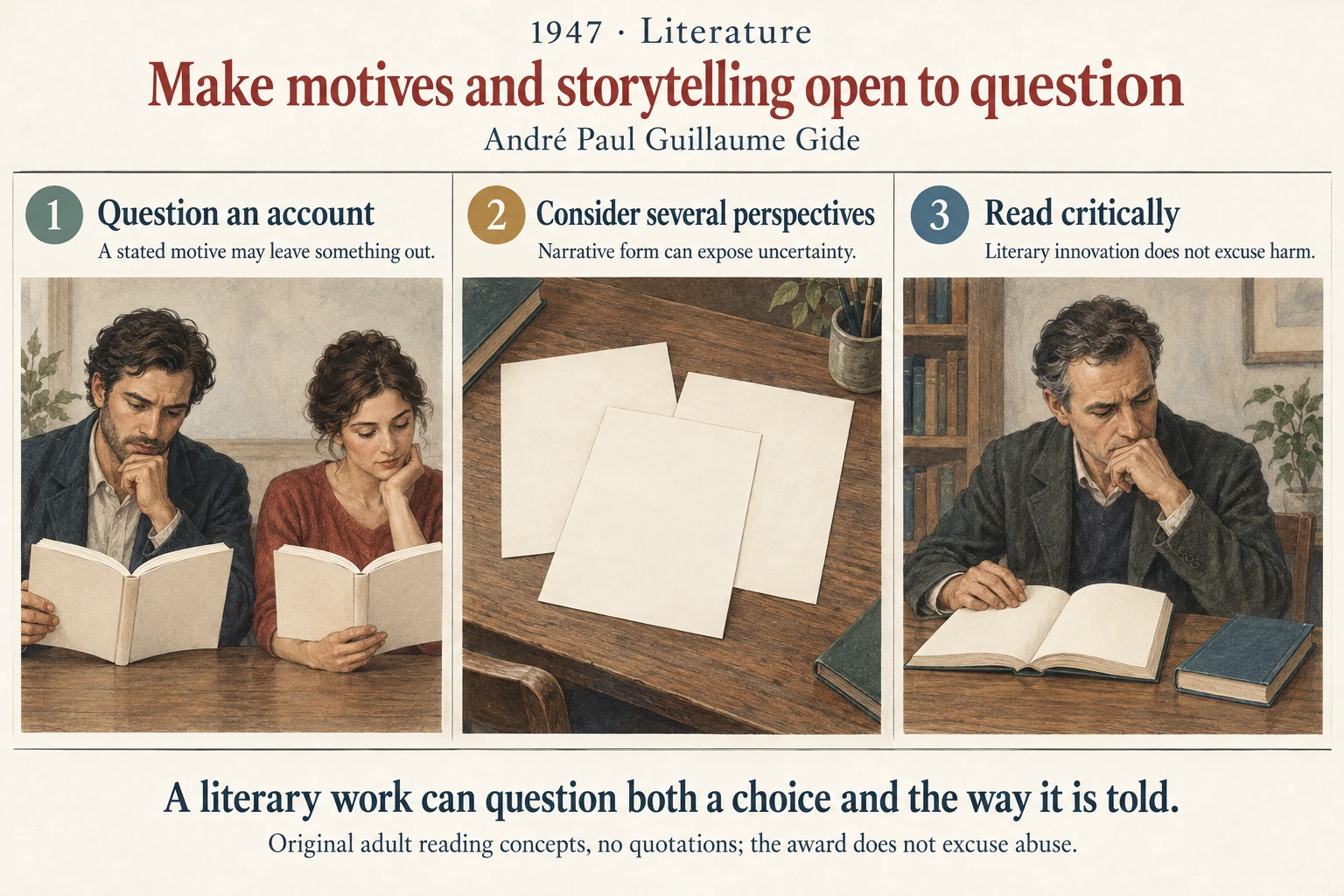
A person can give a convincing account of a choice without fully understanding its motives or consequences. Across fiction, journals and essays, Gide examined the distance between self-description and conduct, bringing competing claims and uncertain judgments into the same work.
Les Faux-Monnayeurs, first published in French in 1925, also makes the making of a novel part of its subject. Changing perspectives and reflection on narrative ask readers to consider who constructs an account and what it leaves out. The 1947 award recognised a wide body of writing, not this novel alone.
Why it matters
Gide’s experiments helped expand what a novel, journal or essay could ask of its reader. His writing also addressed travel, colonial conditions and political commitments. The award records a literary judgment about that body of work; it does not make every narrator’s view the author’s, or endorse every personal or political position.