01 · The contribution
The idea, in everyday language
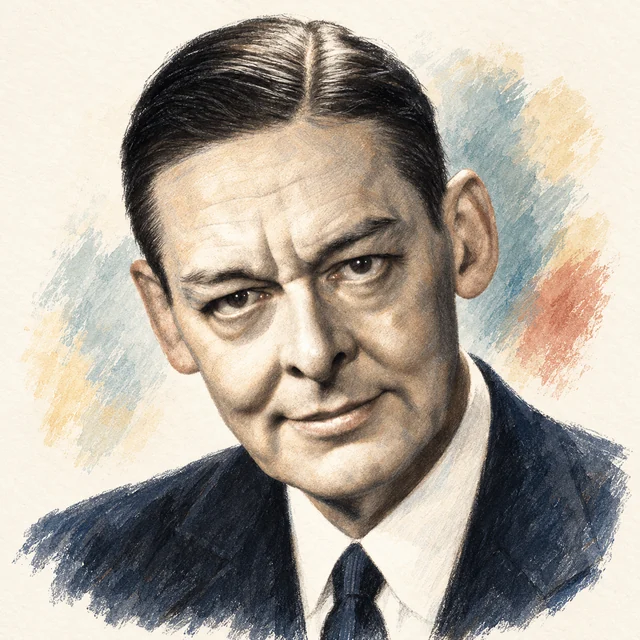
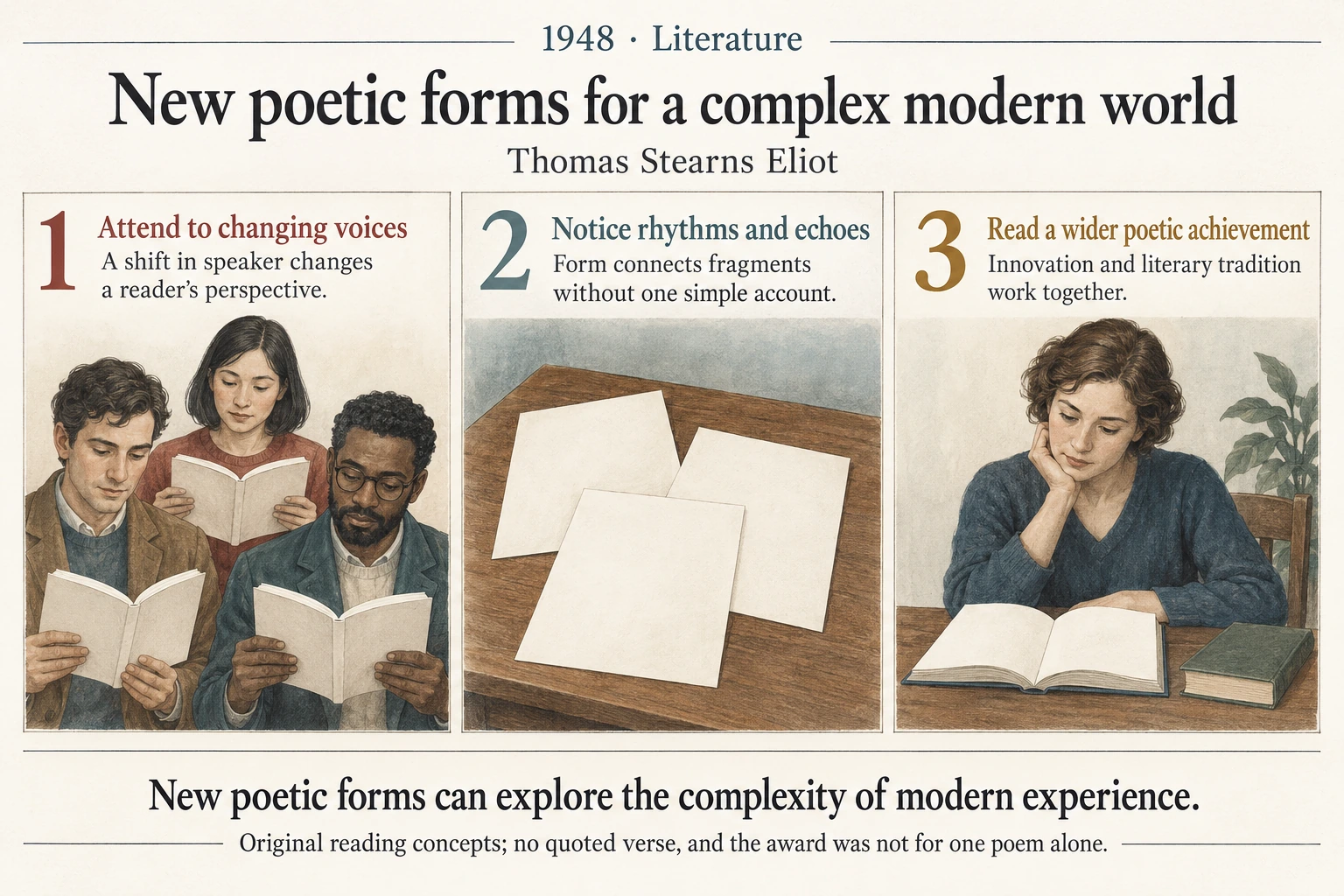
How can poetry give form to a world experienced as fragmented and difficult to interpret? Eliot brought different registers, voices and cultural references into carefully constructed arrangements. A shift in rhythm or speaker can make a reader reconsider what a passage means, rather than follow a single continuous account.
The Waste Land appeared in 1922, not 1932 as the short Nobel facts page states. Its formal experiment was one part of the wider poetic achievement recognised in 1948. Later work, including the Four Quartets collection of 1943, developed sustained reflection on time and spiritual experience. Innovation and attention to literary tradition coexisted in his work rather than forming a simple opposition.
Why it matters
The prize recognised a pioneering contribution to contemporary poetry, with influence on poetic diction and form. Eliot also shaped literary discussion through criticism, editing and verse drama. The award cannot be reduced to one poem, a requirement that all poetry be difficult, or a general endorsement of every social or religious judgement he made.