A life in context
The person behind the prize
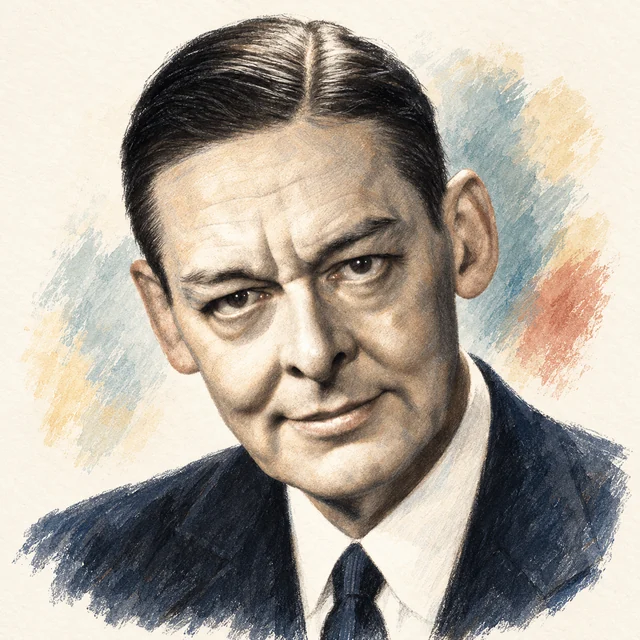
Born in St. Louis, Eliot studied at Harvard and pursued graduate work in philosophy at the Sorbonne, Harvard and Merton College, Oxford. He settled in England, working as a teacher and bank clerk before becoming a literary editor and later a director at Faber & Faber. He founded The Criterion in 1922 and edited it until 1939. Prufrock and Other Observations appeared in 1917, The Waste Land in 1922 and Ash-Wednesday in 1930. His poetry combined changing voices, allusions and carefully shaped rhythms with questions about modern life, time and spiritual experience. He became a British citizen in 1927 and entered the Anglican Church around the same time. Four Quartets appeared as a collection in the United States in 1943 and in Britain in 1944. His criticism and verse drama also shaped literary discussion. The full 1948 Literature Prize recognised his pioneering contribution to contemporary poetry, not one poem alone. Later plays and the 1963 Collected Poems belong to the subsequent history of his work.
The contribution
Eliot developed influential forms of modern poetry through voice, rhythm, allusion and the relationship between tradition and new writing. He received the full Literature Prize for this poetic contribution.
The idea in plain language
How can poetry give form to a world experienced as fragmented and difficult to interpret? Eliot brought different registers, voices and cultural references into carefully constructed arrangements. A shift in rhythm or speaker can make a reader reconsider what a passage means, rather than follow a single continuous account.
Read the full award story ↗

