c.curionodeThe Nobel Archive

1945 · Peace

Prepare institutions for international cooperation

Hull’s diplomatic work helped prepare the United Nations, but the organisation emerged from many governments and its promise did not erase exclusions in his record.

International cooperationUnited NationsDiplomacyInstitutional limits
1945Peace

Visual guide

The prize, pictured

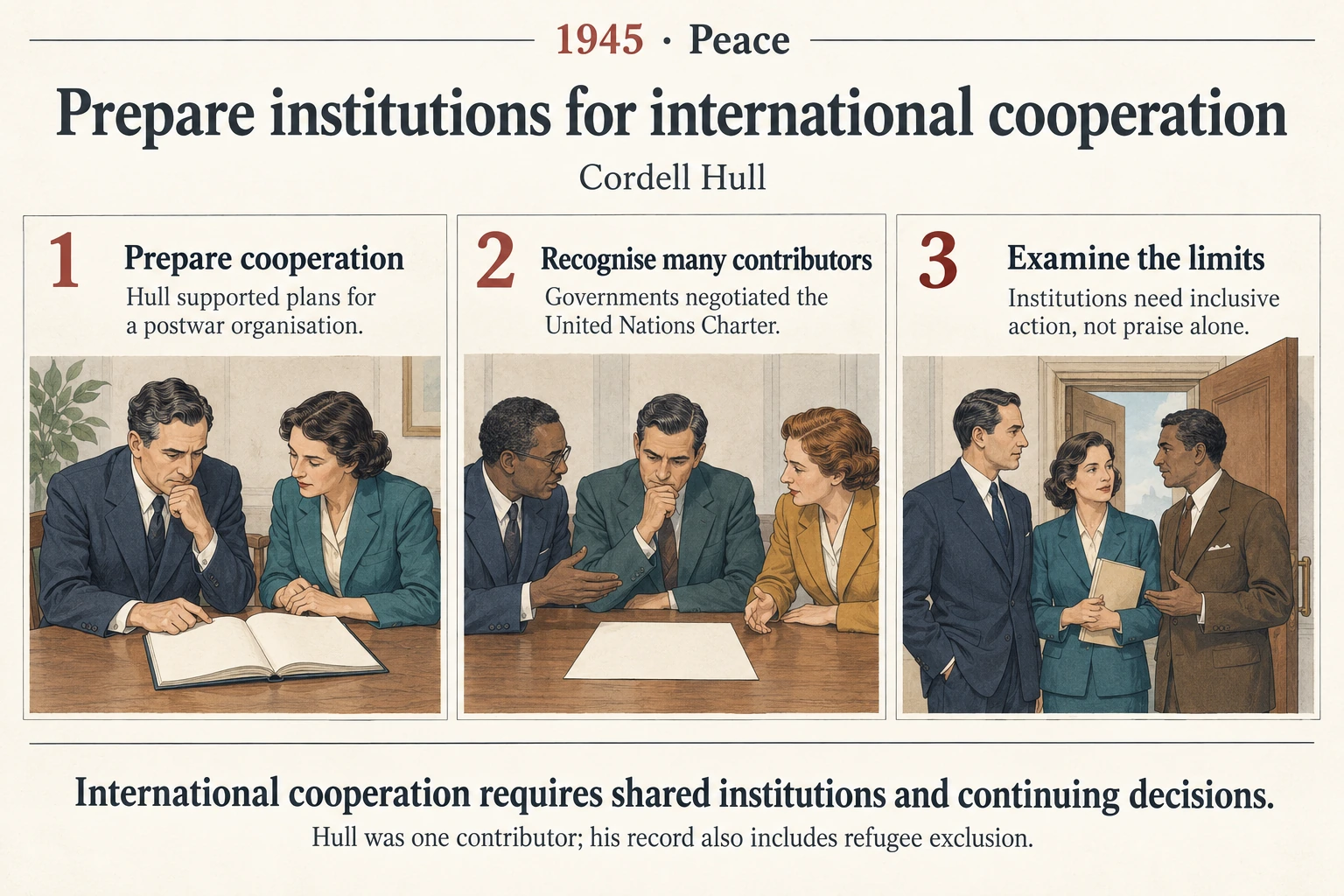
Infographic explaining Prepare institutions for international cooperation
Original AI-generated infographic. A conceptual overview; the explanations and sources below provide context.
Read the poster text

International cooperation requires shared institutions and continuing decisions.

  1. Prepare cooperation

    Hull supported plans for a postwar organisation.

  2. Recognise many contributors

    Governments negotiated the United Nations Charter.

  3. Examine the limits

    Institutions need inclusive action, not praise alone.

Hull was one contributor; his record also includes refugee exclusion.

01 · The contribution

The idea, in everyday language

War exposed the weakness of relying only on separate national decisions to sustain peace. Hull argued for international cooperation and worked to make it part of American policy. His support for reciprocal trade agreements linked economic relations to the hope of reducing antagonism; that was an argument for policy, not a proven guarantee that trade prevents war.

As Secretary of State during most of the Second World War, he helped develop plans for a postwar organisation and took part in the 1943 Moscow diplomacy. He resigned in November 1944 because of ill health. Many states negotiated the United Nations Charter at San Francisco in 1945: it was signed on 26 June and entered into force on 24 October. The Peace Prize recognised Hull’s contribution to this larger undertaking.

Why it matters

Planning an organisation before the war ended helped create a lasting framework for diplomacy and collective action. Its establishment involved governments, officials and negotiators from many countries. Hull was an important participant in building American support, while the UN’s actual effectiveness depended on what its members subsequently did.
02 · The people

Who brought the idea to life?

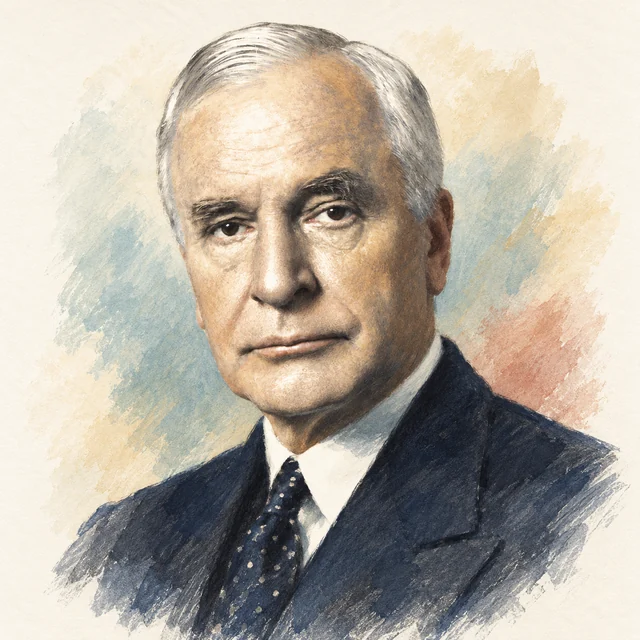
Illustrated portrait of Cordell Hull

Cordell Hull

Prize share · 1

Hull received the whole Peace Prize for work toward international understanding and his role in preparing the United Nations. Its establishment was a collective diplomatic undertaking, with limits and contradictions in his own record.

Read the biography ↗

03 · Years in the making

The path here

  1. 1907

    Enters the US House of Representatives.

  2. 1931

    Becomes a US senator.

  3. 1933

    Becomes Secretary of State.

  4. 1934

    The Reciprocal Trade Agreements Act supports his commercial policy.

  5. 1939

    The State Department and White House refuse exceptional admission for the St Louis passengers.

  6. 1943

    Participates in Moscow diplomacy on postwar cooperation.

  7. 1944

    Resigns as Secretary of State because of ill health.

  8. 1945

    The UN Charter enters into force; Hull receives the full Peace Prize.

04 · Read further

From the original sources

Original explanations by Curionode, based on the official records below. Biographical details and affiliations refer to the award year.

  1. Official award summary nobelprize.org
  2. Award ceremony speech nobelprize.org
  3. United Nations: preparatory years un.org
  4. United Nations: the San Francisco conference un.org
  5. Holocaust Memorial Museum: the St Louis refugees encyclopedia.ushmm.org
  6. Official biography: Cordell Hull nobelprize.org