c.curionodeThe Nobel Archive

1961 · Peace

Strengthening independent international service

Hammarskjöld sought to make the UN’s principles effective through an independent Secretariat and active peace diplomacy.

International civil serviceQuiet diplomacyUN peace work
1961Peace

Visual guide

The prize, pictured

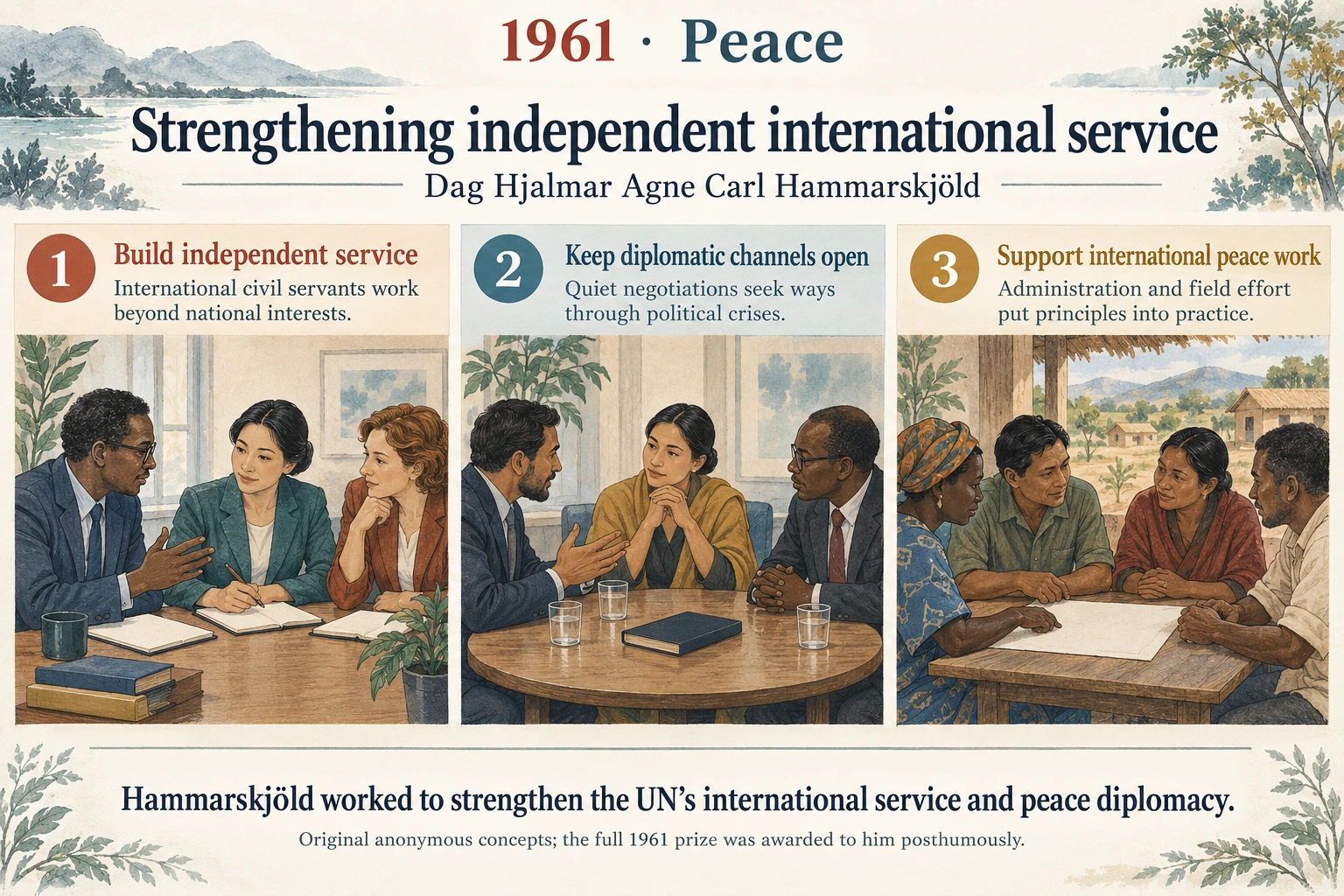
Infographic explaining Strengthening independent international service
Original AI-generated infographic. A conceptual overview; the explanations and sources below provide context.
Read the poster text

Hammarskjöld worked to strengthen the UN’s international service and peace diplomacy.

  1. Build independent service

    International civil servants work beyond national interests.

  2. Keep diplomatic channels open

    Quiet negotiations seek ways through political crises.

  3. Support international peace work

    Administration and field effort put principles into practice.

Original anonymous concepts; the full 1961 prize was awarded to him posthumously.

01 · The contribution

The idea, in everyday language

International cooperation depends on institutions able to work across national interests. During Cold War crises and decolonisation, the UN Secretariat faced pressures from powerful states and disagreement about its role.

As Secretary-General, Hammarskjöld strengthened international civil service and used quiet diplomacy to seek solutions. Suez-related work included the UN Emergency Force in 1956. The Congo operation from 1960 presented difficult and contested questions about assistance, authority and conflict. His work involved colleagues, governments and people affected by these crises.

Why it matters

The prize recognised his efforts to develop the UN into an effective and constructive international organisation. Hammarskjöld died in September 1961 while travelling to seek a cease-fire; the full 1961 prize was awarded to him posthumously as an individual. His family’s representative received it that December.
02 · The people

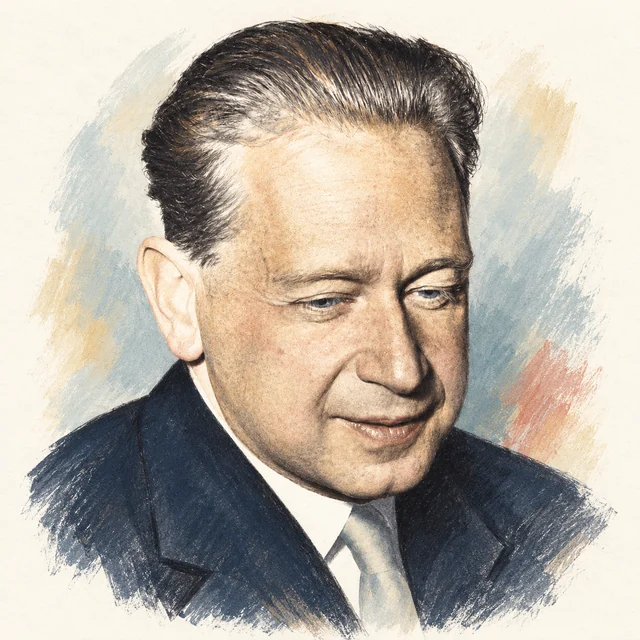
Who brought the idea to life?

03 · Years in the making

The path here

  1. 1933

    The UN biography dates his Stockholm economics doctorate.

  2. 1941–1948

    He chairs the Riksbank board.

  3. 1953

    He becomes the UN’s second Secretary-General.

  4. 1956

    The UN Emergency Force is established during the Suez crisis.

  5. 1957

    He is re-elected Secretary-General.

  6. 1960

    The Congo operation begins.

  7. 1961

    He dies during a peace mission and receives the prize posthumously.

04 · Read further

From the original sources

Original explanations by Curionode, based on the official records below. Biographical details and affiliations refer to the award year.

  1. Official award summary nobelprize.org
  2. Award ceremony speech nobelprize.org
  3. UN Hammarskjöld biography un.org
  4. Official biography: Dag Hjalmar Agne Carl Hammarskjöld nobelprize.org