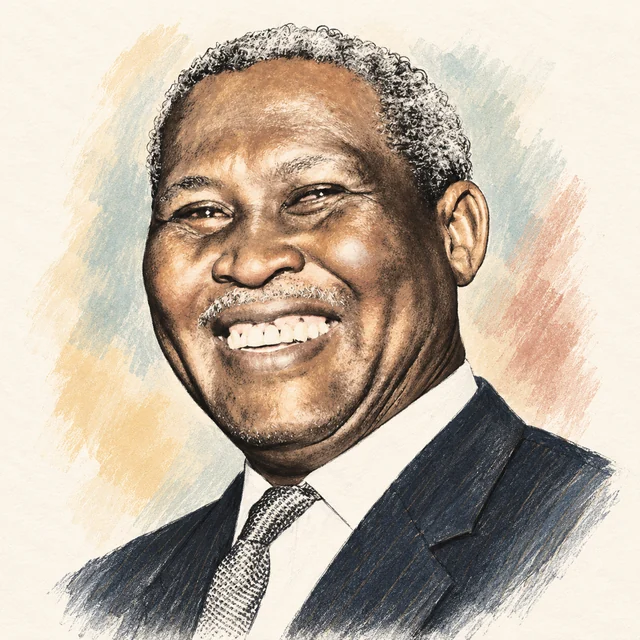
A life in context
The person behind the prize
Lutuli grew up in Groutville after early childhood in Southern Rhodesia. Teacher training led to a long career at Adams College, and in the 1930s he became chief of the Groutville community. He joined the African National Congress in 1944 and became its Natal president in 1951. Participation in the 1952 Defiance Campaign brought a government demand that he abandon political work or his chieftainship. He refused and was removed as chief; that December he became ANC president-general. He promoted non-violent resistance, equality and cooperation across racial divisions amid travel and meeting bans. Treason charges brought in 1956 were later withdrawn against him. After Sharpeville in 1960, the government banned the ANC and other organisations. His Peace Prize belonged to 1960 but was reserved and awarded a year later; temporary travel permission allowed him and his wife to attend the December 1961 ceremony. His work depended on many fellow organisers and participants, and the award did not mean apartheid had ended.
The contribution
Lutuli led and defended non-violent resistance to apartheid and equal political rights. He received the full 1960 Peace Prize in 1961.
The idea in plain language
Apartheid imposed racial divisions in political participation, movement, education and ordinary life. Challenging such a system required collective organisation under restrictions on speech, travel and public meetings.
Read the full award story ↗

