c.curionodeThe Nobel Archive

1962 · Literature

Human stories with a sharp social eye

Steinbeck joined realism, imagination and sympathetic humour in writing about hardship, relationships and social pressures.

Social perceptionRealism and imaginationWork and human relationships
1962Literature

Visual guide

The prize, pictured

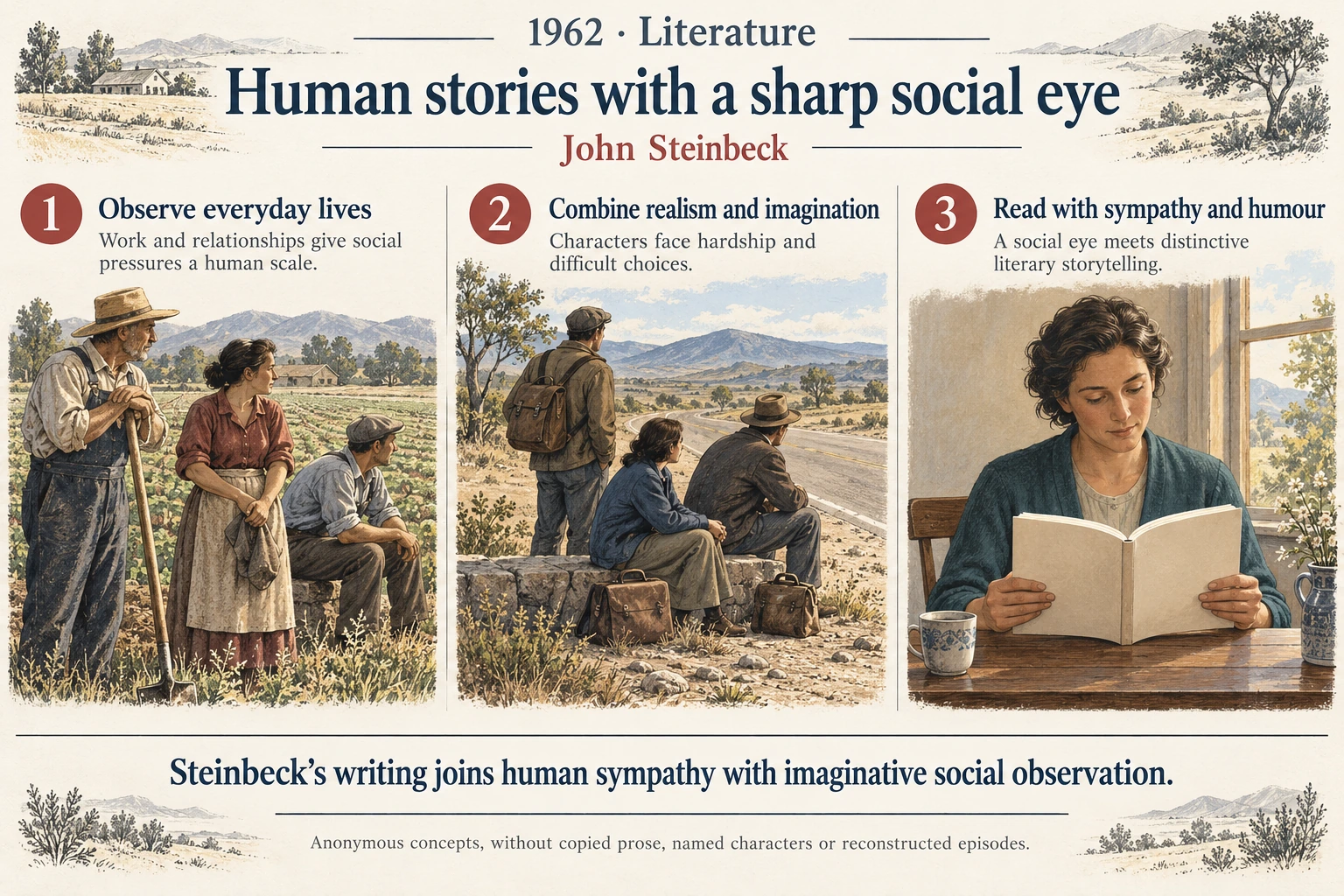
Infographic explaining Human stories with a sharp social eye
Original AI-generated infographic. A conceptual overview; the explanations and sources below provide context.
Read the poster text

Steinbeck’s writing joins human sympathy with imaginative social observation.

  1. Observe everyday lives

    Work and relationships give social pressures a human scale.

  2. Combine realism and imagination

    Characters face hardship and difficult choices.

  3. Read with sympathy and humour

    A social eye meets distinctive literary storytelling.

Anonymous concepts, without copied prose, named characters or reconstructed episodes.

01 · The contribution

The idea, in everyday language

Economic insecurity and unequal power shape everyday lives, but literature can portray more than abstract social problems. Steinbeck made work, migration, friendship and moral choices part of individual stories.

His fiction ranged from the humour of Tortilla Flat to labour conflict in In Dubious Battle and migrant-family experience in The Grapes of Wrath. Of Mice and Men, East of Eden and later work explored relationships and difficult choices through distinctive imagined characters. The prize recognised his writing’s combination of social perception and literary invention.

Why it matters

His work brought labour, migration and inequality into widely read literature while allowing humour and imaginative possibilities. He received the full Literature Prize. The award citation describes a literary achievement, rather than endorsing every judgement in every book.
02 · The people

Who brought the idea to life?

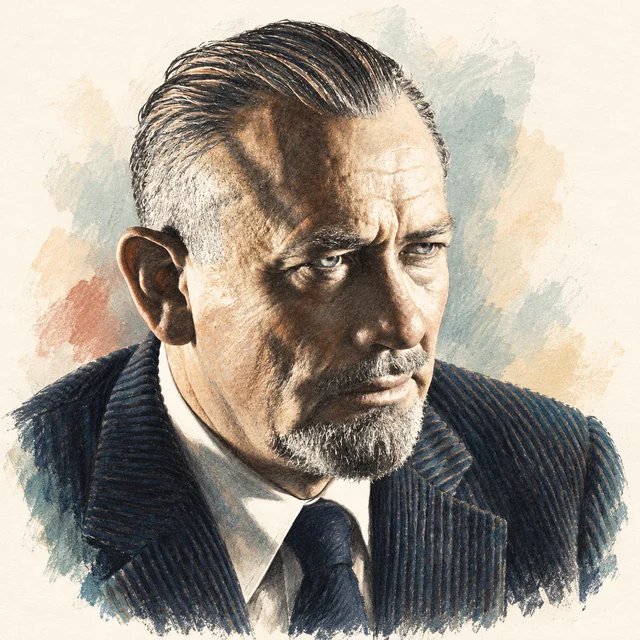
Illustrated portrait of John Steinbeck

John Steinbeck

Prize share · 1

Steinbeck’s writing combined realistic and imaginative storytelling, sympathetic humour and sharp social perception. He received the full Literature Prize.

Read the biography ↗

03 · Years in the making

The path here

  1. 1925

    Steinbeck leaves Stanford and moves to New York.

  2. 1935

    Tortilla Flat brings broad recognition.

  3. 1937

    Of Mice and Men appears.

  4. 1939

    The Grapes of Wrath is published.

  5. 1952

    East of Eden appears.

  6. 1961

    The Winter of Our Discontent is published.

  7. 1962

    Travels with Charley appears; he receives the Literature Prize.

04 · Read further

From the original sources

Original explanations by Curionode, based on the official records below. Biographical details and affiliations refer to the award year.

  1. Official award summary nobelprize.org
  2. Award ceremony speech nobelprize.org
  3. Official biography: John Steinbeck nobelprize.org

More in Literature

Browse this subject ↗