c.curionodeThe Nobel Archive

1961 · Literature

Human destinies across historical time

Andrić’s epic fiction places individual lives within the pressures and continuities of history.

Epic narrativeHistorical experiencePlace and human relationships
1961Literature

Visual guide

The prize, pictured

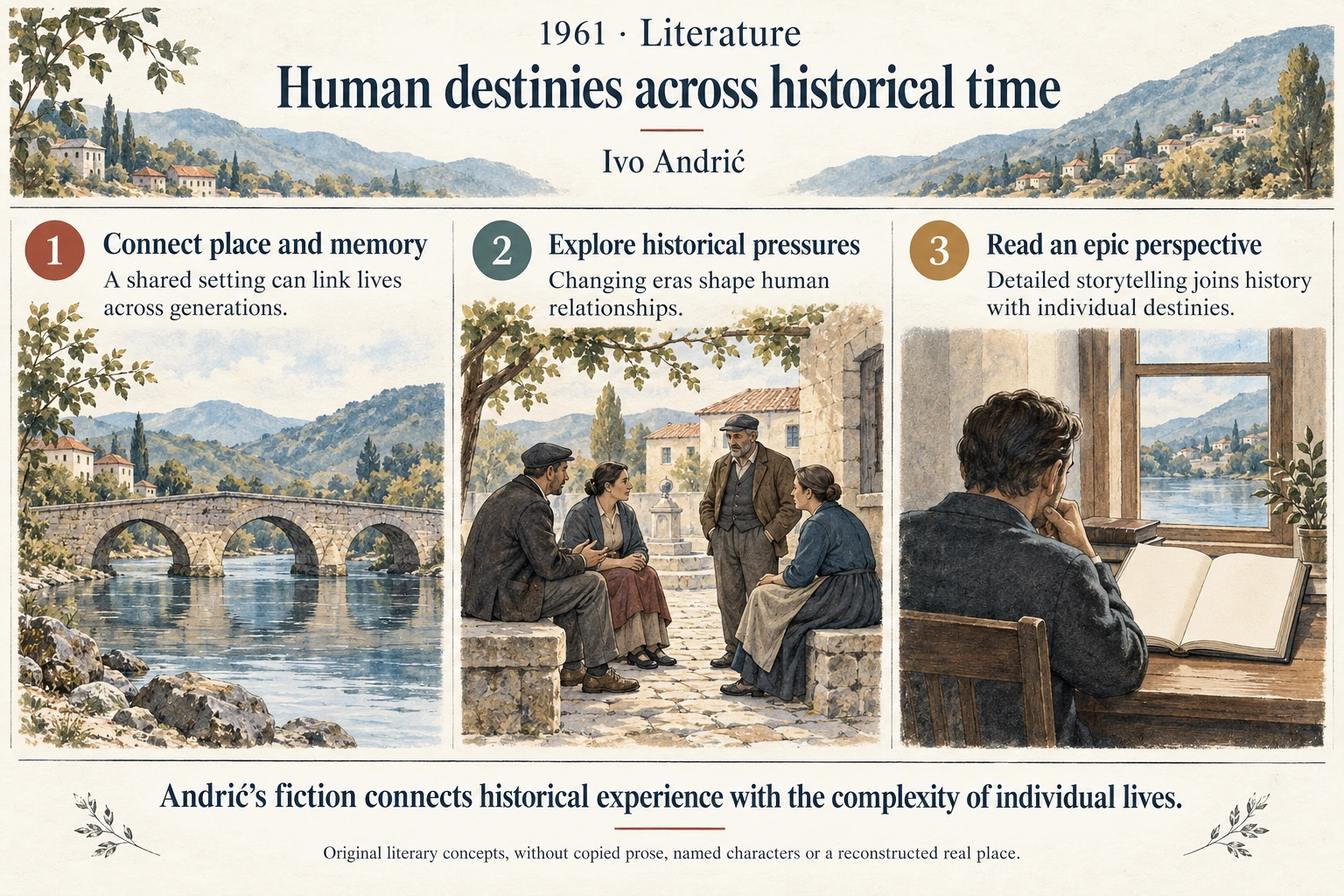
Infographic explaining Human destinies across historical time
Original AI-generated infographic. A conceptual overview; the explanations and sources below provide context.
Read the poster text

Andrić’s fiction connects historical experience with the complexity of individual lives.

  1. Connect place and memory

    A shared setting can link lives across generations.

  2. Explore historical pressures

    Changing eras shape human relationships.

  3. Read an epic perspective

    Detailed storytelling joins history with individual destinies.

Original literary concepts, without copied prose, named characters or a reconstructed real place.

01 · The contribution

The idea, in everyday language

Historical change affects everyday relationships as well as institutions. Andrić drew on Bosnia’s places, memories and encounters to explore how lives unfold amid larger conflicts and transformations.

The Bridge on the Drina and the Travnik Chronicle use expansive narrative forms to connect communities with changing eras. The Woman from Sarajevo and shorter fiction explore distinctive personal concerns. These works combine detailed observation and psychological insight with constructed stories, rather than presenting one simple explanation of a region’s history.

Why it matters

The award recognised the epic force of his portrayal of human destinies drawn from his country’s history. He received the full prize. Translations extended the reach of writing rooted in particular experiences, without making his perspective the voice of every community.
02 · The people

Who brought the idea to life?

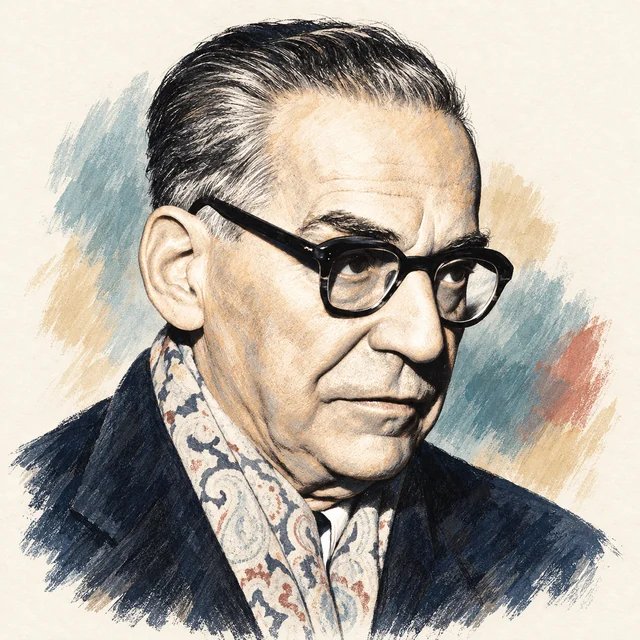
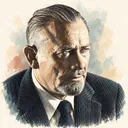
Illustrated portrait of Ivo Andrić

Ivo Andrić

Prize share · 1

Andrić used epic fiction to explore human destinies shaped by his country’s history. He received the full Literature Prize.

Read the biography ↗

03 · Years in the making

The path here

  1. 1914

    His early poetry appears in a shared anthology.

  2. 1918

    Ex Ponto is published.

  3. 1920

    Nemiri and The Journey of Ali Djerzelez appear.

  4. 1924

    He completes his Graz doctorate.

  5. 1941

    He returns to Belgrade and concentrates on writing.

  6. 1945

    Three major works are published.

  7. 1954

    The Damned Yard appears.

  8. 1961

    He receives the Literature Prize.

04 · Read further

From the original sources

Original explanations by Curionode, based on the official records below. Biographical details and affiliations refer to the award year.

  1. Official award summary nobelprize.org
  2. Award ceremony speech nobelprize.org
  3. Andrić Foundation biography ivoandric.org.rs
  4. Official biography: Ivo Andrić nobelprize.org

More in Literature

Browse this subject ↗