01 · The contribution
The idea, in everyday language
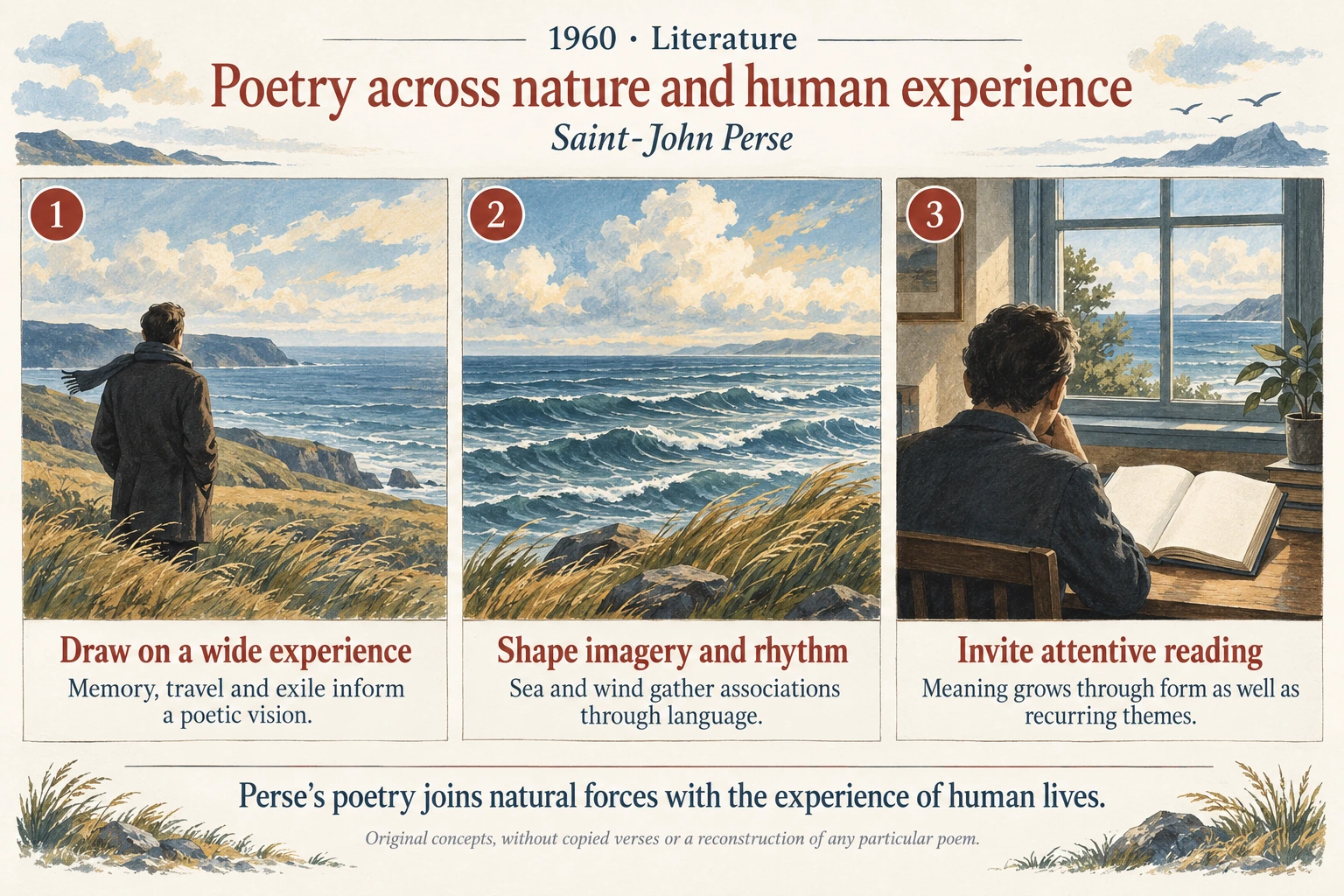
How can poetry give form to experiences that exceed a single place or ordinary narrative? Perse’s writing drew on childhood memory, travel and exile while reaching toward broad questions about people and the natural world.
His poems combine dense imagery, long rhythmic movements and references across disciplines. Éloges gathered early work in 1911; Anabase followed in 1924. Exil, Vents and Amers developed the recurring concerns of displacement, wind, sea and human endurance. Chronique appeared in a magazine in 1959 and as a book in 1960.
Why it matters
The prize recognised a distinctive poetic language and an imaginative view of contemporary human conditions. It encouraged attention to demanding verse whose significance comes from its language and form as well as its themes. Perse’s diplomatic career informed his experience but was not the contribution rewarded by the Literature Prize.