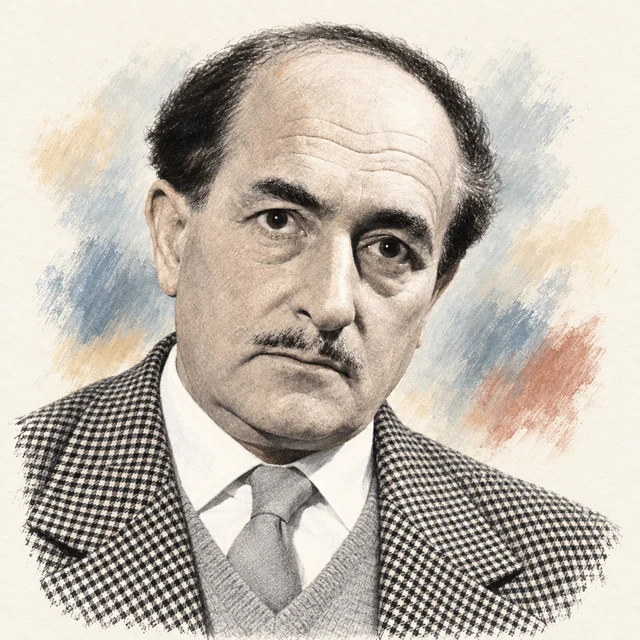
A life in context
The person behind the prize
Quasimodo grew up in Sicily, completed technical schooling and worked as a draughtsman and civil-engineering employee. The Pavia manuscript archive records unfinished mathematics and physics studies, correcting the later account that he enrolled in engineering. His first poetry collection Acque e terre appeared in 1930; Oboe sommerso followed in 1932. Classical-language study and translation remained important alongside his own poetry. He left government employment in 1938 and later taught Italian literature at Milan’s conservatory. Ed è subito sera in 1942 gathered earlier poetry and new work. Wartime experience helped deepen the social and moral concerns of his verse. Giorno dopo giorno appeared in 1947, expanding a differently titled 1946 collection. La vita non è sogno followed in 1949 and La terra impareggiabile in 1958. The 1959 award recognised his lyric poetry, not the later translations and collected editions.
The contribution
Quasimodo’s lyric poetry joined classical resources, precise language and the tragic experience of his time. He received the full Literature Prize.
The idea in plain language
How can a brief lyric hold personal memory and the pressures of a wider historical moment? Quasimodo’s early writing drew on Sicilian landscapes and separation from home, with densely concentrated images rather than a straightforward narrative.
Read the full award story ↗

