c.curionodeThe Nobel Archive

1959 · Literature

Poetry from private memory to shared experience

Quasimodo’s lyric language moved from concentrated personal imagery toward the experience of people living through war and its aftermath.

Lyric poetryMemory and historyTranslation
1959Literature

Visual guide

The prize, pictured

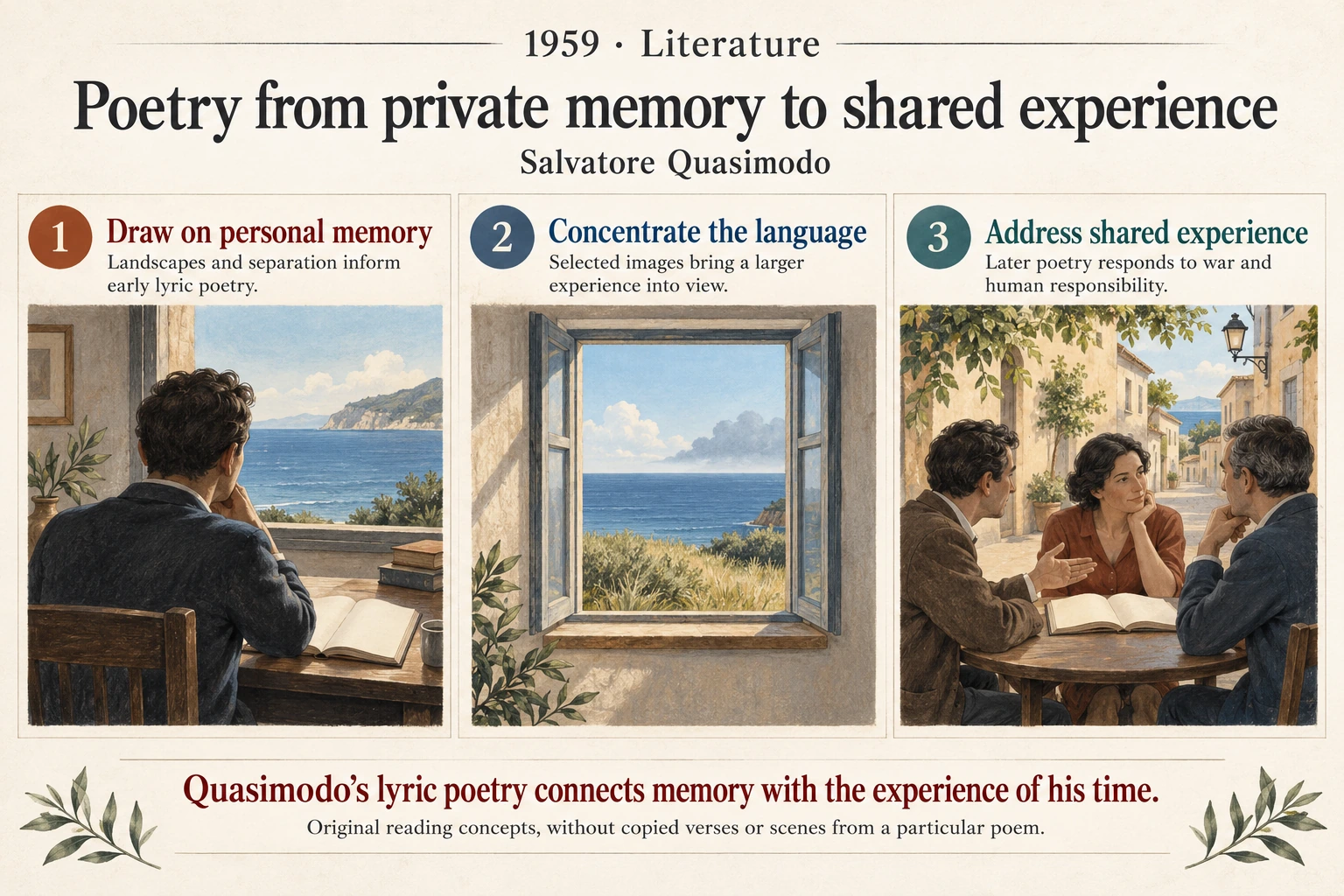
Infographic explaining Poetry from private memory to shared experience
Original AI-generated infographic. A conceptual overview; the explanations and sources below provide context.
Read the poster text

Quasimodo’s lyric poetry connects memory with the experience of his time.

  1. Draw on personal memory

    Landscapes and separation inform early lyric poetry.

  2. Concentrate the language

    Selected images bring a larger experience into view.

  3. Address shared experience

    Later poetry responds to war and human responsibility.

Original reading concepts, without copied verses or scenes from a particular poem.

01 · The contribution

The idea, in everyday language

How can a brief lyric hold personal memory and the pressures of a wider historical moment? Quasimodo’s early writing drew on Sicilian landscapes and separation from home, with densely concentrated images rather than a straightforward narrative.

Collections such as Acque e terre and Oboe sommerso developed that early poetic language. His translations of ancient Greek lyric poetry also shaped his work. Ed è subito sera gathered earlier poems and new writing in 1942. After the war, Giorno dopo giorno and later collections gave greater space to collective experience, suffering and human responsibility. The 1959 prize recognised his lyric achievement.

Why it matters

The award highlighted poetry that joined formal control with a view of human experience marked by the author’s time. Quasimodo’s later work expanded the social concerns of his earlier writing without making poetry a simple historical report. Translation and attentive reading remain central to understanding the language and changes across his collections.
02 · The people

Who brought the idea to life?

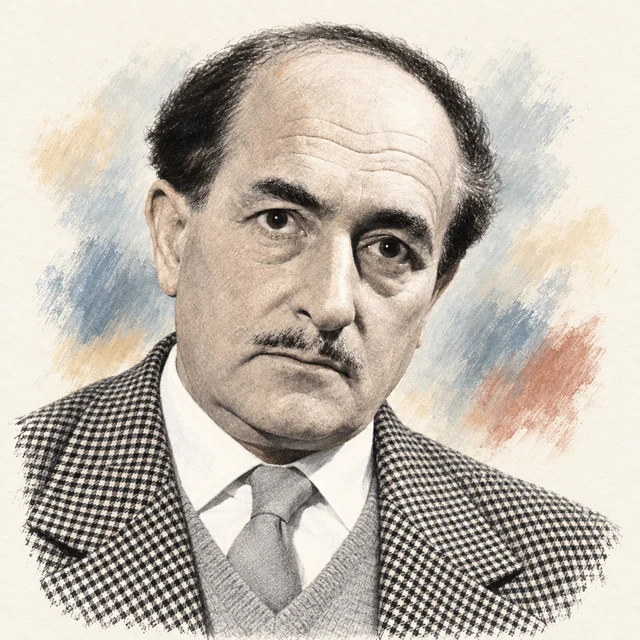
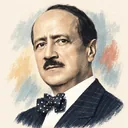
Illustrated portrait of Salvatore Quasimodo

Salvatore Quasimodo

Prize share · 1

Quasimodo’s lyric poetry joined classical resources, precise language and the tragic experience of his time. He received the full Literature Prize.

Read the biography ↗

03 · Years in the making

The path here

  1. 1901

    Quasimodo is born in Modica, Sicily.

  2. 1919

    He receives a technical diploma.

  3. 1923

    He begins mathematics and physics studies in Rome.

  4. 1930

    Acque e terre is published.

  5. 1932

    Oboe sommerso appears.

  6. 1940

    His translations of Greek lyric poetry are published.

  7. 1942

    Ed è subito sera gathers earlier and new poems.

  8. 1947

    Giorno dopo giorno is published.

  9. 1954–1956

    Il falso e vero verde appears, then in an expanded edition.

  10. 1958

    La terra impareggiabile is published.

  11. 1959

    He receives the Literature Prize.

04 · Read further

From the original sources

Original explanations by Curionode, based on the official records below. Biographical details and affiliations refer to the award year.

  1. Official award summary nobelprize.org
  2. Award ceremony speech nobelprize.org
  3. University of Pavia Quasimodo archive lombardiarchivi.servizirl.it
  4. Official biography: Salvatore Quasimodo nobelprize.org

More in Literature

Browse this subject ↗