c.curionodeThe Nobel Archive

1958 · Literature

Lyric intensity within a broad human narrative

Pasternak joined contemporary lyric poetry with the Russian narrative tradition across poetry, prose and translation.

Lyric poetryRussian narrativeTranslation and reading
1958Literature

Visual guide

The prize, pictured

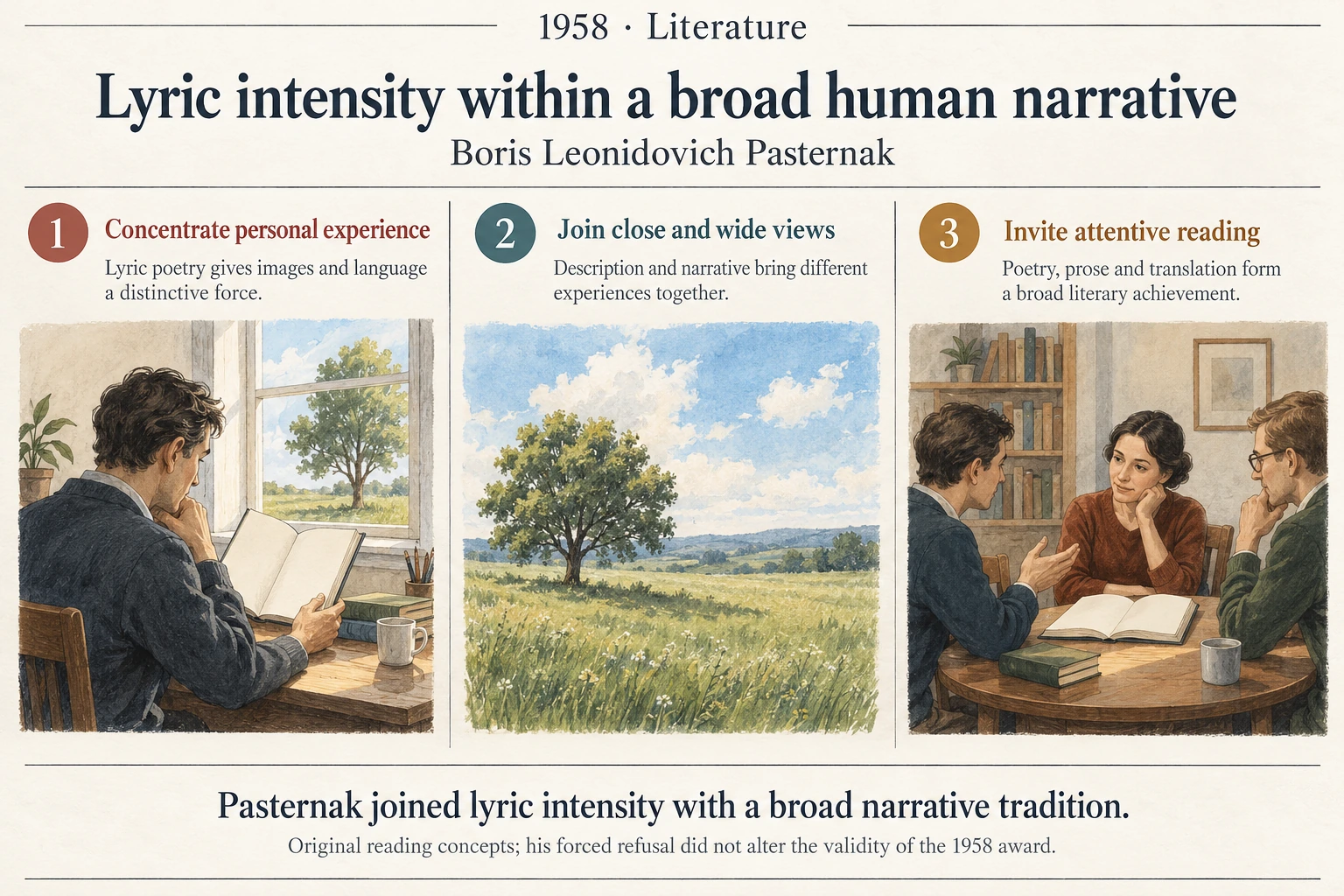
Infographic explaining Lyric intensity within a broad human narrative
Original AI-generated infographic. A conceptual overview; the explanations and sources below provide context.
Read the poster text

Pasternak joined lyric intensity with a broad narrative tradition.

  1. Concentrate personal experience

    Lyric poetry gives images and language a distinctive force.

  2. Join close and wide views

    Description and narrative bring different experiences together.

  3. Invite attentive reading

    Poetry, prose and translation form a broad literary achievement.

Original reading concepts; his forced refusal did not alter the validity of the 1958 award.

01 · The contribution

The idea, in everyday language

How can writing preserve the texture of an individual life while addressing a historical world much larger than one person? Pasternak’s early modernist poetry explored nature, language and experience through concentrated images.

My Sister Life and Themes and Variations established an important poetic voice in the 1920s. Later writing used more direct language while retaining lyric attention to ordinary experience and human relationships. Doctor Zhivago, first published in Italian translation in 1957, brought lyric description into an extended narrative of lives amid historical upheaval. The prize recognised both poetry and the Russian epic tradition.

Why it matters

The 1958 award recognised a body of literary achievement, rather than the novel alone. Pasternak initially accepted the distinction, then declined under pressure from Soviet authorities. The Academy’s official announcement explicitly maintained the validity of the award even though the presentation could not take place. He remains the full-prize laureate in the 1958 edition.
02 · The people

Who brought the idea to life?

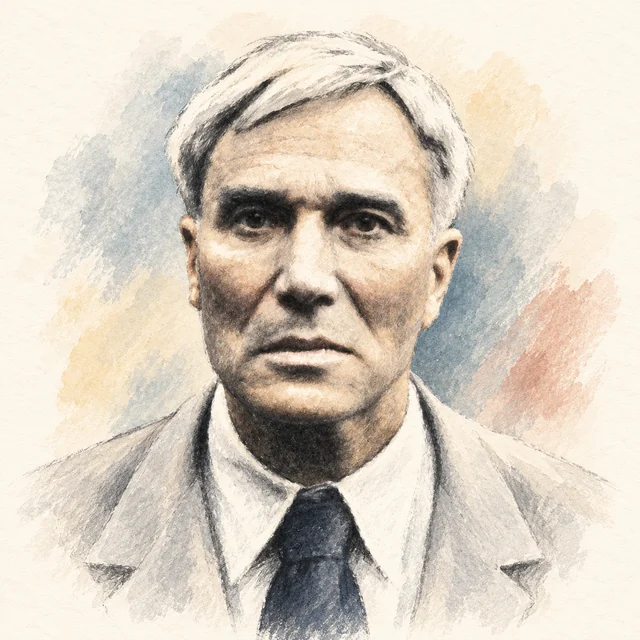
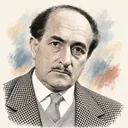
Illustrated portrait of Boris Leonidovich Pasternak

Boris Leonidovich Pasternak

Prize share · 1

Pasternak joined lyric intensity with the Russian narrative tradition across poetry and prose. He received the full Literature Prize, despite being forced to decline its presentation.

Read the biography ↗

03 · Years in the making

The path here

  1. 1890

    Pasternak is born in Moscow.

  2. 1912

    After philosophy studies in Marburg, he chooses literature.

  3. 1922

    My Sister Life is published.

  4. 1923

    Themes and Variations is published.

  5. 1931

    Safe Conduct appears.

  6. 1932

    Second Birth is published.

  7. 1943–1945

    In Early Trains appears and is expanded as Wide Spaces of the Earth.

  8. 1957

    Doctor Zhivago first appears in Italian translation.

  9. 23 October 1958

    The Academy selects him for the Literature Prize.

  10. 25–29 October 1958

    He first accepts, then declines the presentation; the award remains valid.

04 · Read further

From the original sources

Original explanations by Curionode, based on the official records below. Biographical details and affiliations refer to the award year.

  1. Official award summary nobelprize.org
  2. Official announcement nobelprize.org
  3. Official biography: Boris Leonidovich Pasternak nobelprize.org

More in Literature

Browse this subject ↗