c.curionodeThe Nobel Archive

1966 · Literature

Two literary voices of memory and displacement

Agnon’s Hebrew fiction and Sachs’s German poetry and drama transformed Jewish traditions, memory and suffering through distinct artistic forms.

Narrative and poetryCultural memoryExile and loss
1966Literature

Visual guide

The prize, pictured

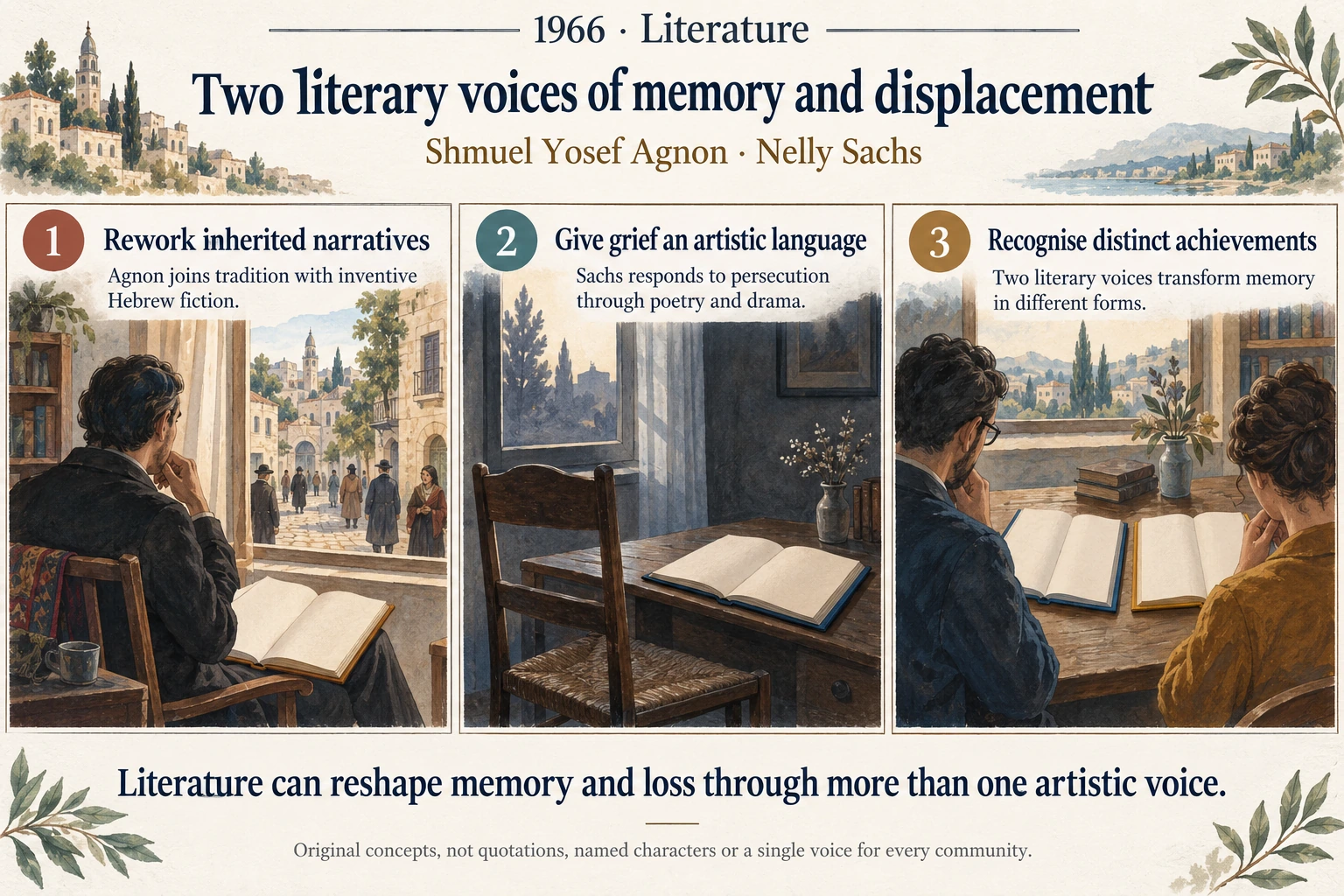
Infographic explaining Two literary voices of memory and displacement
Original AI-generated infographic. A conceptual overview; the explanations and sources below provide context.
Read the poster text

Literature can reshape memory and loss through more than one artistic voice.

  1. Rework inherited narratives

    Agnon joins tradition with inventive Hebrew fiction.

  2. Give grief an artistic language

    Sachs responds to persecution through poetry and drama.

  3. Recognise distinct achievements

    Two literary voices transform memory in different forms.

Original concepts, not quotations, named characters or a single voice for every community.

01 · The contribution

The idea, in everyday language

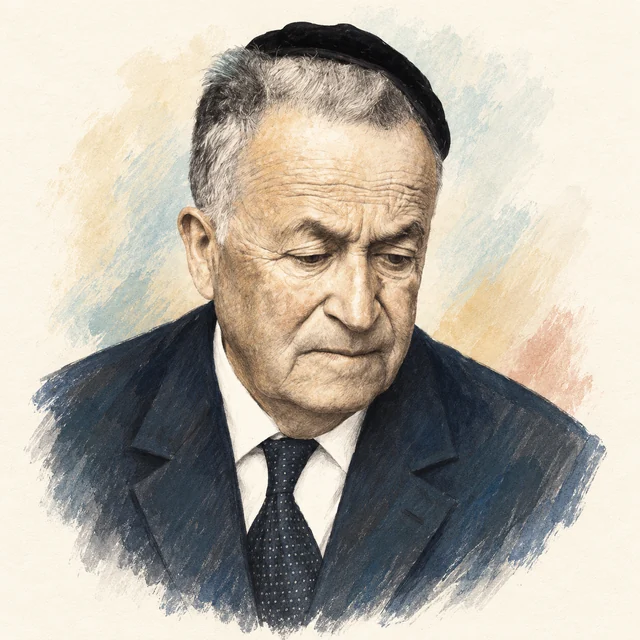
Agnon’s narrative art combines inherited religious language and storytelling with humour, irony and uncertainty. Communities, journeys and remembered places become settings for tensions between tradition and changing life. His literary worlds include Eastern Galicia and his adopted Jerusalem.

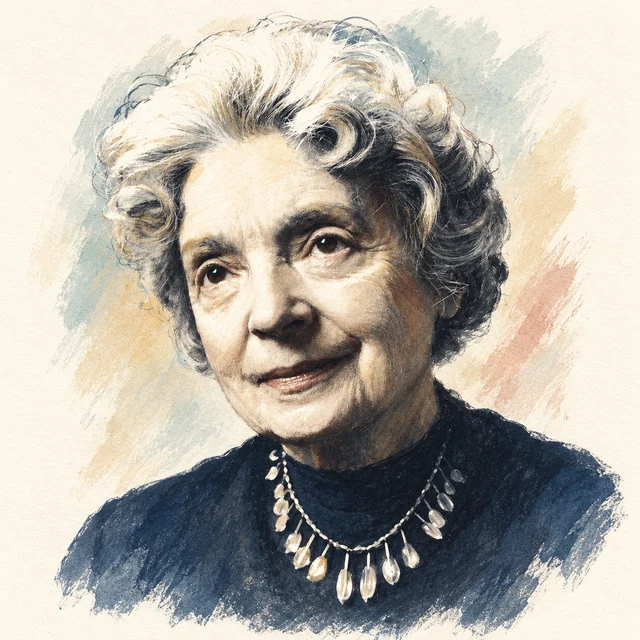
Sachs’s poetry and drama respond to persecution, exile and the Holocaust. Modern metaphor interacts with biblical echoes and Jewish mystical traditions, giving grief and displacement an individual artistic language. She also translated Swedish poets while living in Stockholm. The shared prize honoured two bodies of work, rather than a collaboration or a single uniform perspective.

Why it matters

The award drew international attention to two individual achievements across different languages. Their writing preserved and transformed cultural memory while addressing ruptures in personal and collective life. Each writer received one half of the prize.
02 · The people

Who brought the idea to life?

Illustrated portrait of Nelly Sachs

Nelly Sachs

Prize share · 1/2

Sachs was recognised for lyrical and dramatic writing responding to Jewish suffering and destiny. She received one half of the Literature Prize.

Read the biography ↗

03 · Years in the making

The path here

  1. 1908

    Agnon arrives in Jaffa, according to Agnon House and the National Library.

  2. 1913–1924

    He lives in Germany before returning after a destructive fire.

  3. 1939

    A Guest for the Night appears.

  4. 1940

    Sachs and her mother reach Sweden.

  5. 1945

    Only Yesterday appears.

  6. 1949

    Sachs’s Eclipse of Stars appears.

  7. 1959

    Her Flight and Metamorphosis appears.

  8. 1966

    The writers share the Literature Prize.

04 · Read further

From the original sources

Original explanations by Curionode, based on the official records below. Biographical details and affiliations refer to the award year.

  1. Official award summary nobelprize.org
  2. Award ceremony speech nobelprize.org
  3. Agnon House biography agnonhouse.org.il
  4. National Library Agnon biography nli.org.il
  5. Official bibliography: Agnon nobelprize.org
  6. Official bibliography: Sachs nobelprize.org
  7. Official biography: Shmuel Yosef Agnon nobelprize.org
  8. Official biography: Nelly Sachs nobelprize.org

More in Literature

Browse this subject ↗