c.curionodeThe Nobel Archive

1968 · Literature

Narrative attention to beauty, memory and loss

Kawabata’s fiction joins sensitive observation with narrative art. The Academy recognised an individual literary achievement deeply connected with Japanese cultural traditions.

Narrative masteryMemory and lossLiterary traditions
1968Literature

Visual guide

The prize, pictured

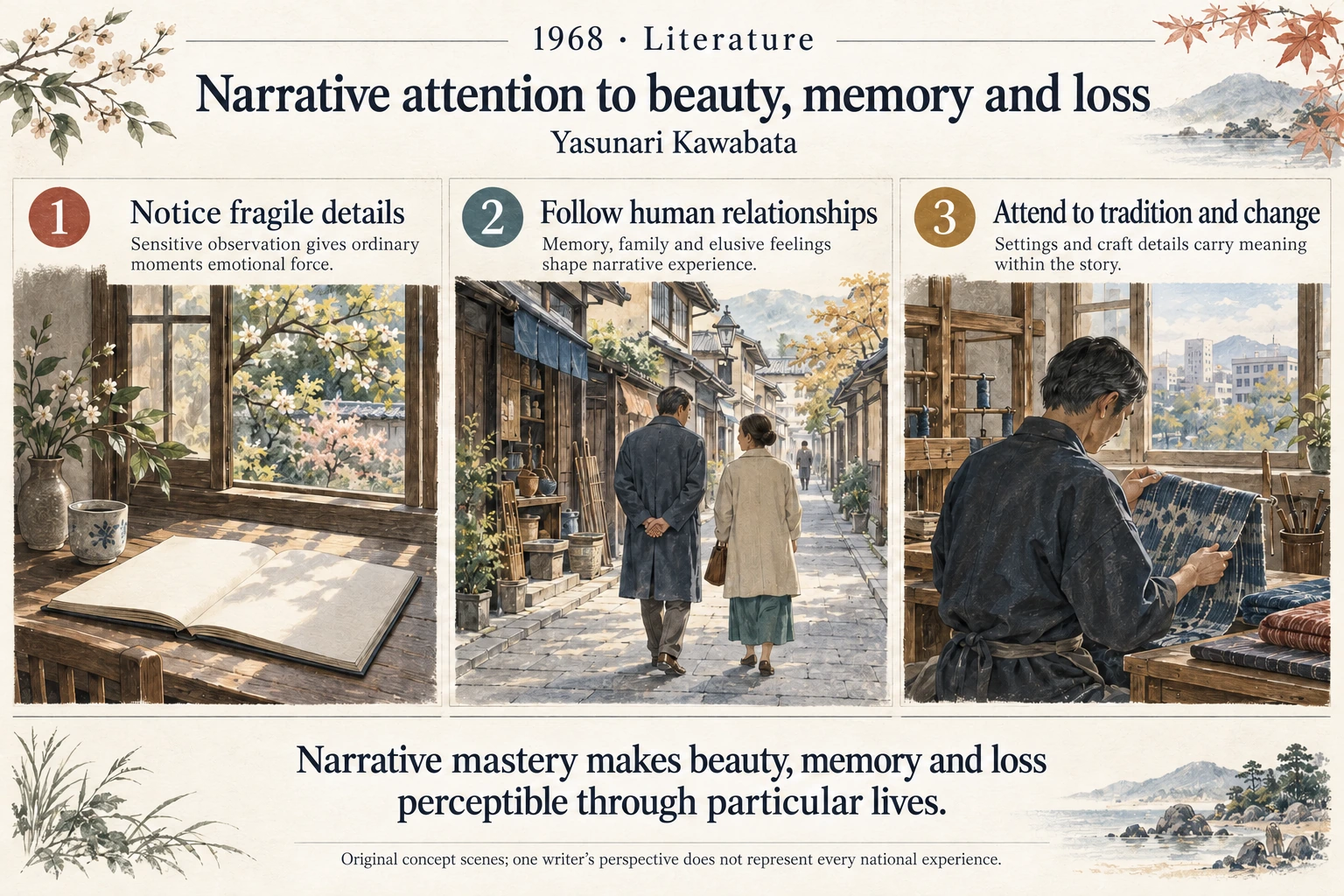
Infographic explaining Narrative attention to beauty, memory and loss
Original AI-generated infographic. A conceptual overview; the explanations and sources below provide context.
Read the poster text

Narrative mastery makes beauty, memory and loss perceptible through particular lives.

  1. Notice fragile details

    Sensitive observation gives ordinary moments emotional force.

  2. Follow human relationships

    Memory, family and elusive feelings shape narrative experience.

  3. Attend to tradition and change

    Settings and craft details carry meaning within the story.

Original concept scenes; one writer’s perspective does not represent every national experience.

01 · The contribution

The idea, in everyday language

Works including Snow Country and Thousand Cranes attend closely to relationships, elusive feelings and fragile details. The Sound of the Mountain and The Old Capital offer other settings for memory, family and changing surroundings.

The ceremony particularly considered The Old Capital’s Kyoto setting, seasonal life and craft traditions. These details carry emotional and narrative meaning; they are more than a catalogue of picturesque customs.

Why it matters

The work carried a distinctive narrative sensibility to international readers and broadened the possibilities of literary exchange. His criticism, support for writers and PEN activity also formed part of a wider literary life.
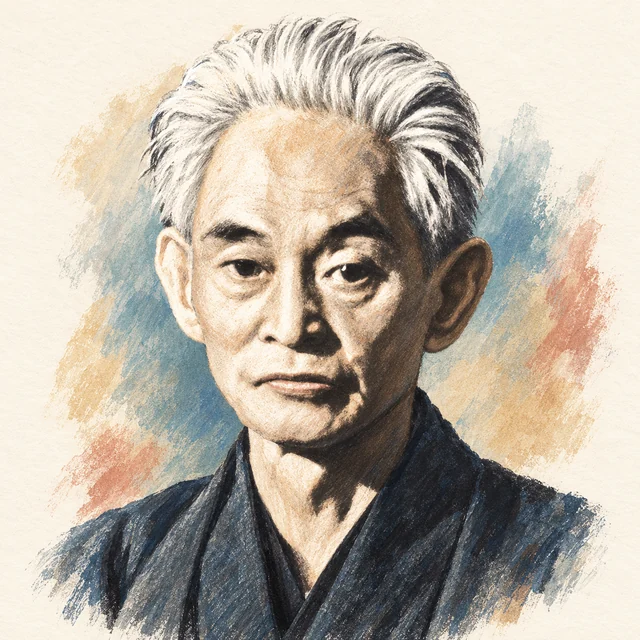

02 · The people

Who brought the idea to life?

03 · Years in the making

The path here

  1. 1920

    Kawabata enters Tokyo Imperial University.

  2. 1924

    He graduates and helps launch Bungei Jidai.

  3. 1926

    The Ibaraki literary museum dates The Izu Dancer to this year.

  4. 1949

    Thousand Cranes and The Sound of the Mountain begin appearing.

  5. 1968

    He receives the Literature Prize.

04 · Read further

From the original sources

Original explanations by Curionode, based on the official records below. Biographical details and affiliations refer to the award year.

  1. Official award summary nobelprize.org
  2. Award ceremony speech nobelprize.org
  3. Official bibliography nobelprize.org
  4. Ibaraki literary museum biography city.ibaraki.osaka.jp
  5. Official biography: Yasunari Kawabata nobelprize.org

More in Literature

Browse this subject ↗